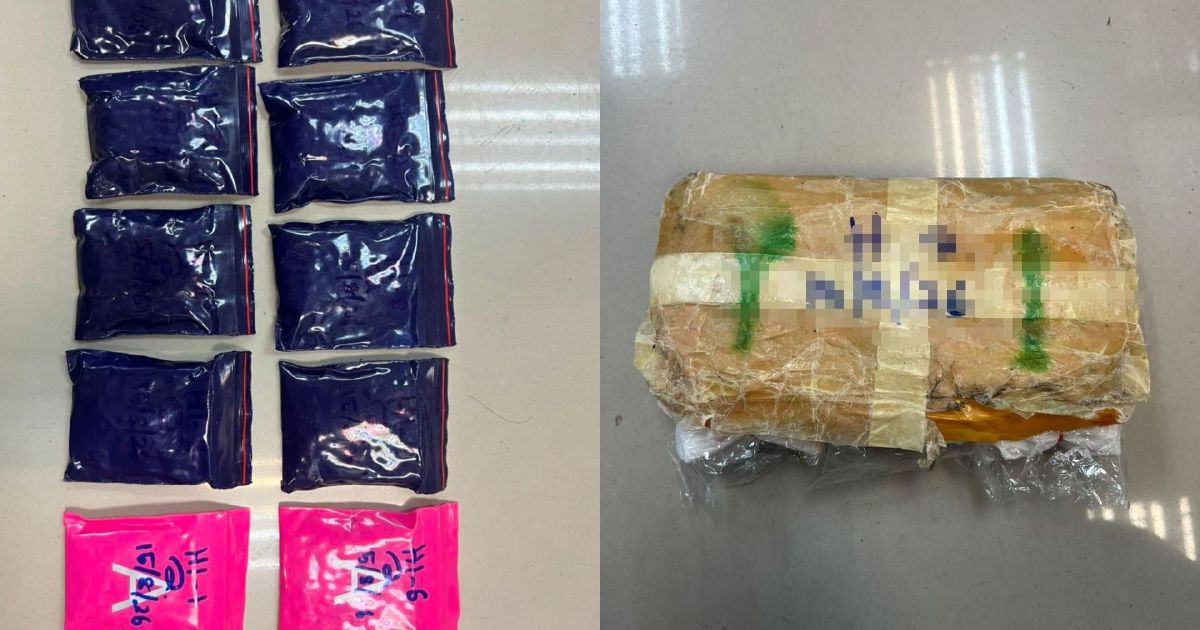
Law enforcement authorities in Kelantan have apprehended a 45-year-old Thai national carrying what police describe as a substantial quantity of methamphetamine pills following a coordinated enforcement operation in the Pasir Mas district. The arrest, conducted at Kampung Rahmat in the vicinity of Rantau Panjang, resulted in the seizure of approximately 6,000 yaba tablets with an estimated street value of RM60,000, according to police statements released following the operation.
The seizure underscores the persistent vulnerability of Malaysia's northeastern borders to drug trafficking networks that exploit porous crossing points and established smuggling corridors. Yaba, a colloquial term for methamphetamine pills typically pressed into tablet form and frequently laced with caffeine, remains one of the most heavily trafficked narcotics across the Thailand-Malaysia frontier. The consistency of such operations suggests that despite enhanced border security measures, organised supply chains continue to funnel controlled substances into Malaysian communities through networks that often involve foreign nationals acting as couriers or dealers.
The Pasir Mas jurisdiction, which encompasses territory directly adjacent to Thailand, has become a focal point for narcotics enforcement activities throughout the year. This geographic positioning makes the area simultaneously attractive to traffickers seeking rapid distribution into peninsular Malaysia and vulnerable to targeted police operations. The strategic location near Rantau Panjang—a major crossing point—means that seizures in this zone often disrupt supply chains intended for wider regional circulation rather than purely local consumption.
The apprehension reflects broader patterns of yaba distribution across Southeast Asia, where demand from recreational users and addiction chains continues to sustain production across the Golden Triangle. Yaba tablets, typically manufactured in clandestine laboratories in Myanmar and Thailand, have become the preferred narcotic among younger demographics throughout Malaysia, with seizures consistently ranking among the highest for any single drug type. The relatively compact nature of tablet form enables concealment in luggage, clothing, and vehicle compartments, making interdiction dependent on intelligence, chance discovery, or tip-offs from informants.
Police operations targeting yaba smuggling networks have intensified across Kelantan and Terengganu over recent years as enforcement agencies attempt to disrupt supply at entry points rather than pursuing only street-level dealers. The rationale reflects strategic thinking that choking supply sources upstream proves more effective than managing demand-side consequences alone. However, the continued volume of successful smuggling suggests that interdiction efforts, while valuable, capture only a fraction of substances crossing borders through means ranging from individual couriers to larger commercial shipments.
The case also highlights the employment of foreign nationals within trafficking networks, a pattern that has become increasingly apparent in major enforcement actions. Thai nationals, given geographic proximity and established networks spanning both countries, frequently feature in such operations either as delivery personnel, facilitators, or dealers. Intelligence agencies recognise that international criminal organisations deliberately recruit individuals from neighbouring countries to navigate border checkpoints and local enforcement environments.
For Malaysian authorities, managing the yaba crisis requires coordination across multiple agencies and jurisdictions. The Kelantan contingent of the Royal Malaysia Police works in concert with the Border Security Force, customs authorities, and intelligence units to maintain surveillance on known trafficking corridors. Yet resource constraints, the volume of cross-border movement in legitimate commerce, and the sophistication of smuggling techniques mean that enforcement inevitably operates on a reactive basis, responding to intelligence or random discovery rather than systematically preventing shipments.
The broader implications for Malaysia's drug policy extend beyond immediate law enforcement considerations. Yaba abuse creates cascading social consequences—addiction, criminal behaviour among users seeking funds, public health burdens, and community destabilisation—that persist long after initial seizures and arrests occur. Prevention-focused interventions targeting vulnerable populations and education campaigns aimed at reducing demand remain underdeveloped compared to enforcement investments, leaving rehabilitation and harm reduction initiatives perpetually underfunded.
Regional cooperation frameworks, including bilateral initiatives with Thai authorities and multilateral arrangements through ASEAN, theoretically provide mechanisms for coordinated action against trafficking networks. However, operational collaboration faces obstacles including jurisdictional limitations, information-sharing constraints, and divergent priorities among countries managing different aspects of the supply chain. Thailand itself confronts enormous domestic demand and production capacity, complicating its role as a potential partner in enforcement against its own nationals engaged in trafficking.
The detention of the Thai national will proceed through Malaysia's legal system, which designates trafficking in quantities exceeding the defined threshold as an offence carrying potential capital punishment. The severity of sentencing provisions reflects the gravity with which Malaysian authorities treat large-scale narcotics distribution. Conviction typically requires substantiating that the accused possessed the substance with intention to distribute rather than for personal consumption, though quantities at this level generally presume trafficking intent.
Looking forward, the sustainability of enforcement operations depends on adequate resource allocation, intelligence development, and technological innovation in detection methodologies. Border posts continue upgrading screening technologies, though throughput pressures mean comprehensive inspection of all vehicles remains impractical. The interplay between security imperatives and trade facilitation—maintaining open borders for legitimate commerce while interdicting contraband—defines the operational environment in which law enforcement must function, often with insufficient resources and competing priorities.

