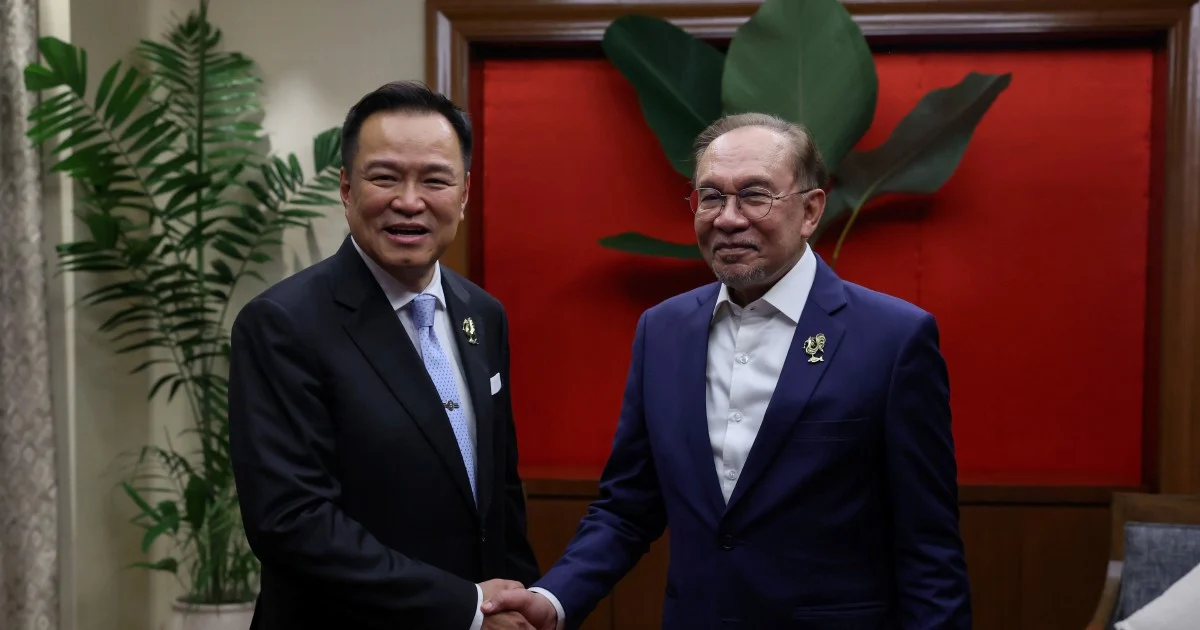
Thai Prime Minister Anutin Charnvirakul is scheduled to visit Malaysia on July 9 and 10 for high-level talks with Prime Minister Datuk Seri Anwar Ibrahim, signalling renewed momentum in bilateral engagement between the two neighbouring Southeast Asian nations. The two-day visit represents a significant diplomatic occasion, with officials anticipating that discussions will centre on transnational security challenges and mutual economic development opportunities that affect both countries and the wider region.
The scheduling of this visit reflects the priority both governments place on strengthening ties at a time when the region faces persistent cross-border security concerns. The Malaysia-Thailand border, spanning over 600 kilometres, has long presented complex challenges ranging from human trafficking and smuggling networks to arms trafficking and irregular migration. These issues have required sustained coordination between law enforcement agencies and intelligence services on both sides, making high-level political dialogue essential for establishing strategic direction and policy coherence.
Border security conversations between Bangkok and Kuala Lumpur have grown increasingly important given the rise in transnational criminal activities that exploit porous frontier areas. Officials from both nations have worked incrementally to enhance border management protocols, though operational gaps and resource constraints continue to complicate enforcement efforts. A prime ministerial visit offers an opportunity to reset governance frameworks, discuss technology-sharing initiatives for border surveillance, and align diplomatic strategies on addressing organised crime syndicates that operate across the frontier.
Beyond security matters, economic cooperation represents an equally pressing agenda item for bilateral discussions. Thailand and Malaysia maintain substantial two-way trade and investment relationships, with Thai companies operating extensively in Malaysian manufacturing, agriculture, and automotive sectors. Malaysian businesses similarly have significant interests in Thailand's industrial base, particularly in electronics and petrochemicals. The visit provides a platform for both leaders to explore deepening trade linkages, reducing tariff barriers, and facilitating smoother movement of goods and services between economies.
Regional supply chain resilience has emerged as a critical focus for Southeast Asian policymakers since global disruptions highlighted vulnerabilities in cross-border logistics and production networks. Thailand and Malaysia, as major manufacturing hubs within ASEAN, share an interest in strengthening integrated regional production systems. Discussions during the visit may address coordination on industrial policies, workforce development initiatives, and infrastructure investments that could enhance competitiveness while reducing dependence on external markets for critical components.
The timing of this visit also carries broader geopolitical significance within the Southeast Asian context. As tensions persist in areas such as the South China Sea and amid great power competition in the region, bilateral dialogue between medium-sized ASEAN economies underscores the importance of internal regional cohesion and mutual security. Thailand and Malaysia both navigate complex relationships with major powers while maintaining commitments to ASEAN centrality and the ASEAN Regional Forum framework.
Tourism and cultural exchange are likely secondary themes that could receive attention during the visit. Both nations benefit significantly from tourist flows, and the post-pandemic recovery period has seen renewed interest in promoting travel connectivity. Enhanced air services, simplified visa procedures, and joint marketing campaigns represent avenues for discussion that could yield tangible benefits for tourism industries in both countries.
Anwar Ibrahim's government has placed considerable emphasis on strengthening regional partnerships as part of its broader foreign policy agenda. The government has sought to position Malaysia as a bridge-builder within ASEAN and a responsible stakeholder in regional prosperity and stability. A successful engagement with the Thai Prime Minister reinforces these objectives while demonstrating Malaysia's capacity to manage complex bilateral relationships marked by historical sensitivities and contemporary shared interests.
For Anutin Charnvirakul, the visit represents an opportunity to reinforce Thailand's commitment to regional stability and economic integration following a period of significant domestic political adjustments. Thailand's own economic policies have increasingly emphasised regional cooperation and ASEAN leadership, particularly as the bloc moves toward deeper integration through mechanisms such as the ASEAN Comprehensive Investment Agreement and various sectoral partnerships.
The outcome of these July talks could shape bilateral relations significantly. Observers will watch for announcements regarding expanded joint working groups, enhanced law enforcement cooperation agreements, or new trade initiatives that reflect the priorities discussed. Such concrete deliverables would validate the political investment both governments have made in high-level dialogue and set momentum for sustained engagement throughout the year.
As Malaysia and Thailand continue navigating shared challenges spanning security to economic development, this bilateral visit underscores the indispensable role of direct diplomatic engagement in advancing mutual interests. For a region where cooperation increasingly determines prosperity and stability, such interactions between regional leaders remain foundational to building trust and establishing collaborative frameworks that transcend immediate bilateral concerns.

