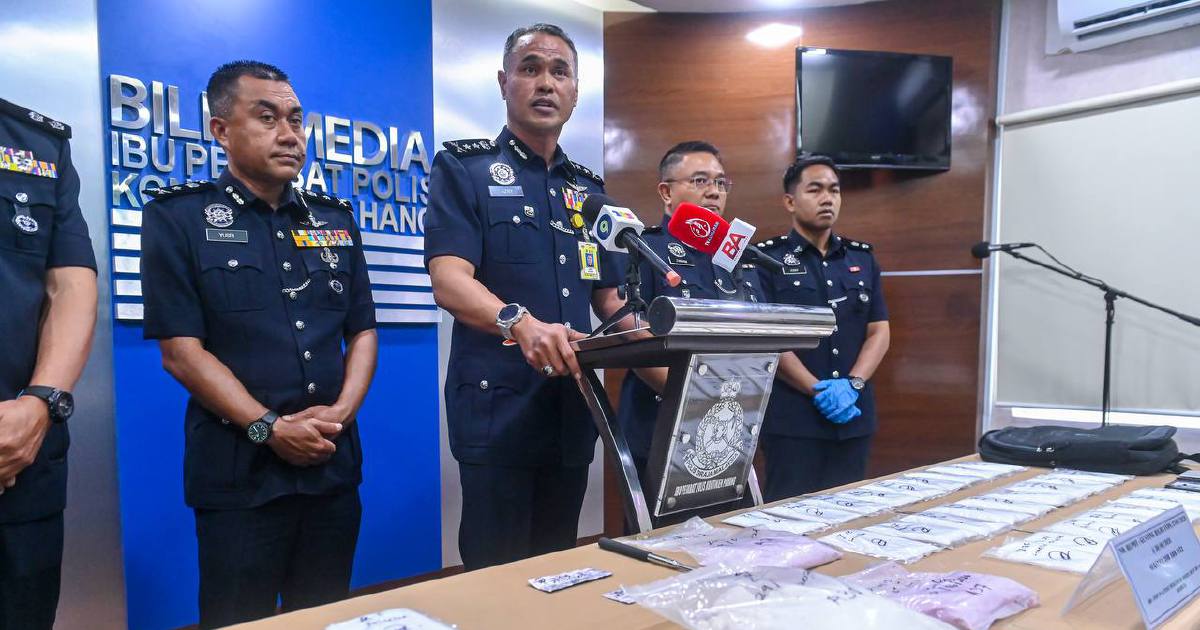
Law enforcement authorities in Kuantan have apprehended a Thai national and her local partner following a significant drug interdiction operation in Genting Permai, Bentong, where officers recovered controlled substances with a street value of approximately RM728,000. The arrests represent another breakthrough in the ongoing crackdown against organised trafficking networks operating across the Klang Valley and into neighbouring Pahang.
The two individuals are suspected of functioning as active couriers within a larger criminal organisation that has been operating distribution channels for the past three months. This operational period suggests the syndicate had established reliable logistics pathways and customer networks before law enforcement intervention disrupted their activities. The seizure indicates authorities had been monitoring the suspects' movements and coordination patterns before executing the operation.
The location of the bust in Genting Permai, a residential area in the Bentong district, highlights how trafficking organisations deliberately position their personnel in sprawling suburban zones rather than confined urban centres. Such locations offer multiple exit routes, residential camouflage, and reduced police foot traffic compared to city centres. The choice of venue also suggests the suspects were involved in an intermediate stage of distribution—neither large-scale processing nor street-level retail, but rather the critical transfer points between warehouse storage and end retailers.
Thailand's geographic proximity to Malaysia and historical labour migration patterns between both nations have created vulnerabilities within law enforcement frameworks. Thai nationals engaged in trafficking activities sometimes exploit less stringent visa controls and the perception of reduced investigative focus compared to domestic criminal networks. This case underscores the transnational character of Southeast Asian drug trafficking, where organised groups strategically recruit operatives from neighbouring countries to reduce traceability and complicate investigations.
The RM728,000 valuation places this seizure among the mid-tier busts regularly reported across Malaysia, suggesting the confiscated materials comprised either a substantial quantity of mid-purity substances or smaller volumes of higher-grade narcotics. The specific composition—whether synthetic drugs, heroin, or methamphetamine variants—typically determines both the street value calculation and the severity of charges the suspects face under Malaysia's strict drug legislation.
These arrests contribute to an evolving pattern across the Pahang region, where border proximity to Thailand and established trafficking corridors through the east coast continue generating enforcement priorities. Bentong's strategic location along the Perak-Pahang boundary and proximity to the Thai border makes it a natural transhipment point for organisations routing contraband through Malaysia's northern states toward high-demand urban markets.
The three-month operational window suggests the suspects had developed sufficient confidence and established customer relationships to sustain regular deliveries. However, such extended timelines also increase the likelihood of operational mistakes, informant intelligence, or electronic surveillance breakthroughs that typically lead to police intervention. The timing of this arrest may indicate that authorities had finally accumulated sufficient evidence to move against the broader distribution network connected to these couriers.
Police handling of the case will likely focus on extracting intelligence regarding higher-ranking members of the syndicate, supply sources, customer bases, and financial networks. Courier arrests frequently become turning points in investigations as suspects face substantial sentencing provisions and may prove willing to cooperate in exchange for reduced charges or sentences. The standard Malaysian approach involves rigorous interrogation, detailed financial forensics, and cross-referencing communication records to map the full extent of the criminal organisation.
For Malaysian readers, this case reinforces the persistent threat posed by transnational trafficking operations that have thoroughly integrated into regional logistics and transport networks. The involvement of Thai nationals specifically highlights how organised crime strategically recruits across international boundaries, a reality that complicates law enforcement coordination and requires sustained intelligence sharing between regional partners. The seizure also demonstrates that despite the volume of contraband continuously crossing Malaysian borders, strategic police operations continue yielding significant recoveries.
The arrest carries broader implications for regional security frameworks. As trafficking organisations evolve their recruitment and operational tactics, law enforcement agencies across Southeast Asia face mounting pressure to modernise investigative techniques, share intelligence more rapidly, and address the socioeconomic factors that drive individuals toward courier work. The three-month operational period suggests this particular operation may have been merely one segment of a substantially larger distribution apparatus that continues functioning elsewhere in the region.

