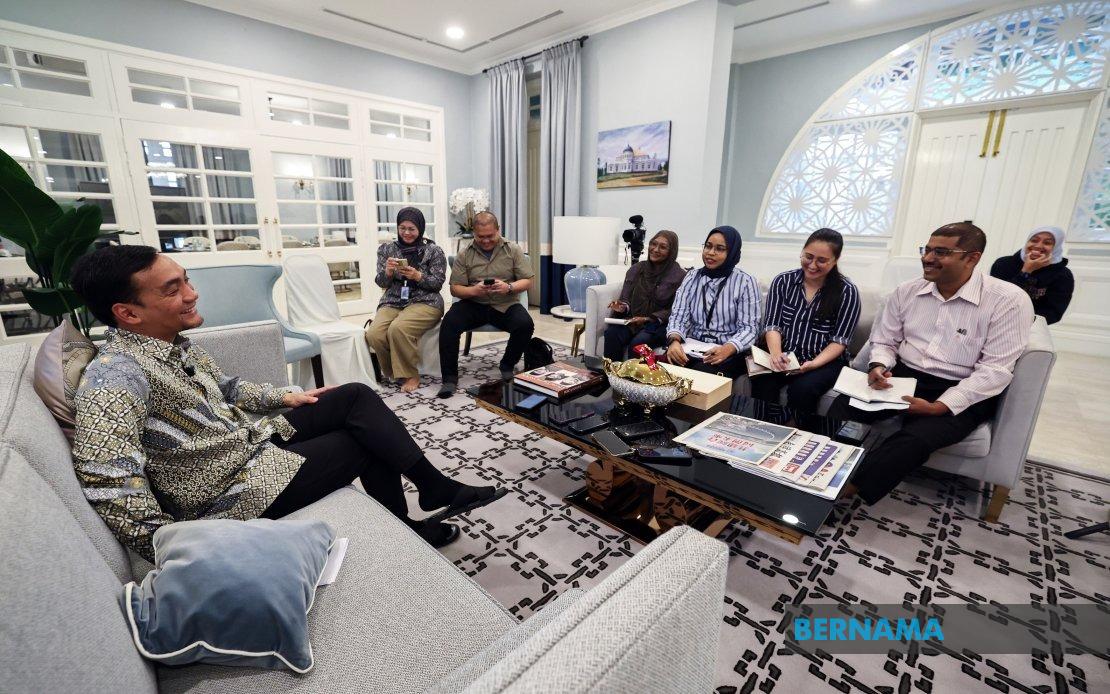
Johor Menteri Besar Datuk Onn Hafiz Ghazi has addressed the disappointment of party members excluded from the Barisan Nasional slate for the forthcoming state election, urging them to channel their energies into supporting the coalition's broader campaign objectives. Speaking at his official residence in Saujana on June 18, the Johor BN chairman framed non-selection not as an endpoint but as an opportunity to contribute through different avenues within the party machinery and at parliamentary levels.
The sentiment reflects a delicate political reality: in any electoral contest, significantly more aspirants seek nomination than seats exist, inevitably generating frustration among those passed over. Onn Hafiz's message attempts to prevent the disaffection from translating into apathy or, worse, defection to rival coalitions. By positioning alternative responsibilities as equally valuable to direct candidacy, he signals that the party structure values loyalty across multiple tiers of engagement. This approach recognises that disappointed candidates remain valuable assets if their expertise and networks are redirected rather than abandoned.
Onn Hafiz emphasised that the candidate selection mechanism remains fluid even at advanced stages, with approximately 80 per cent of selections finalised but subject to revision until official watikah letters are formally distributed. This flexibility acknowledges that circumstances change and that previous commitments have occasionally been reversed. The statement carries implicit reassurance to those still hoping for late inclusions while also tempering expectations among those effectively eliminated from consideration.
The criteria guiding candidate selection, according to Onn Hafiz, transcend narrow demographic categories. Rather than prioritising a specific age bracket, the BN leadership seeks individuals with established community standing, local connections, and genuine capacity to serve constituents effectively. This philosophy aligns with the framework previously articulated by the BN president regarding WALI candidates—those who are winnable, acceptable, and likeable. The emphasis on local rootedness over youthful dynamism or professional prestige reflects Johor's political dynamics, where community bonds and demonstrated responsiveness to local grievances frequently determine electoral outcomes more decisively than credentials alone.
Onn Hafiz clarified that candidate selection transcends individual discretion, requiring approval from BN chairman and UMNO president Datuk Seri Dr Ahmad Zahid Hamidi alongside senior party leadership. This multilayered approval structure diffuses accountability and suggests that disappointment stemming from selection decisions reflects institutional consensus rather than personalised rejection. Understanding this centralised process may help marginalised candidates contextualise their exclusion within broader strategic calculations rather than interpreting it as individual disfavour.
Young voters represent a demographic wild card in Johor's electoral equation, constituting between 20 and 40 per cent of the electorate for voters aged below 40. Onn Hafiz acknowledged this cohort's significance while expressing confidence that BN's elected representatives have meaningfully engaged younger voters. This demographic shift presents both challenge and opportunity: younger electorates frequently demonstrate less automatic loyalty to established coalitions and demand responsiveness on issues ranging from economic opportunity to climate policy. BN's ability to retain youth support in Johor will substantially influence whether the coalition maintains its traditional dominance in the state.
The Johor Menteri Besar extended voting participation appeals to all eligible citizens, including those employed in Singapore. This outreach carries particular weight given the significant Johorean workforce commuting across the causeway daily. Higher turnout typically strengthens established parties benefiting from organisational machinery, whereas lower turnout sometimes favours insurgent movements or opposition coalitions. By advocating for maximum participation, Onn Hafiz expresses confidence that BN's institutional resources and ground networks can effectively mobilise voters across geographic boundaries.
Onn Hafiz's broader message centred on his administration's track record of service delivery and its readiness to implement a second-term agenda should voters grant BN a fresh mandate. The appeal rests on performance-based legitimacy rather than ideological positioning, suggesting that BN's competitive advantage derives from demonstrated governance capacity. This framing becomes increasingly important as opposition coalitions strengthen organisational capabilities and articulate alternative policy visions, requiring governing parties to emphasise tangible development outcomes and administrative efficiency.
The July 11 election represents a crucial test for Johor's political direction. With nomination day scheduled for June 27 and early voting on July 7, the electoral calendar compresses the campaign window, potentially benefiting better-resourced coalitions capable of rapid mobilisation. For BN, maintaining Johor's status as a stronghold remains strategically vital given the state's economic significance and demographic weight within Malaysia's political calculus. The coalition's performance in Johor will offer important signals regarding its capacity to weather contemporary electoral headwinds and sustain relevance among increasingly demanding voter constituencies.