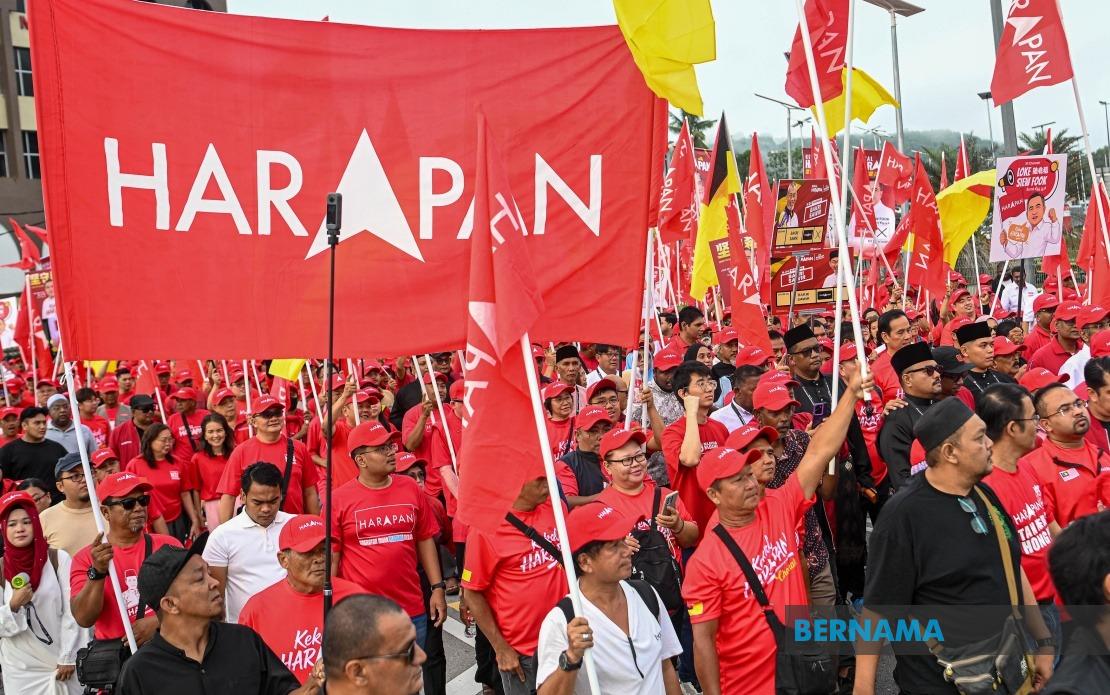
The 16th Negeri Sembilan State Election is shaping up to deliver several intensely competitive contests, with three constituencies—Pertang, Klawang and Sungai Lui—each witnessing three-way battles between major political coalitions. The nomination process concluded on July 18 in Jelebu, with Jelebu Parliamentary returning officer Abdul Rahim A Aziz announcing the final candidate lineups after reviewing all submissions at Dewan Besar Kuala Klawang.
In the Pertang seat, the race will see a direct clash between entrenched incumbent Datuk Seri Jalaluddin Alias of Barisan Nasional, challenger Mohd Umry Abdul Khois representing Pakatan Harapan, and Bersatu's Mohd Faizal Fadli Mohd Idrus. Jalaluddin's grip on the constituency has historically been robust—at the previous state election, he secured 5,634 votes to defeat Amirudin Hasan of Perikatan Nasional by a commanding margin of 2,844 votes. This substantial electoral cushion suggests the incumbent begins from a position of considerable strength, though the entry of PH and Bersatu candidates may fragment opposition support in ways that could either entrench or challenge his position depending on how voters navigate the multi-option ballot.
The Sungai Lui constituency carries a distinctive human interest dimension, as the three contenders—Datuk Mohd Razi Mohd Ali of Barisan Nasional, Zainal Fikri Abd Kadir fielding for Pakatan Harapan, and Bersatu's Mazrulhisham Abd Mansor—share a notable history as former classmates. This shared educational background may influence campaign dynamics and community engagement, adding a layer of personal political rivalry to the broader ideological competition between the three coalitions. The seat represents a genuine open contest without a clearly dominant incumbent, making it one of the more unpredictable battlegrounds in this election cycle.
Klawang presents yet another three-way competition, this one featuring incumbent Datuk Bakri Sawir of Pakatan Harapan, Bersatu's Muhammad Adib Musa, and Perikatan Nasional's Danni Rais. As the sitting representative, Bakri carries the advantages of incumbency, grassroots organization, and established constituent networks. However, the presence of both Bersatu and PN challengers suggests the anti-PH vote may be split, a dynamic that could either consolidate or erode his electoral prospects depending on the distribution of opposition support across the field.
These three-cornered fights reflect the fragmentation of Malaysia's political landscape following the country's recent coalition realignments. The presence of Bersatu—a relative newcomer to state-level competition in Negeri Sembilan—signals the party's ambition to establish electoral bridgeheads in the state. Perikatan Nasional's continued participation underscores its commitment to contesting nationwide, even where historical strength is limited. Barisan Nasional's traditional heartland base remains formidable in portions of the state, while Pakatan Harapan's incumbency in Klawang reflects its 2018 gains and efforts to consolidate support among urban and suburban voters.
For regional observers, the Negeri Sembilan contest offers insights into voter behavior in a demographically mixed state straddling Kuala Lumpur's economic orbit while maintaining its own distinct identity. The state's position as a traditional BN bastion that has nonetheless shown receptiveness to reform movements makes it a meaningful bellwether for understanding broader Malaysian electoral sentiment. The three-cornered contests particularly test whether opposition unity or opposition fragmentation better serves challenger ambitions in a state context.
The Election Commission has established July 28 as the early voting date, allowing civil servants, military personnel, and other eligible voters to cast ballots in advance. The main polling day is scheduled for August 1, giving voters just two weeks from the nomination deadline to assess the three contenders in each contested seat. This compressed timeline means campaigns must rapidly mobilize resources and messaging to reach voters in an information-dense period.
The three-cornered dynamics will substantially influence tactical voting calculations. Voters who prefer particular coalitions must weigh whether splitting opposition votes assists or hinders their preferred outcome. In Pertang, for instance, supporters of either PH or Bersatu must calculate whether their vote more effectively advances reform or Malay-Muslim interests through their respective party choice. The psychological impact of such contests—where none of the three coalitions dominates regional or state-level narrative—may also affect voter mobilization rates and turnout patterns.
These contests will also test the electoral strength of individual candidates beyond party labels. Jalaluddin's previous 2,844-vote majority in Pertang suggests that despite three-way competition, voter attachment to his personal candidacy remains substantial. In Klawang, Bakri's incumbency provides similar advantages. The Sungai Lui race, without a clearly established incumbent advantage, may hinge more substantially on candidate appeal and organizational execution.
The broader state context matters considerably. Negeri Sembilan has nine state seats in total, but these three constituencies attract disproportionate attention because of their competitive nature and the prominence of their candidates. Results in these seats will substantially influence overall state parliament composition and may signal broader shifts in regional political alignment. A strong BN showing in these three would affirm the coalition's resilience despite national headwinds, while significant gains by PH would suggest sustained urban and reform-minded support, and meaningful Bersatu breakthroughs would indicate the party's capacity to compete meaningfully in state elections beyond its traditional bases.

