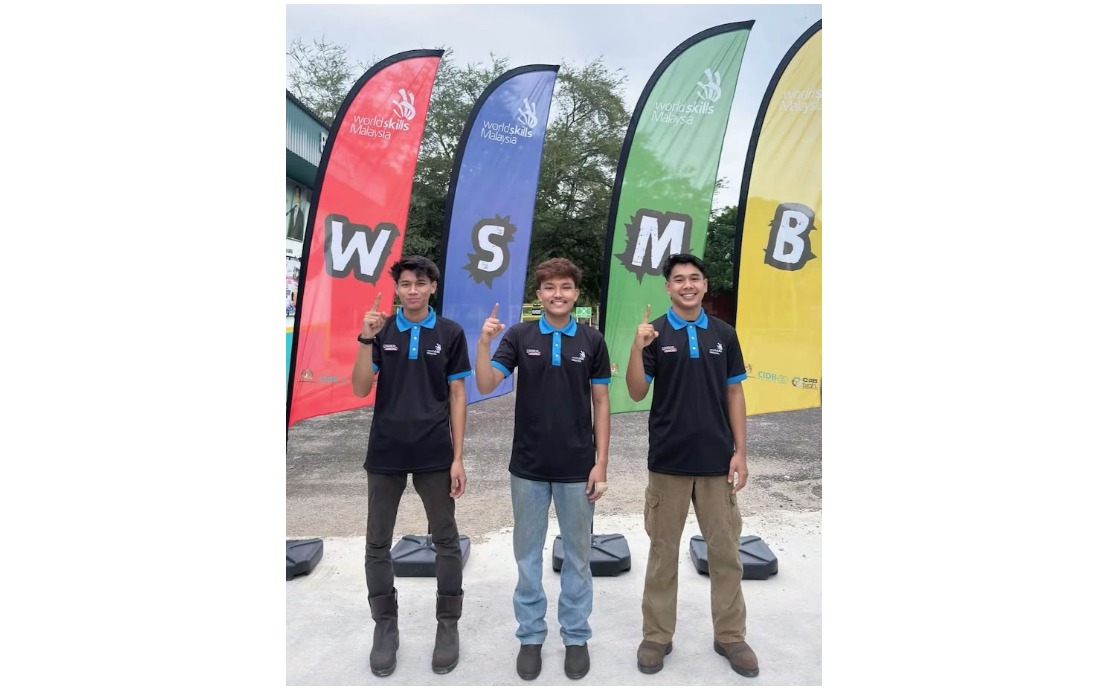
Since its inception in 1990 under the vision of former Prime Minister Tun Dr Mahathir Mohamad, WorldSkills Malaysia Belia has established itself as a cornerstone institution in building Malaysia's technical workforce. Originally known as the Malaysian Skills Champion Competition, the organisation has undergone several transformations—first becoming the Anugerah Tangan Emas Perdana Menteri from 1991 to 2006, then MySkills during 2007-2013, before adopting its current identity in 2014. These rebrandings reflect not merely cosmetic changes but substantive evolutions in approach, reflecting the shifting priorities and technological demands of Malaysia's economic landscape across four decades.
The programme's operational framework reveals a sophisticated approach to skills development. Those emerging as WSMB champions advance into intensive development and training initiatives designed to prepare them for international competition on the WorldSkills stage. This progression model ensures that Malaysia's most talented technicians receive exposure to global standards and practices, positioning them as ambassadors of domestic expertise while simultaneously elevating the country's profile in international vocational arenas. The infrastructure supporting this pipeline includes the Malaysian Construction Academy and CIDB Technologies, both accredited training facilities with infrastructure meeting international specifications.
Mohd Hafiz Dasahi, chief executive of CIDB Technologies, articulates a vision extending beyond competition. He characterises WSMB not simply as a showcase but as a talent factory manufacturing the next generation of construction industry leaders. This perspective reflects a deliberate strategic alignment: rather than treating skills development as an ancillary concern, the organisation positions it as fundamental to Malaysia's future competitive positioning. The emphasis on immediate industry applicability—that graduates prove work-ready rather than merely theoretically qualified—addresses a persistent gap in technical education across Southeast Asia, where employers frequently report skills mismatches despite credential abundance.
The welding specialisation exemplifies how WSMB translates competition into measurable professional standards. Zarulhakim Abdul Rahim, heading CIDB Technologies' welding programme, details the rigorous assessment criteria participants navigate. Evaluation encompasses measurement precision, workmanship quality, adherence to welding procedures, temporal management, problem-solving capacity, and occupational safety compliance. This multidimensional evaluation framework ensures that technical prowess alone proves insufficient; successful participants demonstrate the broader professional competencies—discipline, resilience, self-confidence—that employers across construction, manufacturing, oil and gas, energy, and maritime sectors increasingly demand.
Beyond technical mastery, WSMB cultivates intangible attributes that distinguish world-class professionals. Participants develop enhanced self-confidence through structured competition, internalize discipline through rigorous training protocols, and build resilience by confronting and overcoming technical challenges. The exposure to international technologies and processes prepares participants psychologically for workforce integration, reducing the disorientation many young technicians experience when transitioning from training to employment. This holistic development approach acknowledges that technical skills, while necessary, prove insufficient without accompanying attitudinal and professional maturity.
Industry participation constitutes another critical dimension of WSMB's effectiveness. Companies like Lincoln Energy Sdn Bhd and Vinxus Mark Sdn Bhd actively support participants through equipment provision, consumables supply, and technical mentorship. This partnership model creates training environments approximating actual industrial conditions, shortening the adaptation period once participants enter employment. Such collaboration also ensures curricula remain responsive to technological evolution and market requirements, preventing the frequent scenario wherein training institutions teach obsolescent techniques while industries urgently require different skill sets.
Participant narratives illuminate WSMB's transformative impact on individual trajectories. Ahmad Syafie Dasuki, at twenty, leveraged nearly two years of workshop experience in Terengganu before channelling that practical foundation through WSMB's structured environment. His progression exemplifies how the competition accelerates capability development among motivated individuals already engaged with their chosen field. The exposure to cutting-edge technology within WSMB's facilities elevated his skillset beyond what conventional workshop practice could provide, demonstrating how institutional investment in training infrastructure generates demonstrable returns in workforce quality.
Muhammad Fazran Md Rashid's involvement reveals another pathway: competitive participation as confidence-building mechanism. Working at a welding company in Kedah, he approached WSMB not from necessity but to systematically enhance existing competencies. His articulated goals—becoming a skilled, experienced worker—suggest how WSMB serves not only entry-level talent identification but also mid-career development for technicians seeking advancement beyond standard career progressions. This dual functionality extends the programme's societal value beyond traditional apprenticeship models.
Mohd Sahmi Irfan Sulaimi's advocacy for broader youth participation addresses a critical Malaysian skills challenge. The construction sector faces persistent labour shortages despite unemployment among youth, partly reflecting cultural biases favouring white-collar careers over technical professions. His emphasis on WSMB's networking benefits and career pathway creation targets this perception gap. By highlighting professional network development alongside immediate skill acquisition, his testimony underscores how competition participation transcends individual skill-building, instead facilitating access to industry connections that traditionally remain opaque to aspiring technicians from non-industrial backgrounds.
The alignment between WSMB's development and Malaysia's broader economic transformation cannot be overlooked. As the nation transitions toward higher-value manufacturing and renewable energy sectors, demand intensifies for welders, electricians, and allied technicians capable of working with sophisticated equipment and meeting stringent quality standards. WSMB's emphasis on current technology integration and international standard compliance positions programme graduates to contribute meaningfully to this transition, whether domestically or through skilled migration within ASEAN economies.
The partnership between training institutions, industry players, and government structures through WSMB creates positive reinforcement loops strengthening Malaysia's vocational ecosystem. Training providers receive direct feedback regarding skill gaps, industries gain confidence in graduate quality, and participants acquire validated credentials enhancing employment prospects. This tripartite alignment represents sophisticated policy implementation, ensuring that investment in skills development generates commensurate economic returns rather than producing unemployable graduates regardless of credentials obtained.
Looking forward, WSMB's three-decade trajectory demonstrates that skills development requires sustained institutional commitment rather than episodic initiatives. The programme's survival and evolution through multiple government administrations and economic cycles reflects recognition that technical workforce quality constitutes fundamental competitive necessity. For Malaysia and its Southeast Asian peers, the WSMB model offers valuable lessons: that excellence in vocational training demands modern facilities, industry partnership, rigorous assessment, and strategic positioning within international frameworks. As construction and manufacturing sectors across the region intensify competition for skilled labour, WSMB's continued emphasis on producing internationally-benchmarked professionals becomes increasingly strategic for national economic positioning.

