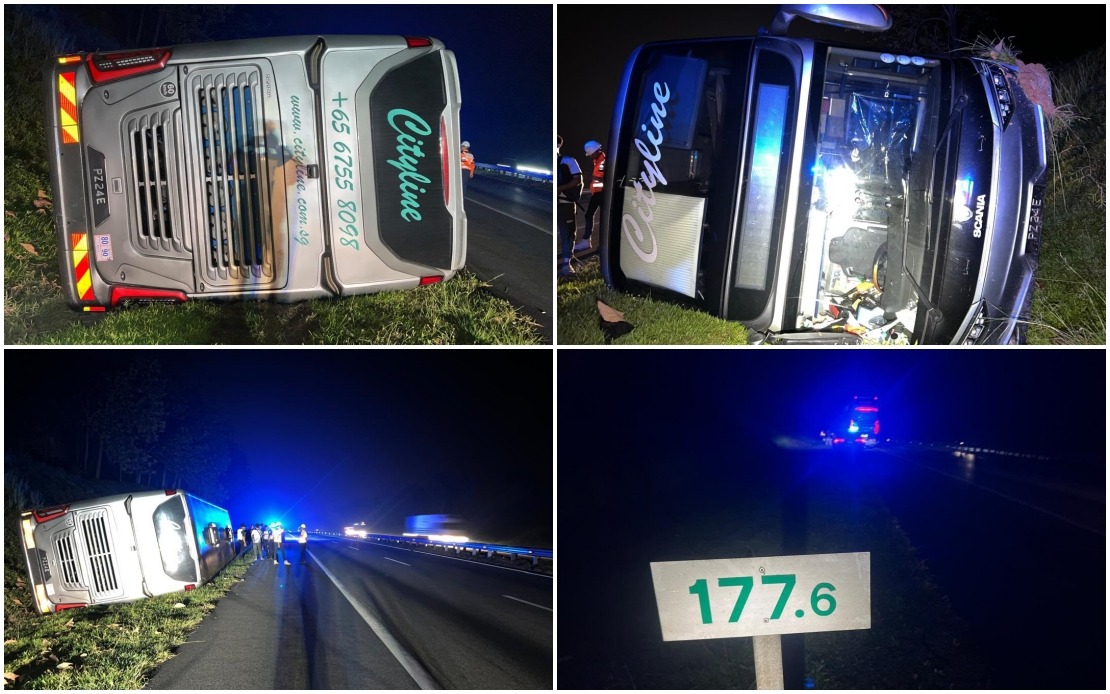
A tour bus carrying international passengers overturned on the North-South Expressway in Jasin on Wednesday morning, leaving three people injured and prompting a swift police response in what authorities described as a traffic incident triggered by sudden evasive action. The accident happened at the 177.6-kilometre marker along the expressway's northbound stretch, affecting a vehicle that had departed from Singapore bound for Kuala Lumpur with a dozen occupants on board.
According to Jasin district police chief Supt Lee Robert, emergency services received notification of the collision at approximately 5 am. The injured comprised a 59-year-old Malaysian tour guide, a 62-year-old Singaporean passenger, and a 42-year-old British national, all of whom sustained injuries to the head and lower extremities. They were transported to Jasin Hospital where medical staff attended to their conditions.
The sequence of events leading to the crash reveals a common highway scenario where split-second decisions by drivers can have serious consequences. The tour bus, which was operating with a full complement of 12 passengers and crew including the driver and guide, encountered a heavy goods vehicle ahead that had begun decelerating on the expressway. In attempting to prevent a rear-end collision, the bus driver manoeuvred sharply to the left but lost control of the vehicle in the process, causing it to drift off the roadway entirely.
This incident underscores the persistent challenges faced by transportation operators managing long-distance coach services through Malaysia's busy highway network. The North-South Expressway remains one of the country's most heavily trafficked corridors, connecting major urban centres and facilitating both domestic and cross-border tourism. Congestion, variable speeds among different vehicle types, and sudden braking events create an inherently complex driving environment where vigilance and rapid decision-making are essential.
Tour operators managing routes between Singapore and Malaysia face particular pressures given the volume of international travellers they accommodate and the extended nature of such journeys. Safety protocols, driver training, and vehicle maintenance standards become critical factors in mitigating risks. The involvement of foreign nationals in this accident highlights how such incidents can have diplomatic and tourism industry implications, particularly when visitors are injured during their time in Malaysia.
The circumstances described by police represent what traffic safety experts identify as a reactive hazard situation, where one vehicle's unexpected slowdown creates a cascade of responses by following traffic. While the bus driver's instinct to swerve rather than brake may have seemed appropriate, the outcome demonstrates the limitations of emergency manoeuvres on expressways where vehicles travel at high speeds and have less margin for recovery.
Investigations into such accidents typically examine multiple factors including weather conditions, road surface conditions, vehicle mechanical integrity, and driver fatigue or attentiveness. Early morning departures from Singapore are common for tour operators seeking to reach Kuala Lumpur during daylight hours, which may introduce driver fatigue considerations depending on when the journey commenced and how rest schedules were managed.
The expressway's design and enforcement of safety protocols form part of the broader conversation about highway safety in Malaysia. While modern expressways offer improved road standards compared to conventional routes, maintaining consistent speeds and appropriate following distances remains a challenge when heavy vehicles and coaches share the same lanes. Speed differentials between vehicle types can create the precise conditions that precipitated this accident.
For the injured passengers, recovery prospects depend on the severity of their head and leg injuries, though hospitalisation at a modern facility like Jasin Hospital provides access to appropriate trauma care. The psychological impact on other passengers who witnessed the overturn should not be overlooked, as such frightening experiences can deter international travellers from choosing coach-based transport for future visits.
This accident adds to the growing body of evidence suggesting that Malaysian highways, despite their infrastructure quality, require continued attention to driver behaviour management and vehicle safety standards. Tour bus operators operating cross-border services face regulatory oversight from multiple jurisdictions, adding complexity to compliance requirements. Enhanced pre-journey safety briefings and stricter adherence to rest-break protocols might reduce fatigue-related incidents, while improved communication systems between vehicles could help drivers anticipate traffic hazards earlier.
The incident serves as a reminder that even modern, well-maintained expressways cannot eliminate the human factors that lead to collisions. Road users, whether drivers of coaches carrying international visitors or operators of freight vehicles, bear responsibility for maintaining awareness and adjusting their driving patterns to the prevailing traffic conditions. As Malaysia continues developing its position as a regional tourism hub, ensuring the safety of international travellers during their ground transportation remains a priority for both government agencies and the private sector.

