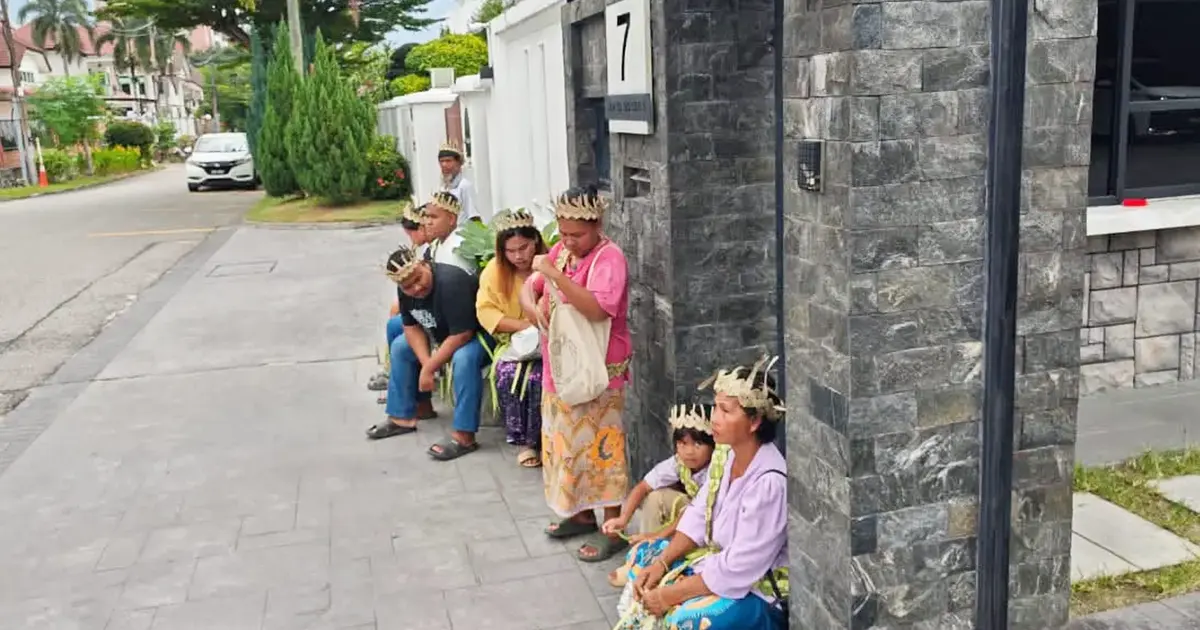
Prime Minister Anwar Ibrahim has confirmed that three Orang Asli individuals held in custody over a land dispute have been released, signalling a potential shift in how high-profile indigenous land cases are being handled at the federal level. The development reflects growing pressure on the government to address the persistent tensions surrounding indigenous land rights, a longstanding issue that has periodically surfaced in Malaysian politics and civil society discourse.
Anwar's announcement represents an intervention into a matter traditionally managed by state-level authorities, particularly the Pahang government, which holds constitutional responsibility over land administration and related affairs. The federal leadership's involvement underscores the political sensitivity surrounding indigenous land claims, especially when such disputes result in detention and attract national attention. The decision to secure the release of the three individuals demonstrates that competing claims over land stewardship and indigenous rights have become matters of sufficient public concern to warrant prime ministerial attention.
Land disputes involving Orang Asli communities have become increasingly contentious in recent years, frequently pitting indigenous claims against development projects, agricultural expansion, and administrative land classifications. The Orang Asli, Malaysia's indigenous population spread across the peninsula, have historically faced challenges in asserting customary land rights within a legal framework that often prioritises registered title and state development priorities. These communities frequently find themselves at a disadvantage when their traditional territories are claimed for development or commercial purposes, leading to confrontations that occasionally result in arrests and legal proceedings.
The Pahang government, as the territorial authority responsible for land matters in the state, maintains primary jurisdiction over how such disputes are adjudicated and resolved. State governments in Malaysia exercise considerable power over land allocation, licensing, and the management of disputes involving landholders and claimants. However, Anwar's signal that the federal government will take up the matter with Pahang authorities suggests that the issue may be receiving reconsideration at higher political levels, potentially opening pathways for resolution that balance indigenous concerns with state interests.
The detention of the three individuals raises broader questions about the legal instruments employed in land disputes and whether criminal law should be invoked when disputes are fundamentally about competing property claims. In many jurisdictions, land conflicts are primarily civil matters addressed through courts examining title and ownership evidence. The decision to detain individuals involved in a land dispute rather than resolve the underlying property question through civil channels reflects how such matters are sometimes handled in Malaysia, though this approach has faced criticism from human rights advocates and indigenous rights organisations.
Orang Asli advocacy groups and international observers have repeatedly highlighted the vulnerability of indigenous communities in land matters. The relative weakness of mechanisms protecting customary land rights, combined with the administrative advantage held by state governments and commercial interests, has created an asymmetry that frequently disadvantages indigenous claimants. Even when Orang Asli communities have legitimate historical and cultural connections to territories, converting these into legally recognised rights within Malaysia's property law system presents formidable obstacles.
The involvement of federal leadership in securing the release of these detainees may signal a recognition within government circles that such cases require more nuanced handling than purely law-enforcement approaches can provide. The federal government's willingness to engage with Pahang authorities on the matter suggests that discussions about alternative resolutions, policy adjustments, or reconsideration of the underlying dispute may be underway. This diplomatic approach contrasts with purely punitive responses and indicates an acknowledgement that detention alone does not address the substantive land claims at issue.
For Malaysia's international standing, how these indigenous land disputes are managed carries significance. Malaysia is frequently scrutinised by international human rights bodies regarding its treatment of indigenous populations and protection of their rights. Cases involving the detention of Orang Asli individuals over land matters attract scrutiny from international observers and human rights organisations, potentially affecting Malaysia's reputation for governance and justice. The federal government's intervention here may partly reflect awareness of these external perspectives and the reputational costs of purely enforcement-focused responses to indigenous land claims.
The regional context matters too. Southeast Asian nations increasingly face pressures to address indigenous and minority land rights as part of broader development and governance frameworks. Thailand, the Philippines, and Indonesia have all grappled with similar tensions between indigenous communities and state land policies. Malaysia's approach to resolving these disputes—whether through confrontation or dialogue—will influence regional perceptions of how the country manages pluralism and minority rights in an era of intensifying environmental and development pressures.
Moving forward, the escalation of the matter to Pahang authorities presents an opportunity for state-level reconsideration of the underlying land dispute. Whether this leads to substantive policy changes, negotiated settlements, or simply administrative resolutions remains to be seen. The fact that federal intervention has secured the release of detainees, however, establishes a precedent that such cases can attract higher-level political attention when public pressure and advocacy efforts are sustained. For Orang Asli communities navigating the complex terrain of land rights in Malaysia, this development suggests that persistence in publicising their claims can yield tangible results, even if long-term systemic reforms addressing indigenous land rights comprehensively remain distant.

