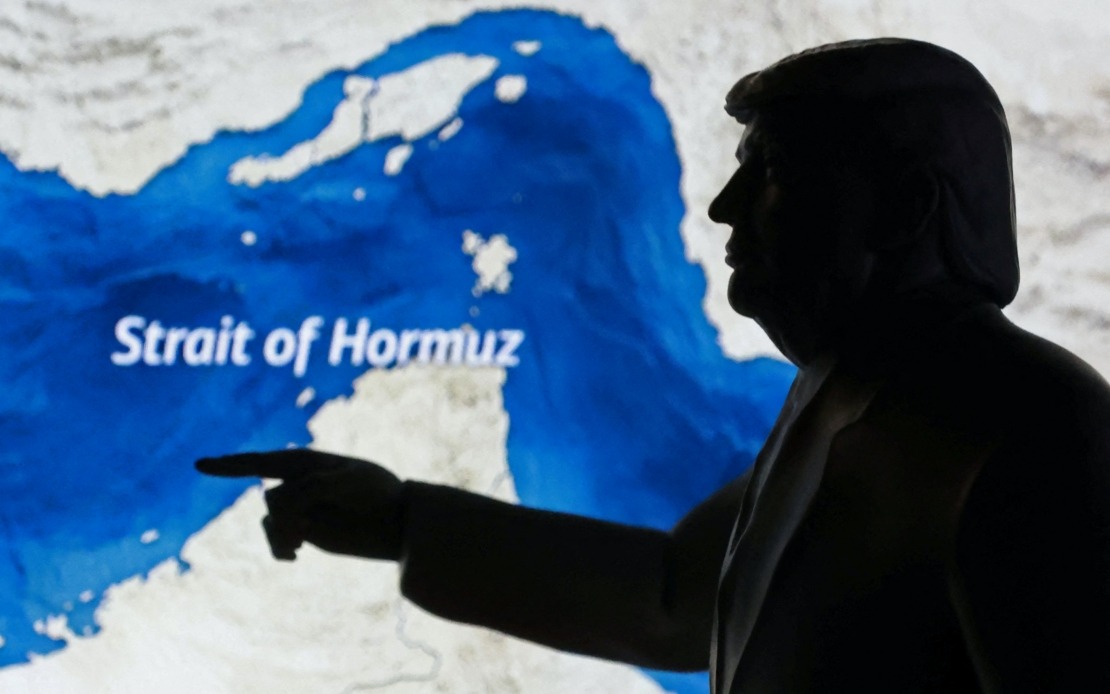
United States President Donald Trump has issued an explicit warning that America will retaliate against Iranian infrastructure for any hostile action against commercial shipping in the Strait of Hormuz. In a statement posted to his Truth Social platform on Wednesday, Trump declared that the US would destroy one bridge or power plant for each Iranian attack on vessels passing through the strategic waterway, with potential targets including facilities adjacent to or within Iran's capital city of Tehran. The proclamation represents a significant hardening of American rhetoric toward Tehran and signals an intent to respond with precision strikes against civilian infrastructure rather than military installations.
The latest threat reflects an intensifying cycle of military exchanges between Washington and Tehran that has persisted despite diplomatic efforts to de-escalate the conflict. Over the past week, American forces have conducted multiple strikes across Iranian territory, prompting Tehran to respond with its own military operations targeting what Iranian officials characterize as American military facilities and bases distributed throughout the region. This tit-for-tat pattern demonstrates the fragility of regional stability and the risks of miscalculation when two hostile powers engage in direct military action with minimal diplomatic buffer.
The context for these escalations traces back to February, when a broader conflict began consuming regional energies and resources. Nevertheless, both nations agreed in June to a Pakistani-brokered framework agreement intended to halt the deteriorating security situation and create pathways toward a comprehensive peace settlement. That agreement has evidently failed to arrest the momentum of military operations, as each side continues to take offensive action and respond to perceived provocations. The persistence of hostilities despite formal ceasefire arrangements underscores the deep structural tensions underlying the conflict and the difficulty of translating diplomatic agreements into actual behavioral change when strategic interests diverge sharply.
The Strait of Hormuz represents one of the world's most critical maritime chokepoints, through which approximately one-fifth of global oil traffic flows annually. Any disruption to commercial shipping in these waters carries immediate consequences for energy security across Asia and beyond, making Malaysian and Southeast Asian economies particularly vulnerable to supply shocks. Threats to merchant vessels operating in the strait directly threaten the economic interests of regional trading nations, including Malaysia, which depends on stable energy supplies and unimpeded maritime commerce for industrial production and exports.
Trump's explicit naming of specific infrastructure categories—bridges and power plants—alongside his invocation of potential strikes near Tehran itself represents an escalatory shift in rhetorical positioning. By specifying civilian infrastructure rather than military targets, the threat implies willingness to impose broader societal costs on Iran's civilian population through disruption of essential services. The inclusion of facilities within Tehran's metropolitan area further signals that American retaliation would extend to Iran's political and administrative heartland, potentially affecting millions of civilians who depend on stable electricity and transportation networks.
The sustainability of such a tit-for-tat escalation strategy remains deeply questionable. Each American strike creates domestic political pressure within Iran for leadership to demonstrate strength through military response, while each Iranian attack justifies further American military action in the eyes of the American public and Congress. This dynamic creates a self-reinforcing cycle where both sides feel compelled to respond to provocation, making peaceful resolution progressively more difficult. The Pakistani-brokered framework agreement, despite its existence on paper, has proven unable to interrupt this momentum.
For regional observers, particularly in Southeast Asia, the escalating US-Iran tensions create multiple policy dilemmas. Malaysia and other ASEAN nations maintain economic relationships with both the United States and Iran, and wider regional conflict disrupts trade flows affecting all regional economies. Additionally, the destabilization of the Middle East through military conflict generates refugee flows, extremist recruitment opportunities, and sectarian tensions that eventually touch Southeast Asia through migrant populations and transnational militant networks. The security implications extend far beyond the Persian Gulf.
The maritime dimensions merit particular attention from Southeast Asian policymakers. Commercial shipping in the Strait of Hormuz increasingly carries insurance premiums reflecting heightened risk, costs that are ultimately borne by consumers and importers throughout Asia. Any actual disruption to oil flows through the strait would immediately trigger energy price spikes affecting Malaysian manufacturing competitiveness and household electricity costs. The implicit threat to commercial vessels also raises questions about freedom of navigation—a principle Southeast Asian nations champion given their dependence on unobstructed maritime trade routes.
Trump's public threat also reveals something about contemporary crisis management and deterrence theory. By explicitly stating consequences beforehand, he hopes to establish a credible commitment to retaliation that might deter Iranian action preemptively. However, such public declarations also eliminate ambiguity and flexibility that negotiators might otherwise exploit. Iranian leadership, having heard the explicit warning, now faces domestic pressure to either accept the humiliation of restraint or demonstrate resolve through military action, knowing full well that response will trigger the promised American retaliation. Public threats, while appearing strong domestically, often constrain diplomatic off-ramps.
The broader question facing international observers is whether the June framework agreement represents merely a temporary pause in a larger conflict trajectory, or whether both sides genuinely intend to move toward sustainable peace. The continued military operations and escalating rhetoric suggest the former remains more likely. Until underlying disputes—including sanctions, regional influence, and Israel's position in Middle Eastern affairs—receive genuine resolution, military exchanges will likely continue punctuating declared ceasefires.
For Malaysia and Southeast Asia, vigilant monitoring of US-Iran tensions should remain a foreign policy priority. Regional economic interests in stable energy supplies and unimpeded maritime commerce require sustained attention to Middle Eastern developments, even as ASEAN members avoid direct military involvement in regional conflicts. Continued escalation threatens costs that extend far beyond the immediate combatants.

