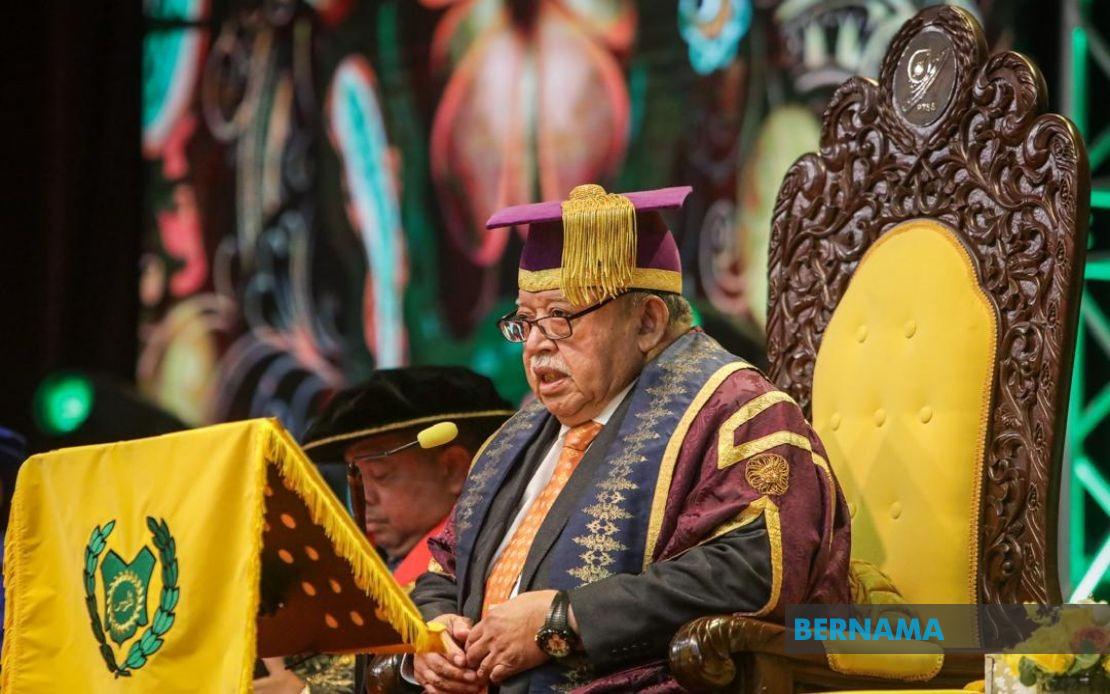
The Raja of Perlis, Tuanku Syed Sirajuddin Jamalullail, has underscored the critical importance of technical and vocational education in developing a workforce with the skills and creativity needed to propel Malaysia forward in an increasingly complex global economy. Speaking at the 2026 Northern Zone Polytechnic and Community College Convocation Ceremony at Politeknik Tuanku Syed Sirajuddin in Arau, the Ruler contended that TVET institutions occupy a strategic position in preparing graduates to meet unprecedented economic and technological challenges that traditional academic pathways alone cannot adequately address.
The transformation of work and industry through emerging technologies presents both opportunity and risk for Malaysian policymakers and educators. Artificial intelligence, robotics, automation, and widespread digitalisation are fundamentally reshaping employment structures across every sector of the economy. Rather than viewing these developments as threats, the Raja framed them as catalysts requiring educational systems to evolve in tandem. This perspective carries particular weight in Southeast Asia, where countries compete fiercely for manufacturing investments and digital economy participation. Malaysia's polytechnic and community college network must therefore function as a responsive ecosystem that equips students not merely with technical competencies, but with the adaptability to evolve as labour markets shift beneath their feet.
Central to the Ruler's message was the proposition that innovation extends far beyond theoretical brainstorming or laboratory experimentation. True innovation demands the practical capacity to transform conceptual thinking into tangible solutions that address real-world problems facing communities and the economy. This distinction matters enormously for TVET programmes, which have historically emphasised hands-on learning and direct application. By reinforcing that innovation must serve societal benefit rather than existing in abstraction, the Raja connected vocational training to broader national development objectives and reinforced the dignity of technical careers within Malaysia's social hierarchy, where such paths have sometimes been perceived as secondary to university education.
The convocation ceremony itself reflected the scale of Malaysia's TVET sector. The event, spanning from August 3 to 9, brought together 6,104 graduates from polytechnics and community colleges serving the northern region encompassing Perlis, Kedah, and Penang. This cohort represents a substantial annual contribution to the professional workforce across these states, entering employment in fields ranging from engineering and information technology to hospitality and healthcare. The geographical concentration of the ceremony underscores how TVET institutions serve as regional anchors for skills development and economic mobility, particularly important in areas outside Kuala Lumpur and Selangor where degree-granting universities are less abundant.
EquallySignificant in the Ruler's remarks was his deliberate emphasis that technical excellence alone remains insufficient for meaningful contribution to society. Graduates, he insisted, must anchor their professional capabilities in strong ethical foundations encompassing honesty, integrity, and trustworthiness. This moral dimension reflects growing recognition across Malaysian leadership that the nation's development depends not only on technical prowess but on the character of individuals wielding that expertise. In fields such as artificial intelligence and data management, where technological power intersects with individual choice, ethical grounding becomes operationally critical rather than merely aspirational. The Ruler's integration of patriotic duty alongside professional excellence also signals that Malaysian TVET graduates are positioned as nation-builders rather than merely skilled workers available for hire by any employer.
The conferring of the Director-General of Polytechnic and Community College Education Award upon Teerti Ganapathi Rao, a 22-year-old Digital Technology diploma graduate, exemplified the calibre of talent emerging from the polytechnic system. Recognition of high-performing graduates in fields such as information and communication technology sends clear market signals about which skill areas Malaysia prioritises as it navigates digital transformation. The prominence accorded to digital technology within the convocation ceremony reflects the urgent need for personnel capable of managing the technological infrastructure underlying modern economies, from cloud computing to cybersecurity to artificial intelligence implementation.
For Malaysian policymakers, the Raja's intervention in the TVET discourse carries particular weight given the role of royal institutions in shaping national priorities. By publicly championing technical education as foundational to national competitiveness rather than peripheral to it, the Ruler provided authoritative validation that TVET pathways deserve equal esteem and investment as university-track education. This messaging proves especially valuable in a society where educational prestige hierarchies remain deeply ingrained and where parents often view polytechnic admission as consolation rather than optimal outcome.
The Northern Zone convocation also reflects deliberate decentralisation of skills development beyond the Klang Valley. Politeknik Tuanku Syed Sirajuddin, serving the northern region, demonstrates how TVET infrastructure can be geographically distributed to serve local labour markets and reduce brain drain from peripheral states. When graduates complete training in their home regions and secure employment locally, they contribute to economic diversification beyond Kuala Lumpur and reduce pressure on housing and infrastructure in overstretched urban centres.
Looking forward, the intersection of TVET development with technological disruption will likely define Malaysian economic resilience over the coming decade. As automation eliminates routine technical tasks, demand will intensify for graduates capable of higher-order problem-solving, innovation, and adaptability. The Raja's emphasis on nurturing innovation culture within polytechnic environments suggests recognition that TVET must evolve beyond transmitting static skill sets toward cultivating dynamic capability for continuous learning and reinvention. This represents a significant conceptual shift within technical education toward outcomes-based frameworks emphasising competency, critical thinking, and creative application rather than rote mastery of predetermined procedures.
The broader context underpinning this convocation ceremony extends to Southeast Asia's competitive positioning in global supply chains and digital economies. Thailand, Vietnam, and Indonesia all invest substantially in technical education as part of industrial upgrading strategies. Malaysia's commitment to TVET quality and innovation capacity directly influences its ability to attract advanced manufacturing and digital services investment against regional competitors. The Ruler's public affirmation of TVET importance thus carries economic implications extending beyond individual graduate prospects to encompass national competitive strategy in increasingly contested regional markets.

