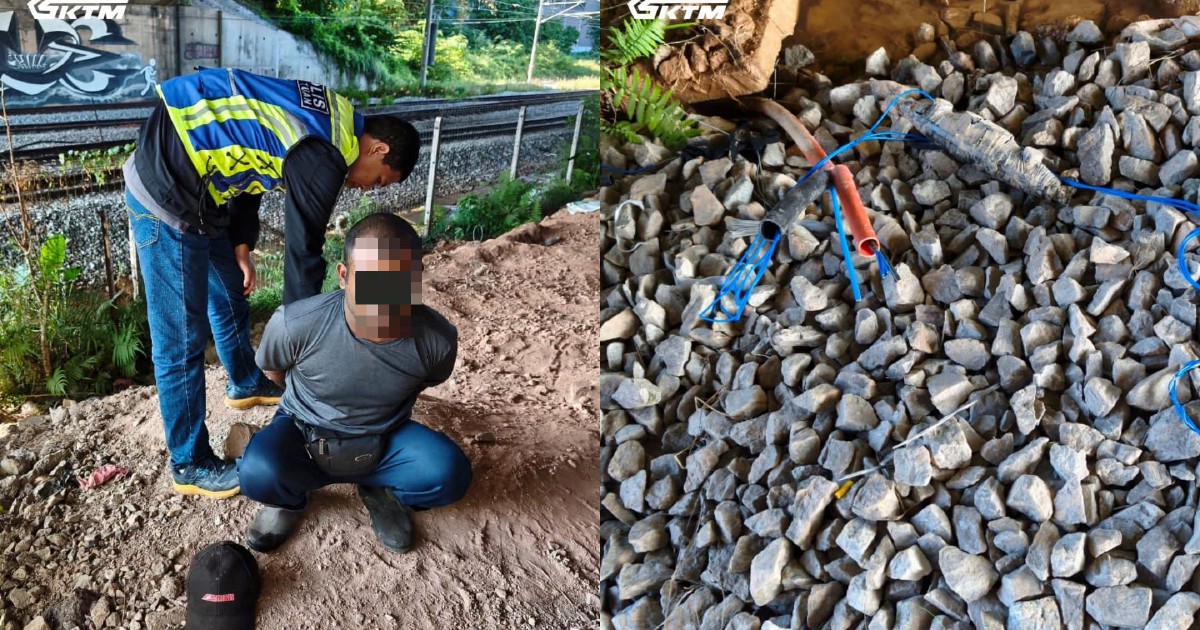
Officers from Keretapi Tanah Melayu Bhd (KTMB) have made two arrests following an incident in Shah Alam, where suspects were caught attempting to steal railway cables. The auxiliary police force, which plays a crucial role in safeguarding the national railway operator's infrastructure and passenger safety, apprehended the individuals red-handed during the operation yesterday.
The incident highlights an escalating problem that has plagued Malaysia's railway network, where thieves regularly target copper and other valuable materials used in cable installations. These materials fetch competitive prices in the scrap metal market, making railway lines an attractive target for organised theft rings and opportunistic criminals alike. The cables serve critical functions in railway operations, including power distribution, signalling systems, and communication networks that are essential for train movements and passenger safety.
Railway cable theft has emerged as a persistent challenge for KTMB across its nationwide network. Stolen cables often leave sections of track without proper power supply or signalling capabilities, potentially disrupting train schedules and compromising safety protocols. The financial cost of replacing damaged infrastructure runs into millions of ringgit annually, expenses that ultimately affect the operator's operational efficiency and service quality for commuters relying on the rail system for daily transport.
The Shah Alam detention represents one of numerous similar incidents reported across Selangor and other states in recent years. Railway theft typically occurs during off-peak hours or in less-patrolled sections of track, though the timing and location of this particular case suggest that KTMB's auxiliary police patrols had intensified monitoring in the area. The agency regularly coordinates with federal police and local authorities to enhance security measures and increase the likelihood of catching perpetrators in the act.
Organised cable theft operations often involve multiple participants with different roles—lookouts, cutters, transporters, and buyers. The involvement of two suspects in this instance indicates a coordinated attempt rather than random scavenging, a distinction that may influence the severity of charges prosecutors pursue. Investigation teams typically examine whether the individuals were acting independently or as part of a larger syndicate with connections to scrap metal dealers and black market networks.
The auxiliary police force, comprising uniformed security personnel employed directly by KTMB, maintains constant vigilance across railway stations, rail yards, and trackside areas. Their presence has proven instrumental in deterring casual theft and apprehending suspects engaged in planned operations. The force's familiarity with railway infrastructure and schedules provides advantages that civilian security arrangements might not achieve, enabling rapid response to incidents and detailed knowledge of vulnerable sections.
For Malaysian commuters and businesses dependent on reliable rail transport, incidents of this nature carry broader implications. Frequent theft-related disruptions contribute to service delays, reduced frequency of train operations, and passenger frustration with rail network reliability. The cumulative effect of repeated infrastructure damage can discourage ridership and affect KTMB's revenue generation, creating a cycle that impacts maintenance budgets and long-term service expansion plans.
The arrests underscore the importance of public cooperation in combating railway crime. Many communities adjacent to rail lines have become partners in security efforts, reporting suspicious activities and providing intelligence to authorities. Information from vigilant residents and commuters has frequently enabled police and KTMB security to intercept theft attempts before significant damage occurs. Public awareness campaigns continue to emphasise the serious consequences of railway infrastructure theft and its detrimental effects on service reliability.
From a broader security perspective, the accessibility of railway infrastructure remains challenging to manage comprehensively. The sheer length of railway corridors spanning thousands of kilometres means that complete physical coverage remains impractical. KTMB has explored technological solutions including surveillance camera installations, motion sensors, and improved lighting in high-risk areas, alongside traditional patrol strategies. The combination of technology and personnel-based security measures has proven more effective than either approach alone.
The incident in Shah Alam will likely result in formal charges being filed against the two arrested individuals. The prosecution may pursue charges related to theft of railway property, trespassing on railway premises, or conspiracy depending on evidence gathered during investigation and the extent of damage or theft actually accomplished. Penalties for railway-related crimes have been tightened in recent years to reflect the serious nature of such offences.
Moving forward, KTMB and law enforcement agencies face the ongoing challenge of balancing security investment with operational costs. As the value of scrap metals fluctuates, the economic incentive for theft rises and falls, making it difficult to predict and prevent all incidents. Continued cooperation between KTMB, police, local authorities, and the general public remains essential to maintaining railway infrastructure integrity and ensuring safe, dependable service for Malaysia's travelling public.

