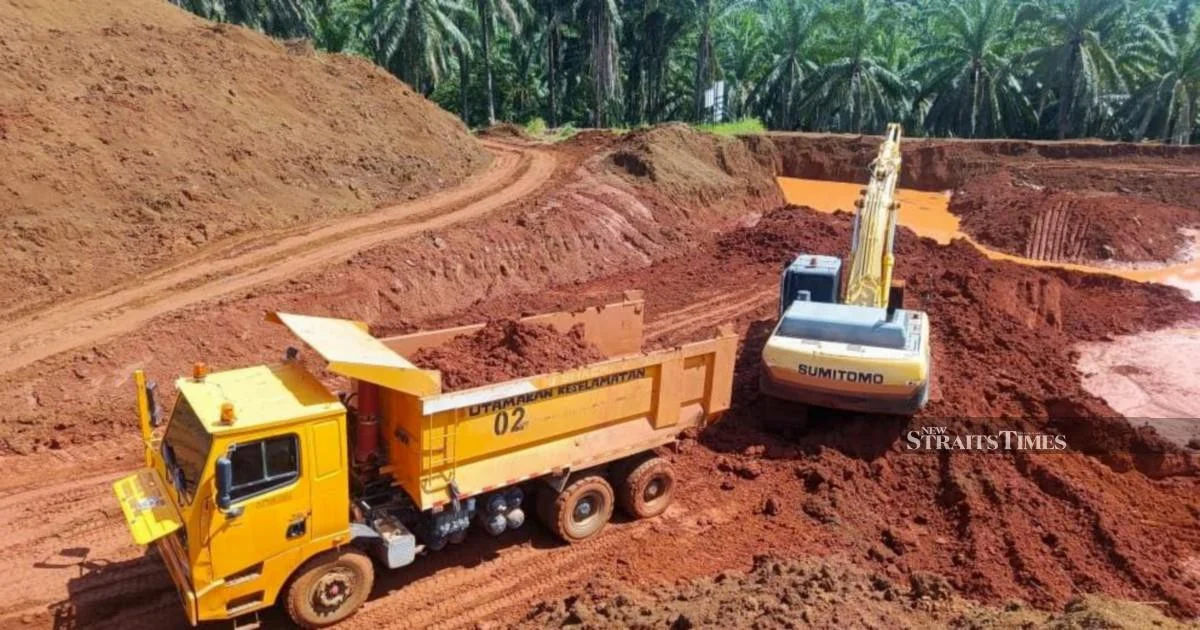
Authorities in Terengganu have arrested two individuals suspected of orchestrating an illegal silica sand transfer scheme in Marang. The operation, conducted by the General Operations Force (GOF), resulted in the seizure of heavy machinery valued at RM1.8 million, signalling a significant crackdown on illicit sand extraction and smuggling activities in the state.
The arrests mark the latest intervention by enforcement agencies against the thriving black market in natural resources across the state. Silica sand, a mineral essential for glass manufacturing, foundry operations, and construction applications, has become an increasingly targeted commodity for illegal extraction due to rising demand from regional industrial sectors and lucrative overseas markets. The high-value nature of the operation underscores how organised illegal mining has evolved into a substantial criminal enterprise affecting Malaysia's resource management.
The seizure of RM1.8 million in equipment demonstrates the scale at which these operations function. Such machinery—typically including excavators, loaders, and transport vehicles—forms the backbone of industrial-scale sand extraction. The capital-intensive nature of this equipment suggests the suspects were not engaged in petty illegal mining but rather as part of a coordinated network capable of extracting and distributing significant volumes of silica sand to buyers, potentially including legitimate manufacturers seeking cheaper illicit supplies.
Silica sand theft and illegal transfer have emerged as persistent challenges across Malaysia's coastal states. Terengganu, blessed with abundant reserves along its eastern seaboard, has been particularly vulnerable to such operations. The mineral's widespread industrial application creates steady demand, while porous enforcement capacity and challenging terrain complicate detection. Cross-border smuggling to neighbouring Kelantan and Pahang, and potentially further afield, has made this a regional concern requiring coordinated law enforcement responses.
The role of the GOF in the arrests highlights the involvement of paramilitary security forces in combating resource crimes—a reflection of how seriously authorities are treating organised environmental and economic crimes. The GOF, trained in operations and tactical responses, brings different capabilities than standard police units, suggesting these operations may involve confrontational elements or occur in locations requiring specialised deployment.
Beyond the immediate criminal charges, illegal sand extraction carries significant environmental consequences. Unregulated mining destabilises riverbanks and coastal areas, accelerates erosion, damages aquatic ecosystems, and threatens water quality in affected regions. Communities reliant on these waterways for fishing, irrigation, and fresh water face indirect harm. The ecological footprint of such operations often remains invisible in crime statistics but represents a hidden cost to Malaysian society.
The timing of this arrest reflects broader enforcement momentum against illegal mining in Malaysia. Authorities have increasingly recognised that tackling resource crimes requires not only reactive arrests but also intelligence-led investigations targeting networks and supply chains. The specificity of charging two individuals in connection with transfer operations—rather than merely extraction—suggests investigators are mapping how illegal materials move through distribution channels, potentially leading to further upstream and downstream prosecutions.
For industrial operators in the glass, construction, and foundry sectors across Southeast Asia, the proliferation of illegal silica sand has complicated compliance. Legitimate manufacturers may find themselves undercut by competitors utilising cheaper illicit supplies, creating pressure to cut corners. The arrest demonstrates authorities' intent to disrupt this market distortion and protect businesses operating within regulatory frameworks.
The investigation underlying these arrests likely involved coordination between multiple agencies. Intelligence gathering on machinery movements, financial transactions, and personnel networks typically precedes such operations. The precision of the seizure—targeting specific high-value equipment—indicates investigators had developed actionable intelligence about when and where the transfer would occur, rather than stumbling upon the operation opportunistically.
Looking forward, these arrests carry implications for resource governance across Terengganu and neighbouring states. As regional economic competition intensifies and industrial demand for raw materials grows, illegal extraction networks will likely adapt tactics and locations. Enforcement agencies must similarly evolve their strategies, potentially increasing cooperation with private sector stakeholders, improving community reporting mechanisms, and investing in technology-enabled monitoring of extraction sites.
The case also underscores broader challenges in regulating Malaysia's extractive industries. While formal concessions exist for legitimate sand mining, oversight of licensed operations and surveillance of transition between extraction and sale remain imperfect. Strengthening traceability systems—requiring documented provenance for all silica sand sales—could reduce opportunities for laundering illegally-sourced material through legitimate supply chains.
For residents and authorities in coastal Terengganu, the arrest offers temporary relief but raises underlying questions about sustainable resource management. The underlying demand that drives illegal operations will persist unless supply-side management improves and enforcement remains consistent and credible. Deterrence requires not only visible arrests but also prosecution outcomes that impose meaningful penalties, signalling that the risk-reward calculation favours lawful conduct over illicit extraction.

