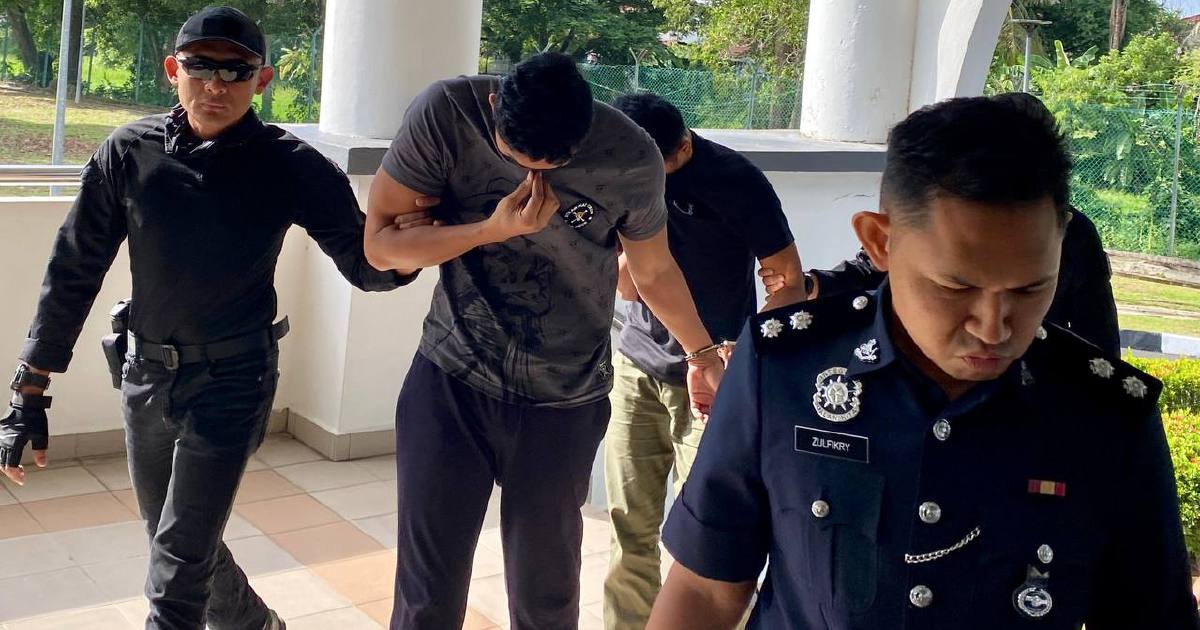
At the Sessions Court in Alor Setar, two members of the Malaysian armed forces appeared before a judge to face charges stemming from their alleged involvement in human trafficking. The accusations relate to an incident in which three nationals from Myanmar were allegedly assisted in crossing the Malaysia-Thailand frontier without proper documentation or authorisation. This case highlights ongoing concerns about border security and the vulnerability of migrants from conflict-affected regions to exploitation by those in positions of authority.
The involvement of military personnel in smuggling operations underscores a troubling pattern observed across Southeast Asia, where individuals tasked with enforcing border regulations sometimes become complicit in the very activities they are meant to prevent. The proximity of soldiers to international boundaries places them in positions where they can facilitate illegal crossings, often motivated by financial incentives that far exceed their regular military compensation. In Malaysia's context, with its extensive maritime and land borders, such cases point to systemic challenges in maintaining institutional integrity within security forces.
Myanmar has experienced protracted conflict and political instability since the 2021 military coup, driving unprecedented waves of displacement. Thousands of Burmese citizens have fled to neighbouring countries seeking refuge from violence, persecution, and economic collapse. Malaysia, despite not being a signatory to the 1951 Refugee Convention, hosts one of the largest populations of undocumented Myanmar nationals in Southeast Asia, estimated at over 100,000 individuals. Many of these migrants employ smuggling networks to enter the country, facing dangerous journeys through dense jungles and treacherous waters.
The role of border enforcement personnel in facilitating these crossings raises questions about recruitment, vetting, and oversight within Malaysia's military establishment. Soldiers stationed in remote frontier areas may encounter unique pressures and temptations, from economic hardship to direct inducements offered by trafficking syndicates. The scale of smuggling operations suggests involvement extending beyond isolated incidents, potentially involving organised networks that recruit uniformed personnel as essential components of their logistics. Understanding these dynamics is crucial for developing effective countermeasures that address both individual misconduct and structural vulnerabilities.
Trafficking and smuggling along the Malaysia-Thailand border constitute distinct but overlapping challenges. While smuggling focuses on facilitating illegal border crossings, human trafficking involves exploitation through coercion, deception, or abuse. Myanmar migrants, regardless of how they enter Malaysia, frequently encounter exploitation once within the country—through debt bondage, wage theft, and confinement. The involvement of security personnel in initial smuggling operations can create pathways into trafficking networks, leaving migrants exposed to further abuse throughout their stay.
This case arrives amid renewed international scrutiny of Malaysia's migration management practices. The country has faced criticism from human rights organisations regarding detention conditions, forced deportations, and inadequate protections for vulnerable migrants. NGOs working with Myanmar communities highlight how lack of legal status forces migrants into informal employment sectors with minimal regulatory oversight or labour protections. The military personnel charged today represent only the visible layer of what remains an extensive underground economy servicing undocumented populations.
For Malaysia, strengthening border integrity and military discipline represents a strategic priority with security and humanitarian dimensions. Corruption within enforcement agencies enables not only human smuggling but also drug trafficking and arms smuggling—threats with direct implications for national security. Conversely, addressing root causes of irregular migration requires acknowledging the genuine humanitarian crises driving exodus from Myanmar. The country must balance enforcement with compassion, recognising that many migrants are fleeing genuine persecution rather than economic opportunity alone.
The Sessions Court proceedings will examine evidence regarding the soldiers' actions, their knowledge of the migrants' status, and their apparent motivations. If convicted, the military personnel face penalties established under relevant smuggling and immigration legislation. Beyond individual accountability, however, this case should prompt institutional reflection within the armed forces regarding recruitment standards, ethical training, and supervision mechanisms in border postings. Units stationed along the frontier require robust command oversight and periodic rotation to minimise opportunities for corrupt relationships with smuggling syndicates to develop.
For the three Myanmar nationals involved, their immediate situation remains unclear from available information. If they have lodged asylum claims, Malaysia's immigration authorities typically place them in detention pending processing or eventual removal. The country's Immigration Act provides limited protections for irregular migrants, and asylum seekers lack formal recognition or substantive rights. Their eventual outcome—whether deportation or regularisation—will depend on multiple factors including their national status documentation and willingness to cooperate with authorities investigating the smuggling operation.
Regionally, the case reflects broader trends affecting Southeast Asia's borders. Thailand, Myanmar, and Malaysia form a migration triangle where conflict in Myanmar generates movement across multiple borders simultaneously. Cambodia, Vietnam, and Laos also receive Myanmar migrants, often through similarly precarious routes. Coordinated regional approaches addressing both trafficking prosecution and victim protection remain underdeveloped despite shared challenges. Malaysia's response to these cases influences broader regional norms regarding enforcement intensity and institutional accountability.
Moving forward, Malaysia should consider strengthening cross-border cooperation with Thai authorities to disrupt smuggling networks operating along their shared frontier. Intelligence sharing regarding trafficking routes and personnel recruitment can improve interception rates before migrants reach Malaysian territory. Simultaneously, the government might explore regularisation pathways for long-term Myanmar residents, reducing reliance on dangerous smuggling services while enhancing labour market oversight and migrant welfare monitoring. These approaches, combined with prosecution of corrupt officials like those currently before the courts, represent components of comprehensive migration management rather than enforcement alone.


%22%2F%3E%3C%2Fpattern%3E%3C%2Fdefs%3E%3Crect%20width%3D%22100%25%22%20height%3D%22100%25%22%20fill%3D%22url(%23ph6fyvg)%22%2F%3E%3Crect%20width%3D%22100%25%22%20height%3D%22100%25%22%20fill%3D%22url(%23ph6fyvp)%22%2F%3E%3Ctext%20x%3D%2250%25%22%20y%3D%2250%25%22%20text-anchor%3D%22middle%22%20dominant-baseline%3D%22central%22%20fill%3D%22rgba(255%2C255%2C255%2C0.95)%22%20font-family%3D%22Georgia%2C%20'Times%20New%20Roman'%2C%20serif%22%20font-weight%3D%22700%22%20font-size%3D%22320%22%20letter-spacing%3D%22-0.02em%22%3EOnn%3C%2Ftext%3E%3C%2Fsvg%3E)