Malaysia's political landscape appears poised for significant realignment as Umno and PAS signal openness to rekindling their alliance despite a fractured history between the two Malay-Muslim parties. According to Puad Zarkashi, the pair remain capable of forging a workable partnership centred on their immediate political objectives, marking a notable shift in rhetoric surrounding potential coalition arrangements ahead of anticipated political developments.
The assertion from Puad Zarkashi that both parties can overcome previous disagreements reflects a pragmatic approach to Malaysian politics, where electoral mathematics and parliamentary calculations often supersede ideological purity. Umno, facing pressure to reassert its dominance within the Malay political base after electoral setbacks, appears willing to consider alliances it previously dismissed. PAS, meanwhile, has grown increasingly vocal about its desire to participate directly in federal government, a position that differs markedly from its current posture as a supporting partner to the current coalition.
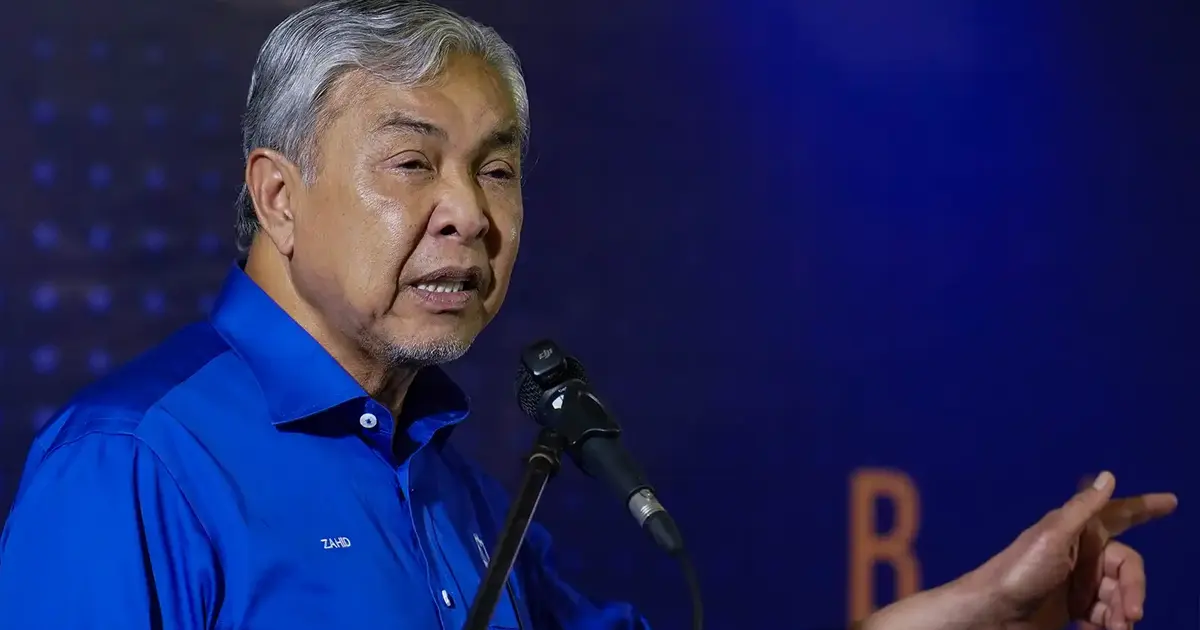
Zahid Hamidi's reported interest in the prime minister position represents a significant declaration of ambition from Umno's president, who has worked to rehabilitate his political standing in recent years. His pursuit of the top job would necessarily require commanding support from sufficient parliamentary members to form government, making coalition partners essential to any bid for the premiership. This ambition provides concrete momentum for discussions with potential allies who might benefit from such an arrangement.
PAS's stated objective of returning to formal government participation carries particular weight given the party's recent trajectory. Once a coalition partner in federal administrations, PAS has positioned itself as an influential voice despite operating outside direct government responsibility, wielding considerable power through supply-and-confidence arrangements and negotiated support. A return to cabinet roles and ministerial posts would represent a substantive shift in the party's national political position, offering its leadership increased access to resources and decision-making authority.
The potential bridging of Umno and PAS marks a departure from the period following their previous alliance's dissolution, which witnessed considerable mutual criticism and competing narratives about governance priorities. Both parties have experienced electoral fluctuations that may have prompted reassessment of their political viability operating independently or within existing configurations. The calculation now appears focused on whether renewed cooperation better serves their respective interests than continued separation or alternative alliances.
For Malaysian voters and observers, this emerging alignment carries implications extending beyond simple parliamentary mathematics. An Umno-PAS combination would substantially reshape the ideological composition of potential government, given the parties' different emphasis on policy priorities ranging from economic management to religious and social legislation. Such a partnership could influence approaches to federal-state relations, particularly in states where one party holds influence and the other might gain portfolio representation.
The timing of these signals reflects broader political currents within Malaysia's parliament, where coalition stability remains contingent on ongoing accommodation between component parties. Current arrangements have faced periodic strain, creating openings for alternative configurations to gain credibility among politicians evaluating their optimal positioning. Zahid's explicit pursuit of higher office provides clear incentive for potential partners to engage in serious discussions about ministerial distribution and policy frameworks that would accompany any formal arrangement.
Regional observers will monitor whether these preliminary overtures translate into concrete institutional arrangements or remain positioning tactics within ongoing coalition negotiations. The history of Malaysian politics demonstrates that public statements about political cooperation frequently precede more nuanced behind-the-scenes negotiations where specific terms and benefit distribution become the decisive factors. Both Umno and PAS will need to address constituencies concerned about previous conflicts and ideological tensions that complicated their earlier partnership.
The emergence of this possibility underscores the fluid nature of Malaysian coalition politics, where parties continuously evaluate their options based on electoral prospects, parliamentary numbers, and leadership aspirations. For Umno, partnership with PAS offers access to the party's organizational strength and voter base in specific regions. For PAS, collaboration with Umno could facilitate advancement toward government positions while maintaining policy influence on matters central to its support base. Whether these mutual interests prove sufficiently durable to overcome previous disagreements will determine whether Malaysian politics enters a new configuration or returns to familiar patterns.

