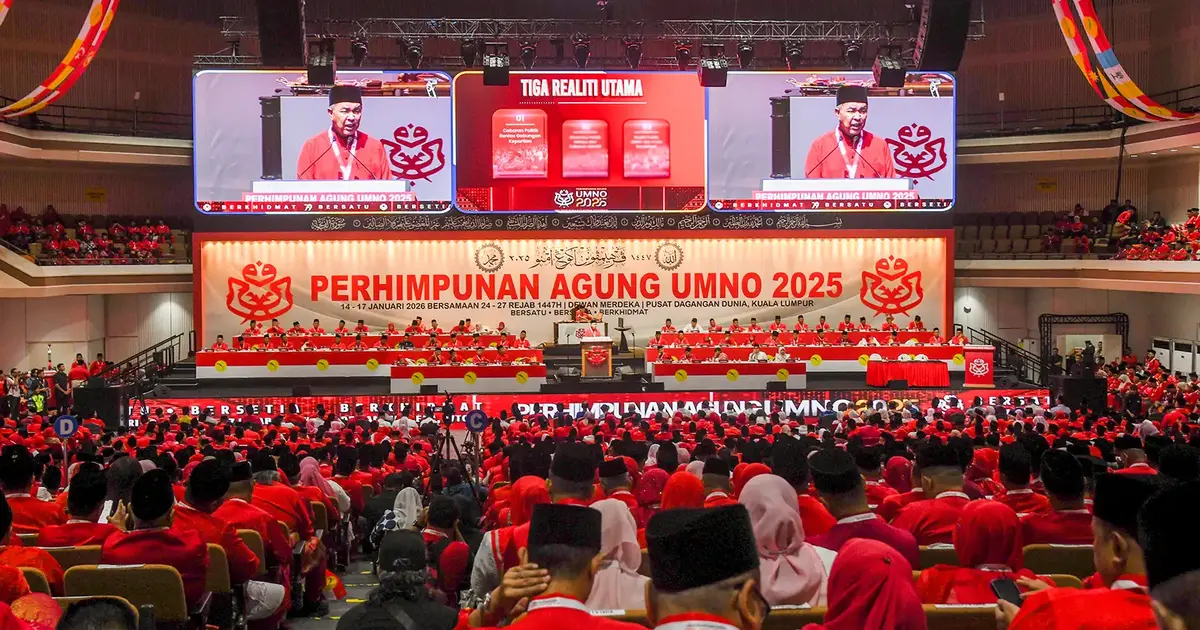
Tension has emerged within Umno's Negeri Sembilan division following an announced seat distribution arrangement that has left senior party leaders feeling sidelined in the state's political landscape. The frustration centres on the decision to award 11 state assembly seats to Perikatan Nasional and its affiliated parties, a development that several prominent Umno figures in the state view as disproportionate to their organisational strength and electoral capabilities.
The allocation process has sparked particular resentment among Umno grassroots leaders who question the rationale behind certain seat allocations within the broader coalition. These division-level figures argue that the formula applied in distributing constituencies does not adequately reflect either historical performance or party machinery on the ground. For many Umno operatives accustomed to commanding substantial influence at the state level, the arrangement represents a meaningful diminution of their party's role in Negeri Sembilan politics.
Among the flashpoints in this internal coalition dispute is the specific allocation given to Wawasan, a political entity that received four seats despite this being its first electoral contest. Several Umno leaders have publicly questioned how a newcomer to state politics could justify such a significant allocation when established parties with proven track records face constraints. This grievance reveals the underlying tension within federal-level coalition arrangements, where seat negotiations often prioritise national political configurations over state-level considerations.
Wawasan's sudden prominence in the Negeri Sembilan equation suggests broader strategic calculations at the federal level that may not align with Umno's traditional constituency interests. The party's decision to contest in the state despite being newly formed indicates that decisions shaping Negeri Sembilan's electoral contest are being driven by considerations extending well beyond the state itself. For Umno members who have invested years building party structures and electoral networks, this arrangement can feel like a fundamental reordering of coalition priorities that disadvantages their efforts.
The friction between Umno and its coalition partners in Negeri Sembilan reflects a recurring challenge in Malaysian coalition politics: balancing the interests of established parties with ambitious newcomers seeking political space. Federal coalition leaders must weigh the stability offered by experienced political machines against the perceived advantages of bringing fresh political movements into their fold. In Negeri Sembilan's case, the apparent tilt towards accommodating Wawasan has created a diplomatic problem that extends beyond mere seat-counting exercises.
These internal coalition tensions carry significance for the broader political stability in Negeri Sembilan, a state that has experienced considerable electoral volatility in recent years. When dominant coalition partners feel marginalized within their own alliance, the result can be reduced campaign enthusiasm, factional friction, and in some instances, defections or strategic withdrawals from electoral contests. Umno's grassroots machinery in Negeri Sembilan, if demoralized by perceived unfair treatment, could potentially impact the coalition's overall performance in state elections.
The complaint from Umno division leaders also signals the complexity of managing multi-party coalitions in Malaysia's contemporary political environment. Unlike simpler two-party systems, coalition arrangements require constant negotiation and compromise. However, when compromises appear to overwhelmingly favor newcomers over established parties, questions about coalition viability naturally arise. Senior Umno figures may privately wonder whether Perikatan Nasional's national strategies are being imposed on state-level politics in ways that undermine Umno's state-level standing.
For observers tracking Malaysian coalition dynamics, the Negeri Sembilan situation represents a microcosm of larger challenges facing federal coalitions. As parties expand and political movements proliferate, traditional coalition leaders must decide how much accommodation they are willing to extend to allies. Umno's current frustration in Negeri Sembilan suggests that this negotiation process, at least in this instance, has tilted in directions that the party's leadership finds philosophically objectionable and strategically disadvantageous.
The allocation controversy also highlights the continuing importance of state-level politics in Malaysia's federal system. Even as national coalition agreements are finalized at federal level, their practical implementation at state level can generate significant friction. Negeri Sembilan's case demonstrates that decisions made in federal capitals without adequate consultation with state-level party structures can create genuine operational and morale challenges on the ground.
Moving forward, whether Umno can resolve its internal frustrations regarding the Negeri Sembilan seat allocation will likely depend on whether party leadership can demonstrate tangible benefits from the broader coalition arrangement. If the party can translate coalition membership into legislative influence, executive appointments, or other political dividends, the current discontent may gradually recede. However, if state elections proceed with continued resentment among Umno's division leaders, the coalition's campaign effectiveness could suffer measurably.

