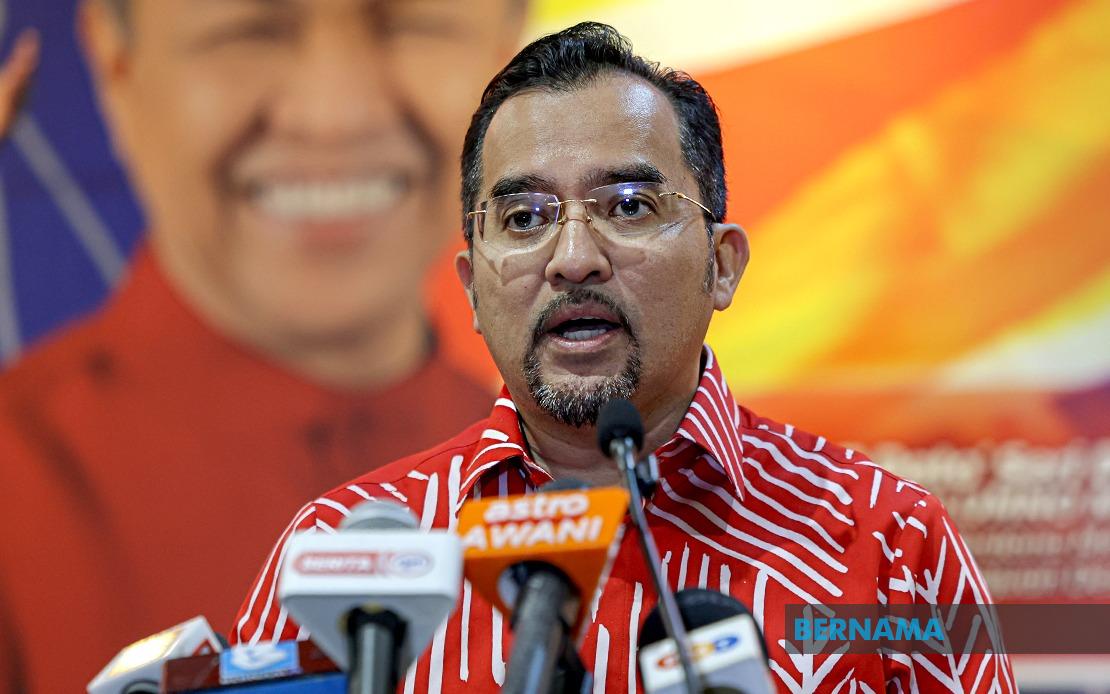
UMNO has taken a significant step toward flexible coalition-building by formally delegating negotiation authority to its state organizations, allowing regional leaders to explore partnership opportunities with interested political parties ahead of the coming election cycle. The decision, ratified during a Supreme Council session convened at Menara Dato' Onn in Kuala Lumpur on August 28, represents a strategic decentralization of the party's political positioning and reflects growing recognition that electoral arrangements must be tailored to local political realities across Malaysia's varied landscape.
Datuk Dr Asyraf Wajdi Dusuki, UMNO's secretary-general, articulated the party's approach during remarks following the meeting, which was presided over by president Datuk Seri Dr Ahmad Zahid Hamidi and included deputy president Datuk Seri Mohamad Hasan alongside other key council members. The authorization grants state divisions considerable latitude in determining their negotiating partners and terms, provided such discussions operate within overarching principles that the party leadership has laid out regarding the conduct of such engagements.
Crucially, UMNO has emphasized that any emerging cooperation frameworks must be grounded in genuine reciprocity and mutual confidence rather than extractive tactics or intimidation. Asyraf Wajdi underscored this principle by noting that negotiations should never involve threats or coercive pressure, signaling the party's intention to pursue partnerships through principled dialogue. This framing carries particular weight in Malaysia's competitive political environment, where coalition negotiations have historically been prone to last-minute brinkmanship and hardball tactics that can destabilize arrangements.
The Supreme Council's decision carries implications for the structure of Malaysia's electoral landscape in the next cycle. By enabling state-level autonomy in coalition-building, UMNO opens pathways for arrangements that might not have been possible under more centralized decision-making. This could facilitate creative power-sharing configurations that reflect regional political peculiarities, though it also introduces potential complexity around ensuring coherent national messaging and preventing internal party fragmentation.
Simultaneously, the party has extended a formal invitation to PAS leadership to participate in the 2026 UMNO General Assembly scheduled to convene from September 9 to 12. This gesture, appearing alongside the broader cooperation mandate, signals UMNO's intention to deepen dialogue with the Islamist party despite their complex historical relationship. The invitation reflects recognition that PAS remains a significant player in Malaysian politics whose engagement is strategically valuable, particularly given its strength in certain states and its ability to mobilize rural Malay-Muslim constituencies.
Beyond electoral positioning, the Supreme Council meeting approved an ambitious slate of programs scheduled for September 8, including the 2026 Malay Education Convention, the Malaysian Islamic Scholars Convention, and Laman Wanita Kreatif. These concurrent events suggest UMNO is pursuing a multifaceted engagement strategy designed to strengthen its ideological foundations and broaden its appeal across different demographic segments simultaneously with electoral preparations. The concentration of such events demonstrates the party's intent to use September's assembly proceedings as a platform for substantive ideological and policy discussions rather than merely procedural gatherings.
UMNO has also reaffirmed its commitment to the rule of law and due legal process, explicitly stating that individuals should not be presumed guilty prior to formal charges, trial, and judicial conviction. This statement carries particular salience given Malaysia's ongoing exposure to corruption allegations and legal proceedings involving prominent political figures. By reinforcing this principle, UMNO attempts to position itself as institutionally committed to justice and accountability, though skeptics might view such declarations against the backdrop of the party's checkered history with such matters.
The party's leadership stressed that UMNO will not countenance wrongdoing among its membership or senior figures, insisting instead that any alleged misconduct must proceed through formal legal channels. This stance theoretically creates distance between the party organization and individual actors facing criminal or civil allegations, though implementation and consistency remain challenging in environments where political and legal dynamics frequently intersect. The statement appears designed to preempt criticism that UMNO shields implicated members from consequences, a criticism that has dogged Malaysian political parties historically.
The authorization granted to state divisions arrives at a pivotal moment in Malaysia's political cycle. With the next general election potentially occurring within the next two years, parties are beginning the preliminary phase of coalition positioning and candidate selection. UMNO's decision to decentralize these preliminary negotiations reflects both practical wisdom—acknowledging that state-level leaders possess better intelligence about local political opportunities than the national leadership—and potentially a recognition that the party's organizational coherence has become fragile enough that micromanagement from the center could precipitate defections or internal conflict.
For Malaysia's broader political landscape, this development suggests we may see a proliferation of state-level coalition arrangements that do not conform to neat national-level alliances. This fragmentation, while potentially beneficial in allowing customized arrangements reflecting regional preferences, could complicate governance if coalition partners at different levels pursue contradictory policies or if central coordination breaks down during implementation phases. The coming months will reveal whether UMNO's devolved approach produces pragmatic, durable arrangements or generates the internal tensions and contradictions that plague decentralized political decision-making in competitive environments.

