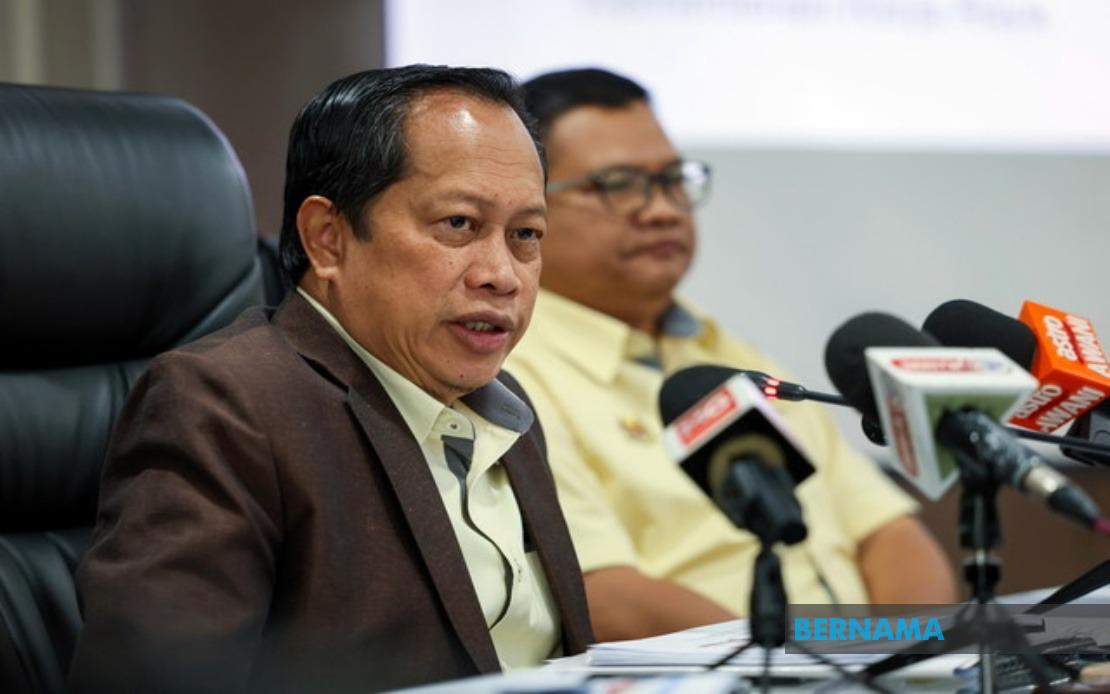
UMNO's top leadership will convene on August 28 to determine the political trajectory for the forthcoming Melaka state election, with President Datuk Seri Dr Ahmad Zahid Hamidi chairing discussions on whether Barisan Nasional should contest independently or align with competing political coalitions. The Supreme Council meeting will represent a crucial juncture for resolving months of speculation and positioning among Malaysian political parties regarding the state-level contest.
Datek Seri Dr Ahmad Maslan, an UMNO Supreme Council member who also serves as Deputy Works Minister, indicated that no definitive conclusion has yet been reached on the party's electoral approach in Melaka. He acknowledged the extensive commentary circulating through media outlets and statements from various figures, particularly within UMNO's Melaka division, proposing potential cooperation frameworks between Barisan Nasional and Pakatan Harapan, as well as between Barisan Nasional and Perikatan Nasional.
The upcoming Supreme Council deliberations will assess which strategic framework best positions Barisan Nasional to secure electoral victory in the state. Dr Ahmad Maslan emphasised that the party's determination on Melaka must reflect broader considerations about suitability and contextual appropriateness, noting that Barisan Nasional may pursue distinct political approaches across different states rather than adopting a uniform nationwide strategy.
Melaka's state government mandate extends until December 31, meaning the electoral contest must occur within this window. The timeline adds urgency to UMNO's deliberations, as party members and coalition partners will require sufficient notice to campaign effectively. This compressed schedule has intensified speculation about which political grouping will ultimately command Barisan Nasional's support.
The current Melaka government emerged victorious from the fifteenth state election, where Barisan Nasional secured twenty-one of twenty-eight available seats. Pakatan Harapan obtained five seats while Perikatan Nasional claimed two, reflecting the fragmented political landscape characterising contemporary Malaysian state-level contests. Despite Barisan Nasional's commanding majority, the state executive council encompasses representatives from Pakatan Harapan, mirroring the federal-level Unity Government configuration that has governed Malaysia since 2022.
This power-sharing arrangement at the state level demonstrates how Malaysian political dynamics have evolved toward multi-bloc governance frameworks. The inclusion of Pakatan Harapan representatives in Melaka's executive structure despite Barisan Nasional's electoral dominance illustrates the pragmatic coalition-building that has become characteristic of contemporary Malaysian politics. However, such arrangements can prove unstable when facing electoral contests, as competing parties navigate between maintaining federal-level cooperation and pursuing state-level electoral advantage.
UMNO's deliberation carries implications extending beyond Melaka itself, as the party's decision will signal its broader coalition preferences heading into potential future electoral contests. Whether Barisan Nasional chooses to reinforce its Unity Government partnership with Pakatan Harapan, explore alternative arrangements with Perikatan Nasional, or campaign independently will establish precedents affecting political calculations elsewhere. The choice may reshape interparty dynamics at both state and federal levels.
Dr Ahmad Maslan called upon all party members to respect whatever determination emerges from the Supreme Council meeting, emphasising the importance of unified implementation regardless of internal deliberations. Such appeals for party discipline become crucial when decisions might disappoint certain factions, as competitive tensions between potential coalition partners could generate pressure on rank-and-file members to challenge leadership directives.
The Melaka decision arrives as Malaysian politics continues processing the consequences of the Unity Government arrangement forged following the 2022 general election. That unprecedented coalition between Barisan Nasional, Pakatan Harapan, and several smaller parties created governance structures requiring ongoing negotiation and compromise. Melaka's approaching contest provides an opportunity to test whether such arrangements can function effectively at state level or whether electoral pressures inevitably push parties toward more confrontational positioning.
Peikatan Nasional's presence as a third political force complicates calculations considerably, as neither Barisan Nasional nor Pakatan Harapan commands automatic majorities requiring third-party support for governing majorities. The emergence of Perikatan Nasional as a significant electoral force in recent years has fundamentally altered Malaysian political arithmetic, requiring traditional coalitions to reassess their strategies and competitive positioning.
UMNO's August 28 meeting will ultimately reflect broader transformations within Malaysian politics, where state-level contests increasingly involve complex calculations about federal-level implications and long-term coalition positioning. The party's Melaka decision should therefore be understood not merely as a response to local circumstances but as a strategic determination with ramifications throughout Malaysia's evolving political architecture.

