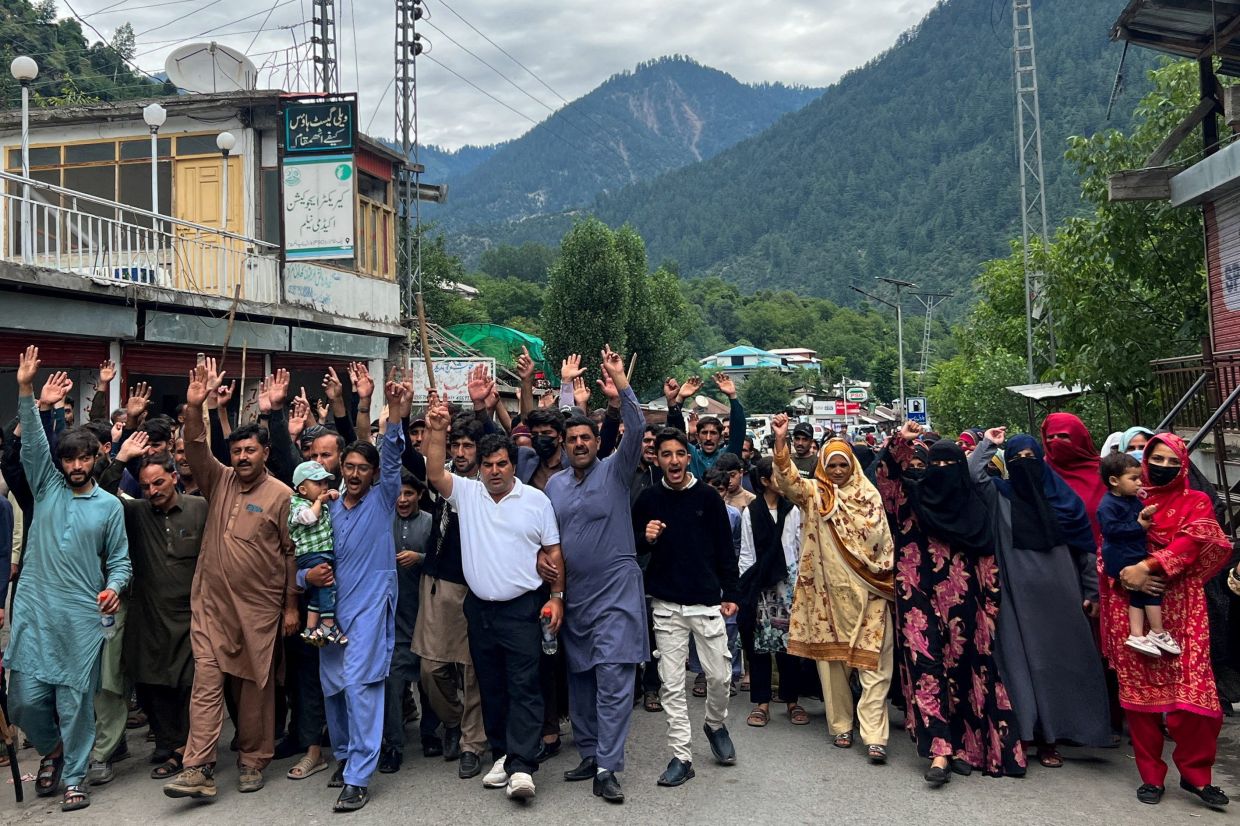
The United Nations has pressed Pakistan to launch comprehensive, independent inquiries into the mounting death toll from widespread disturbances sweeping through Kashmir ahead of critical legislative assembly elections. Speaking through his spokesman Jeremy Laurence in Geneva on Friday, UN High Commissioner for Human Rights Volker Turk appealed for calm across the disputed territory while emphasizing the urgent need for transparent investigations into fatalities among both civilians and law enforcement personnel.
The humanitarian toll from the current unrest has reached alarming levels since June, with dozens of lives lost during demonstrations that have roiled the mountainous region in the weeks leading up to the July 27 electoral vote. Among those killed have been protesting citizens alongside security personnel, painting a picture of increasingly volatile confrontations between authorities and grassroots movements demanding systemic change. The escalating cycle of violence underscores deep-seated tensions within Pakistan-administered Kashmir that extend far beyond electoral politics.
At the heart of the turbulence lies the Joint Awami Action Committee, a broad anti-government coalition mobilizing citizens around demands for meaningful economic development and improved governance standards. Despite Pakistani authorities designating JAAC as a terrorist organization last month—a classification the government justified on public order and security grounds—the movement has persisted with demonstrations and mobilization efforts. This organizational crackdown represents a significant escalation in state responses to grassroots activism, raising questions about the space afforded to civil society in the region.
The UN human rights office has voiced particular alarm regarding the detention of JAAC leadership figures, cautioning that criminalizing a civil society organization and imposing stringent restrictions on public gatherings strikes at fundamental democratic freedoms. International observers have flagged serious risks that these measures contravene internationally recognized protections for expression, peaceful assembly, and association. The UN specifically demanded that detained leaders receive adequate legal representation and family contact, while guaranteeing their entitlements to fair trial procedures and due process protections.
This latest eruption of unrest recalls similar confrontations that gripped the Himalayan region last September, when violent clashes between police and JAAC-led protesters claimed at least nine confirmed lives. The recurring pattern of demonstrations, security force responses, and resulting casualties suggests systemic grievances remain unresolved despite previous cycles of unrest and governmental action. Understanding the depth of these underlying discontent is essential for comprehending why elections in Kashmir routinely coincide with elevated tensions.
The broader geopolitical context cannot be overlooked when assessing these developments. Kashmir remains one of South Asia's most volatile flash points, with both India and Pakistan laying sovereign claims to the entire territory following their 1947 partition from British colonial rule. The region's division between the two nuclear-armed nations has spawned decades of military confrontation, with Pakistan's government and defense establishment viewing Kashmir through the lens of national security. This strategic sensitivity means that domestic political movements in Pakistani-administered Kashmir inevitably acquire dimensions beyond ordinary electoral politics.
Turk's office has also highlighted concerning communications infrastructure restrictions affecting the territory, warning that internet shutdowns disproportionately undermine citizens' abilities to access information and express themselves during periods of heightened tension. Such limitations become particularly troubling when coupled with active street-level unrest, effectively creating information vacuums that can exacerbate misunderstandings and limit accountability mechanisms. The UN emphasized that authorities must restore comprehensive digital connectivity to ensure populations can remain informed and connected.
The humanitarian organization furthermore called for meaningful political engagement between state authorities and local populations to address the substantive grievances fueling mobilization. Framing the path forward as requiring inclusive dialogue rather than enforcement mechanisms alone reflects international best practices for managing civil unrest in contexts with deep historical tensions. Such dialogue would ostensibly focus on the economic and governance concerns that JAAC has articulated as central to its movement.
For Malaysian observers and policymakers, these developments carry instructive implications regarding the management of regional diversity and governance legitimacy. Southeast Asia's own experience with civil dissent and electoral contestation offers comparative lessons. While Malaysia's federal structure and constitutional democracy provide different institutional frameworks than Pakistan's system, the underlying principles regarding protection of assembly rights, transparency in security responses, and inclusive political dialogue remain universally relevant. The UN's intervention also reflects how regional security issues increasingly invite international human rights scrutiny, a factor that governments throughout Southeast Asia must consider when calibrating responses to internal movements.
The July 27 Kashmir elections will occur amid this turbulent backdrop, with international attention focused on whether the electoral process can proceed safely and legitimately. How Pakistan's authorities balance security concerns against democratic participation will influence both immediate stability and longer-term political legitimacy in the territory. The UN's calls for investigation and dialogue represent efforts to guide this delicate navigation toward outcomes that respect both security imperatives and human rights protections that democratic societies are expected to uphold.

