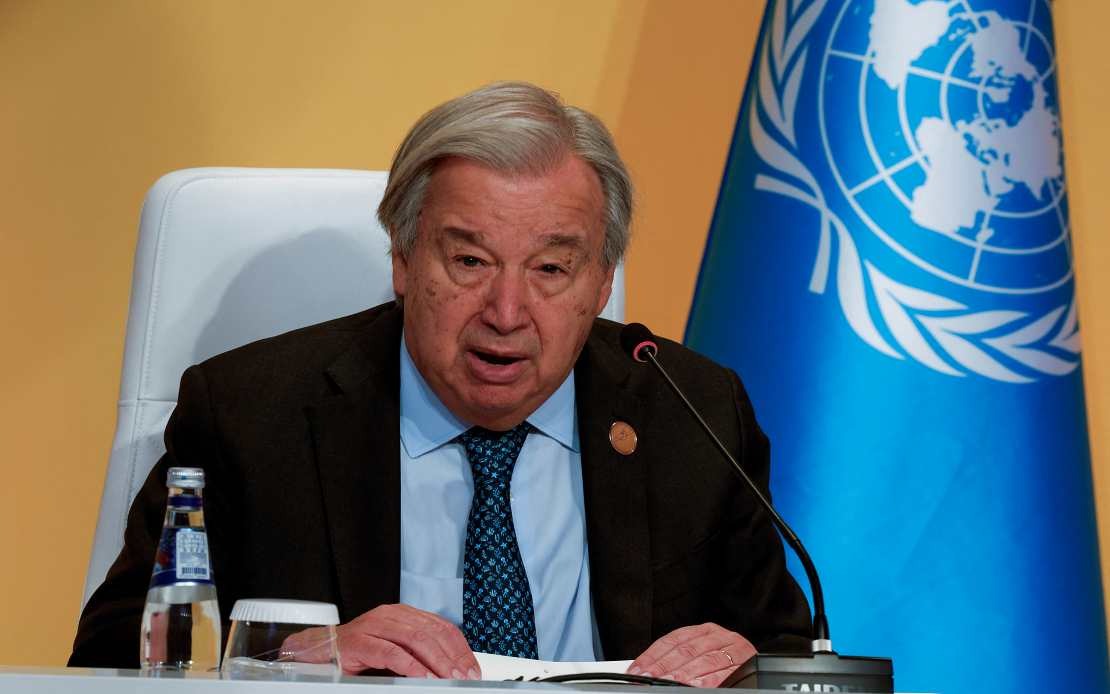
The United Nations has expressed alarm at the intensifying military standoff engulfing the Persian Gulf, with Secretary-General Antonio Guterres issuing an urgent plea for all parties to step back from the brink of wider conflict. Through his official spokesperson, Guterres underscored his grave apprehension regarding the cascade of hostile actions unfolding across the strategically vital waterway, encompassing Iranian maritime attacks, retaliatory American strikes, and Iranian operations targeting neighbouring states.
The escalation represents a fundamental threat to one of the world's most critical maritime zones and carries implications that extend far beyond the immediate region. For Malaysia and other Southeast Asian economies heavily dependent on stable energy supplies and unimpeded global trade routes, the deteriorating situation in the Gulf presents a direct and tangible concern. Approximately one-third of global maritime oil trade passes through the Strait of Hormuz, meaning any prolonged disruption could trigger commodity price spikes affecting everything from fuel costs to manufacturing inputs across the region.
Guterres's statement underscores the UN's position that the current trajectory is unsustainable and potentially irreversible if left unchecked. The secretary-general explicitly cautioned that a return to full-scale military hostilities would unleash consequences described as "catastrophic" for the peoples inhabiting the region itself, for the international system's broader peace and security architecture, and for global economic stability. This framing reflects the reality that modern conflicts in such economically interconnected areas rarely remain geographically contained.
The call for maximum restraint from all parties acknowledges the volatile nature of the current dynamic, where miscalculation or uncontrolled escalation could rapidly spiral beyond the intentions of any single actor. The Gulf has historically demonstrated how quickly military confrontations can expand, with minor incidents occasionally triggering disproportionate responses. The UN's emphasis on immediate de-escalatory steps represents recognition that preventive diplomatic action is essential before irreversible military choices become inevitable.
A particular focus of the secretary-general's concern centres on maritime security and freedom of navigation within the Strait of Hormuz. This waterway, through which roughly 21 million barrels of crude oil transit daily, has become increasingly contested terrain. Attacks on commercial shipping, whether attributed to Iranian forces or proxy actors, create an environment of uncertainty that undermines the predictability essential to global commerce. Restoration of unfettered passage remains fundamental to international economic functioning.
Guterres has specifically urged Iran and the United States to urgently resume direct negotiations, positioning diplomacy as the essential mechanism for resolving the underlying disputes driving the military escalations. This appeal reflects the UN's traditional role as mediator and facilitator of dialogue between adversarial parties. The recommendation acknowledges that the current cycle of tit-for-tat military action, while serious, has not yet foreclosed the possibility of negotiated settlement if political will exists.
The emphasis on addressing "outstanding issues through diplomacy" points to the deeper structural tensions animating current hostilities. The disputes between Tehran and Washington encompass numerous dimensions—nuclear programme concerns, regional influence, sanctions regimes, and competing geopolitical objectives—that cannot be resolved through military means alone. Sustainable de-escalation requires comprehensive diplomatic engagement that addresses root grievances rather than merely managing symptoms.
For Southeast Asian nations, the UN secretary-general's warnings carry particular resonance given the region's economic vulnerability to energy price volatility and supply disruptions. Malaysia, as both a hydrocarbon-producing nation and energy importer, faces dual exposure to Gulf instability. Rising oil prices could inflate domestic inflation and reduce competitiveness of regional exports, while supply uncertainties complicate energy security planning across Southeast Asia.
The international dimension of the UN's concern reflects broader implications for the rules-based global order. Escalating military confrontations in strategically crucial zones challenge the principle that international disputes should be resolved through negotiation and peaceful mechanisms rather than force. The precedent established by uncontrolled regional militarisation could reverberate across other contested areas, potentially encouraging similar escalatory dynamics elsewhere.
Guterres's statement represents a formal expression of institutional concern but also highlights the limited enforcement mechanisms available to the UN when major powers are directly involved. The secretary-general can articulate principles and appeal to restraint, but implementation ultimately depends on the political calculations and decision-making of the principal actors themselves. This structural reality underscores why diplomatic channels and back-channel negotiations remain crucial—official UN pronouncements, while important for establishing international norms, cannot alone reverse military momentum.
The timing of the UN's intervention reflects growing international anxiety that the current trajectory represents a critical juncture where deliberate choices remain possible but may not remain available indefinitely. The longer hostilities continue, the greater the risk of entrenchment, domestic political pressure for escalation, and the emergence of actors with vested interests in perpetuating conflict. Urgent resumption of negotiations before such dynamics fully consolidate remains the secretary-general's clear message to all parties involved.

