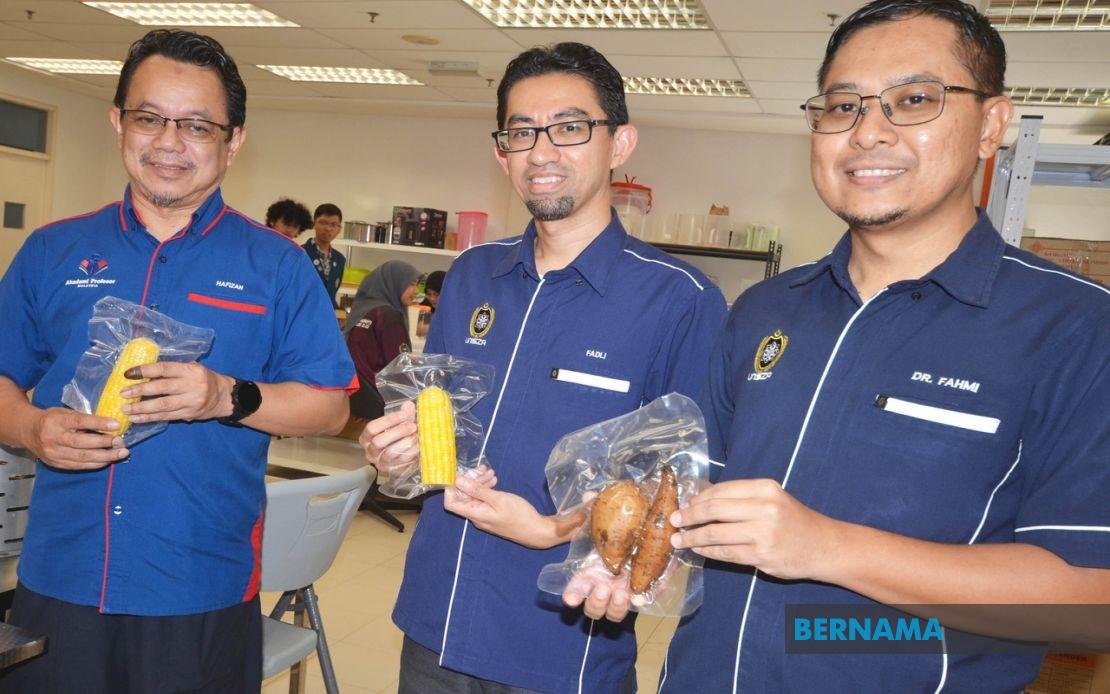
Universiti Sultan Zainal Abidin (UniSZA) has launched an ambitious initiative to address a long-standing challenge facing smallholder farmers in Besut, Terengganu: the inability to realise fair prices for their harvest and the consequent waste of perfectly good agricultural produce. The Dapur Komuniti, or Community Kitchen, operates in tandem with the university's Sustainable Community Farm on its Besut campus, serving as both a food innovation laboratory and an economic development platform for the surrounding agricultural community. According to the faculty's dean, Prof Dr Hafizan Juahir, the facility represents a comprehensive response to the structural problems that have long constrained rural prosperity in the region.
The underlying issue driving the initiative reflects a broader problem across Malaysia's agricultural sector. Farmers in Besut face a squeeze from multiple directions: limited marketing sophistication, weak digital presence, and dependence on middlemen who capture much of the value chain while farmers receive depressed farm-gate prices. Sweet potatoes have historically sold for less than RM2 per kilogramme at the farm, yet command substantially higher prices when they reach urban markets such as Kuantan or the major cities. This price differential is not merely a reflection of transport costs but reveals the degree to which farmers lack direct market access and control over distribution. The logistics bottleneck and absence of digital marketing capabilities among many farmers mean that perishable produce frequently rots unsold, translating into both environmental waste and direct income loss for already-vulnerable rural households.
The Community Kitchen transforms this dynamic through value-added product development. Rather than accepting the premise that unsold produce represents total loss, the facility enables the conversion of agricultural surplus into shelf-stable products with extended market windows. The initiative has already demonstrated this principle with an innovative product: pickled Terengganu Sweet Melon created from lower-grade melons that would otherwise be discarded. By processing these substandard fruits into a distinctive preserved product, the university generates additional revenue for farmers while simultaneously reducing food waste. This model can be replicated across other crops in the region, creating multiple new revenue pathways for producers historically locked into fresh-produce markets dominated by middlemen.
Beyond product innovation, the facility functions as a training and capability-building centre. Prof Dr Hafizan emphasized that the Community Kitchen provides hands-on food processing instruction targeted specifically at local residents and farming communities. This training is not merely theoretical but practically oriented, enabling farmers to develop value-added products independently. The implications are significant for rural economic autonomy: farmers who can process their own surplus into marketable products are no longer entirely dependent on middlemen or bound by the volatility of fresh-produce pricing. They gain the ability to extend their selling season, reach new market segments, and improve their margins.
The university is pursuing formal recognition of this training capability through discussions with the Department of Skills Development. The objective is to establish the Community Kitchen as an accredited training centre for the Malaysian Skills Certificate (SKM) in food processing. This accreditation would be transformative. UniSZA students graduating from food-related programmes could simultaneously obtain both a bachelor's degree and an SKM Level 3 qualification, ensuring that graduates entering the labour market possess industry-recognised credentials alongside academic qualifications. In Malaysia's employment landscape, where skills mismatches frequently plague workforce development, this dual-qualification approach directly addresses employer demands for both educational breadth and applied technical competency.
The initiative's reach extends beyond students and farmers to encompass a demographic group often overlooked in rural development: Malaysian Armed Forces veterans. Retired military personnel often struggle to transition to civilian employment and income-generating activities. By equipping them with food processing skills through the Community Kitchen, UniSZA provides a pathway toward sustainable post-retirement livelihoods. This dimension reflects a sophisticated understanding of rural community needs; the programme recognises that community development must attend to multiple constituencies within the same geographic space, each facing distinct but interconnected challenges.
From a regional development perspective, the Community Kitchen model carries implications for how Malaysian universities can contribute to rural economic transformation. Rather than remaining primarily teaching institutions, universities increasingly position themselves as innovation hubs generating solutions to local problems. UniSZA's integration of research into agricultural waste reduction, product development, skills training, and community economic strengthening demonstrates how tertiary institutions can leverage their resources and expertise to address market failures at the local level. The Besut initiative could serve as a template for replication in other agricultural regions across Malaysia and Southeast Asia facing similar oversupply and marketing challenges.
The programme also reflects a strategic alignment with national sustainability priorities. Food waste represents both an environmental burden and an economic inefficiency. By converting agricultural surplus into processed products with extended shelf lives, the Community Kitchen simultaneously reduces environmental impact and optimises resource utilisation. The approach acknowledges that sustainability is not merely an environmental concern but fundamentally an economic one: farmers cannot invest in sustainable practices when immediate survival depends on capturing whatever income is available, however inadequate. Addressing farmer poverty and agricultural waste simultaneously creates conditions where longer-term sustainability becomes feasible.
The pricing disparities highlighted in the Besut case illustrate how rural agricultural communities across Malaysia remain susceptible to value-chain capture by intermediaries. The gap between farm-gate prices and retail prices reflects not just distribution costs but power imbalances in agricultural markets. Initiatives like UniSZA's Community Kitchen operate on the premise that direct value-addition by producers can redistribute margins more equitably. While a single university facility cannot fundamentally restructure national agricultural markets, it demonstrates a proof of concept that farm-level product development combined with skills training offers farmers a pathway toward greater economic agency and improved incomes.
As the Community Kitchen develops and potentially formalises its SKM accreditation, its impact will be measurable through multiple metrics: the volume of produce converted from waste into value-added products, the income gains realised by participating farmers, the number of individuals trained and employed in food processing, and ultimately, the broader economic and social transformation within Besut's agricultural community. The initiative represents more than a localised intervention; it articulates a vision of how universities can function as engines of inclusive rural development, using research, innovation, and skills transfer to strengthen community resilience and agricultural prosperity in an era of market pressure and supply volatility.

