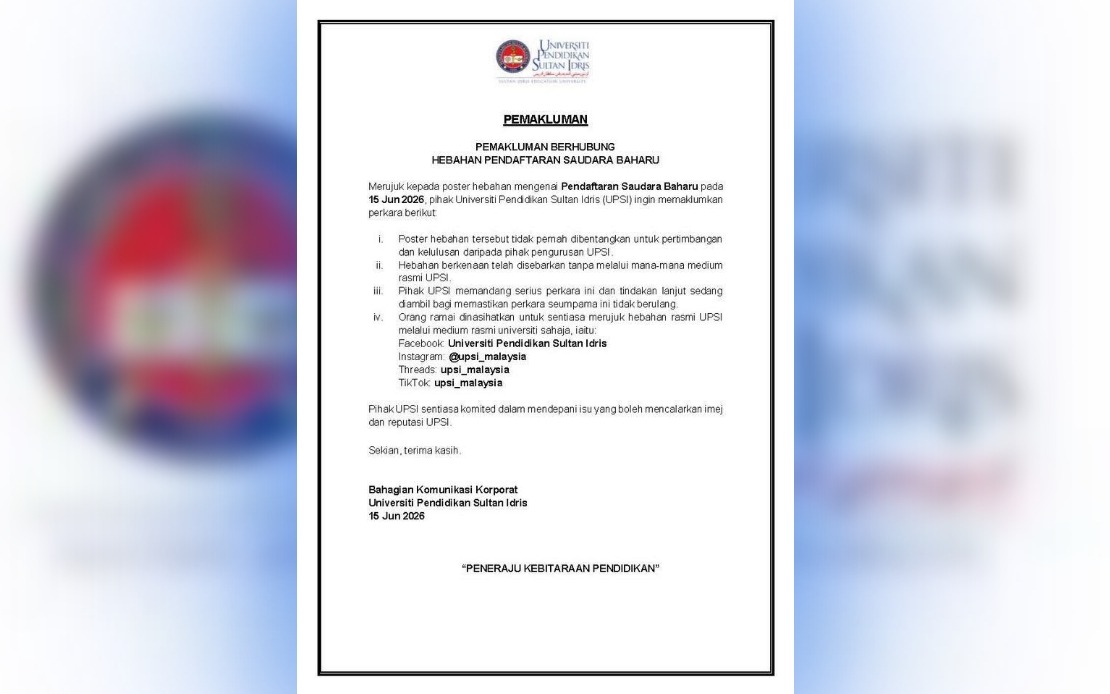
Universiti Pendidikan Sultan Idris (UPSI) has moved to clarify its position regarding a poster about registering 'saudara baharu' or 'mualaf' that recently circulated widely across social media platforms. The institution released a formal statement through its official social media channels on June 17, categorically denying any involvement in the creation or dissemination of the material, which was dated June 15.
According to UPSI's statement, the poster in question never reached the university's administrative apparatus for formal review or approval before being shared online. This distinction is crucial, as it underscores that the document did not pass through the institution's official governance structures. The university emphasised that the material was distributed entirely outside its authorised communication channels, suggesting the poster emerged from sources unaffiliated with the institution's formal operations.
The incident highlights a growing concern among Malaysian educational institutions about their digital reputation and the spread of unofficial content bearing their names or logos. UPSI's response reflects a broader institutional anxiety about materials attributed to universities without proper authorisation, particularly when such content touches on sensitive matters related to religious affairs or conversions. The university's swift denial and clarification serve as a protective measure against reputational damage and public misunderstanding about its policies and positions.
In its statement, UPSI stressed that it takes the matter with considerable seriousness and indicated that measures would be implemented to prevent similar occurrences in the future. This forward-looking commitment suggests the institution may review its internal protocols for monitoring and controlling the use of its branding and institutional identity across digital platforms. Such precautions have become increasingly necessary as social media facilitates rapid and uncontrolled dissemination of information, sometimes falsely attributed to official sources.
The university urged the public to exercise caution and verify information through UPSI's legitimate announcement channels rather than accepting materials circulating on social media at face value. This appeal reflects a broader challenge facing educational institutions in Malaysia and across Southeast Asia, where distinguishing between authentic institutional communications and unauthorised content has become increasingly difficult for the general public. UPSI's guidance essentially functions as a reminder that official policy positions and announcements should only be considered legitimate when they emerge through verified official mediums.
UPSI also reaffirmed its unwavering dedication to protecting its institutional reputation and preventing any issues that might damage public perception of the university. This commitment extends beyond merely responding to individual incidents and encompasses a broader institutional philosophy of maintaining standards and integrity in all aspects of university operations. By publicly addressing this matter, UPSI demonstrates its accountability to stakeholders including students, staff, and the wider Malaysian community.
The incident serves as a cautionary tale about how misinformation or unauthorised content can rapidly gain traction in today's digital environment. For universities operating in Malaysia, the incident underscores the importance of robust digital governance frameworks and clear communication protocols. Institutions must balance transparency with security, ensuring that their official channels remain authoritative sources while maintaining public awareness about the risks of fake or unauthorised materials.
For the Malaysian public, this episode reinforces the necessity of critical digital literacy. As various stakeholders seek to influence public discourse through content that claims institutional backing, citizens must develop stronger verification habits. Cross-referencing claims with official sources, checking institutional websites directly rather than relying on social media shares, and maintaining healthy scepticism about materials lacking clear sourcing have become essential practices in navigating contemporary information environments.
The broader implications for Malaysia's educational sector are significant. Universities serve as trusted custodians of knowledge and moral authority within their communities. When unauthorised materials are attributed to these institutions, particularly on matters related to religion, citizenship, or values, the potential for public confusion and loss of institutional credibility increases substantially. UPSI's proactive response represents a model for how institutions might address similar challenges, though it also highlights the ongoing vulnerability of institutional identities in digital spaces.