The Upper Rajang Development Agency (URDA) is embarking on an ambitious restructuring of how the region approaches economic development, signalling a fundamental shift away from traditional dependence on raw material extraction towards a knowledge-intensive, technology-enabled framework that can compete in modern markets. Speaking in Sibu on July 16, URDA chairman Datuk Seri Alexander Nanta Linggi outlined the agency's commitment to forge stronger ties with academic institutions, government development bodies, and grassroots communities across the region to construct a sustainable economic foundation centred on innovation and value creation rather than commodity-based extraction.
The rationale behind this strategic reorientation reflects a growing recognition across Malaysian policymaking circles that rural economies cannot sustain themselves through traditional approaches to agriculture and resource extraction alone. Instead, Nanta stressed that rural communities must position themselves to capture greater shares of value chains by incorporating advanced technologies, embracing research-backed practices, and gaining direct access to consumer markets that reward quality and differentiation. This perspective aligns with broader economic transformation goals across Southeast Asia, where countries are seeking to move away from low-margin commodity dependency towards higher-value sectors that generate more durable employment and income stability.
Evidence supporting this approach comes from the demonstrated success of URDA's High Impact Community Projects (HICP), which have already yielded measurable results in participating communities. According to Nanta, participants in these initiatives have experienced income increases exceeding 25 per cent, a significant improvement that underscores the potential of properly resourced, research-informed development interventions. These results suggest that when communities receive adequate support in acquiring new skills, adopting proven technologies, and understanding market dynamics, the economic returns can be both substantial and relatively rapid—a powerful argument for continued investment in this model.
Central to this strategy is repositioning universities from ivory tower institutions into practical economic development partners. Nanta articulated this perspective with particular clarity, noting that universities function most effectively when their research capabilities are deliberately aligned with community needs and when government agencies actively facilitate the translation of academic insights into real-world business applications. This framework moves beyond the conventional university extension model towards a more integrated approach where scholars, entrepreneurs, development practitioners, and community members collaborate from the outset to ensure research agendas address genuine economic challenges facing rural populations.
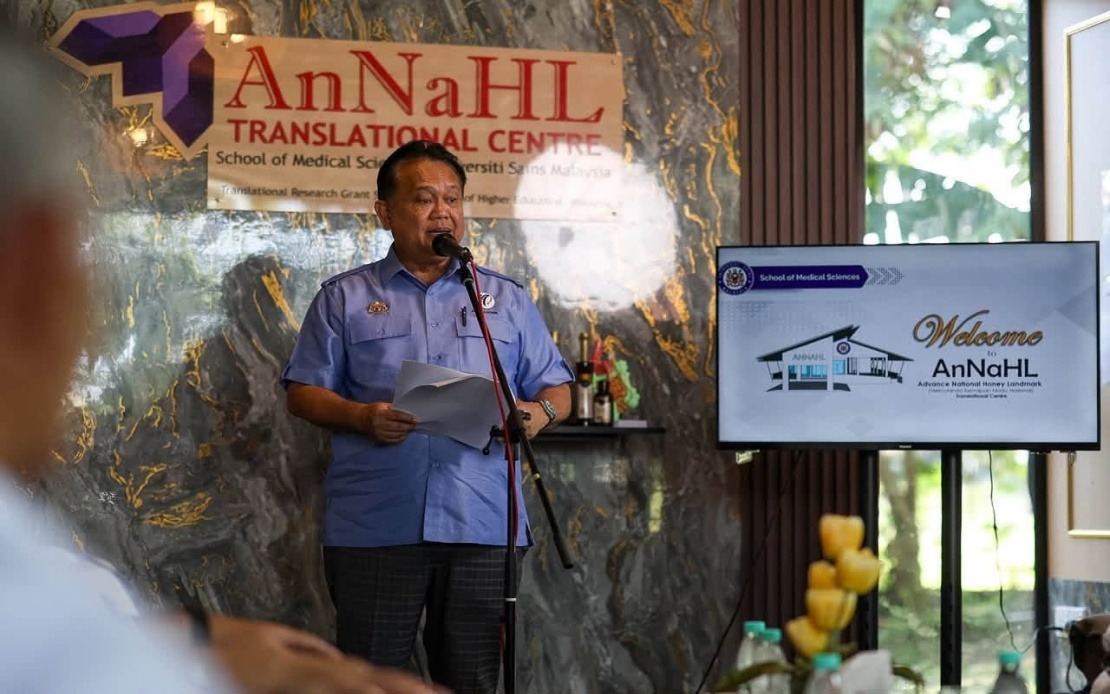
The strategic partnership received tangible expression during a joint field visit by delegations from both URDA and the Regional Corridor Development Authority (RECODA) to the Advanced National Honey Landmark (AnNaHL) Translational Centre located at Universiti Sains Malaysia's Health Campus in Kubang Kerian, Kelantan. This facility exemplifies the type of institutional infrastructure that can facilitate the bridge between academic research and community economic application, specifically in the apiculture sector, which has gained attention as a viable high-value agricultural pursuit across rural Malaysia. The centre's role in processing, marketing, training, and product development for honey and related products demonstrates how specialised facilities can create ecosystem support for emerging rural enterprises.
Within the Kapit parliamentary constituency, which Nanta represents as its Member of Parliament and where he also serves as Minister of Works, multiple locations have already been identified as candidates for high-impact community initiatives. Notably, stingless bee farming has emerged as a focal point for development efforts, reflecting both the ecological suitability of the Upper Rajang region and the substantial market opportunities in premium honey products and related bee-derived goods. This sector selection is strategic, as stingless bee farming requires relatively modest land investments compared to conventional agriculture while generating products that command premium prices in domestic and export markets.
The broader developmental philosophy underpinning URDA's new direction emphasises building community capacity through a multifaceted approach that encompasses knowledge acquisition, technical skills training, technology adoption, and market linkage development. Rather than imposing external solutions or pursuing top-down development models, this framework recognises that sustainable economic transformation occurs when communities themselves possess the capabilities and market connections to drive their own economic advancement. This empowerment-centred approach addresses a persistent challenge in rural development globally: the tendency for externally designed projects to fail once supporting organisations withdraw, because local capacity remains underdeveloped.
For Malaysian policymakers and development practitioners, URDA's strategy offers important lessons about the practical mechanics of rural economic diversification. The focus on value-chain development rather than raw production addresses a fundamental constraint facing many rural communities, where farmers and producers earn minimal margins by selling unprocessed commodities while middlemen and processors capture the substantial value-addition portions of final product prices. By equipping communities with processing capabilities, quality management knowledge, branding expertise, and direct market access, development agencies can fundamentally alter the economics of rural production.
The emphasis on university partnerships also carries significant implications for Malaysia's higher education institutions, many of which have invested substantial resources in research facilities and faculty expertise that remain underutilised in addressing practical community economic challenges. URDA's framework provides a institutional model for universities to demonstrate their societal value while simultaneously conducting applied research that enriches their academic missions. This symbiotic relationship benefits rural communities through access to cutting-edge knowledge, benefits universities through engagement with real-world problems, and benefits government through observable returns on higher education investments.
Looking forward, the success of this initiative will likely depend on sustained commitment from multiple stakeholders and the development of robust mechanisms for technology transfer and market access. One critical question involves how URDA will ensure that communities acquiring new skills and technologies can reliably access markets at scales sufficient to justify their investments. Without functioning market infrastructure and reliable demand signals, even well-trained communities may struggle to maintain economic gains achieved through initial project phases. Additionally, the model's scalability across diverse communities within the Upper Rajang region, each with distinct ecological conditions and cultural contexts, will require flexible adaptation rather than rigid implementation of standardised approaches.

