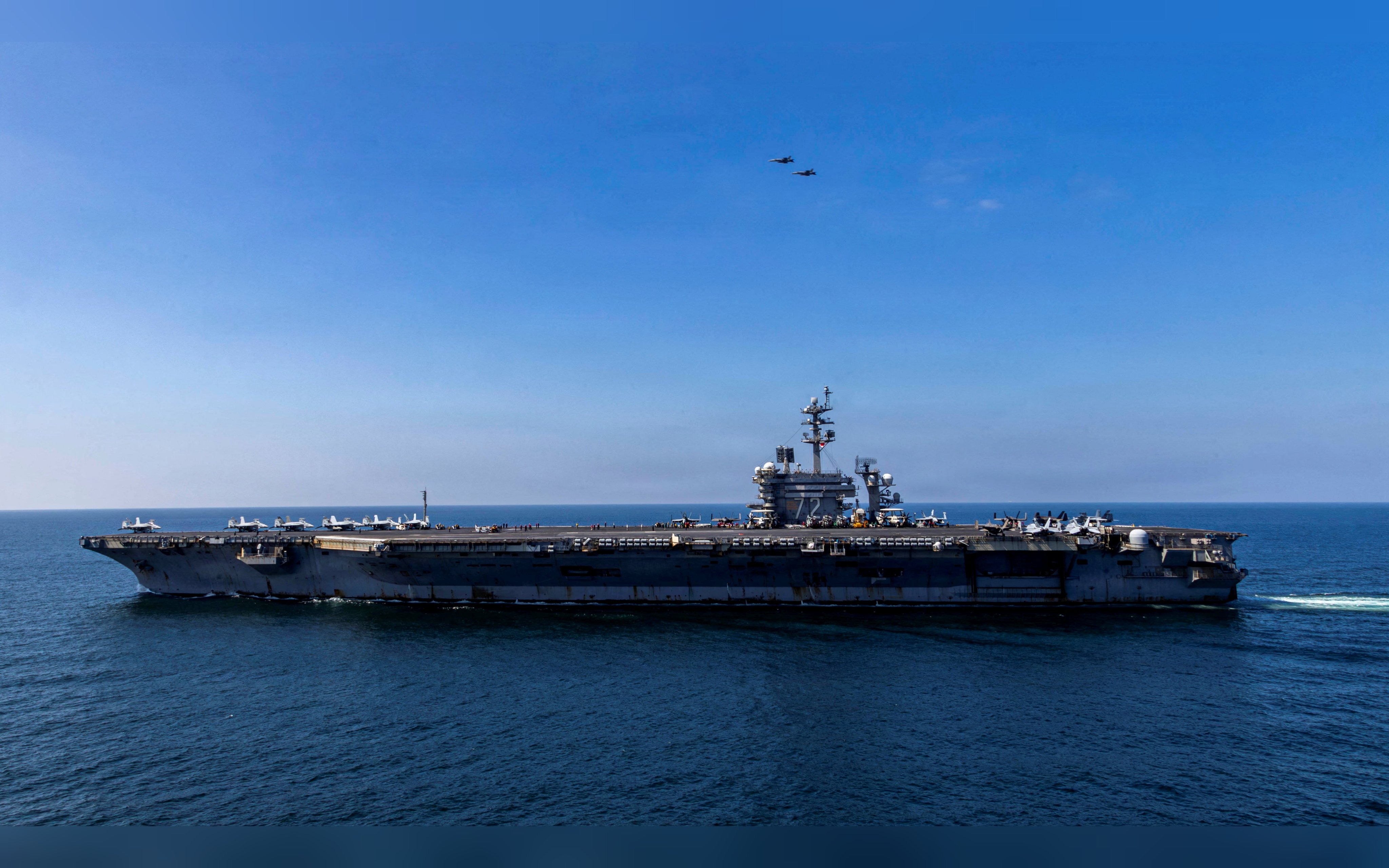
President Donald Trump announced on Friday that the USS Abraham Lincoln, which has been stationed in West Asia for more than eight months, will soon be relieved by another carrier-class vessel as part of routine fleet rotation procedures. The confirmation came after mounting concerns from military families and lawmakers about the extended deployment and the hardships faced by personnel aboard the nuclear-powered warship.
The USS Abraham Lincoln will be replaced by the USS George Washington in a previously scheduled carrier rotation that underscores the United States' sustained military commitment to the region. This transition represents a planned handoff rather than an emergency measure, though the timing reflects broader debates within the military establishment about deployment cycles and their impact on service members and their families.
The carrier commenced operations in November and was redirected to West Asia in January as regional tensions escalated. Over its tenure, the vessel's air wing executed more than 10,000 combat sorties and released in excess of 1.5 million pounds of ordnance, according to figures released by Acting Navy Secretary Hung Cao. These operational metrics underscore the intensity of the carrier's mission and the demanding pace imposed on its crew.
Concerns about crew welfare became increasingly vocal in recent weeks when Senator Richard Blumenthal of Connecticut formally notified Defence Secretary Pete Hegseth and the acting Navy Secretary about deteriorating conditions aboard. The senator's letter detailed numerous challenges including insufficient supplies for basic needs, contaminated water systems, malfunctioning plumbing infrastructure, emerging mental health issues among personnel, documented safety hazards on flight decks, and significant delays in mail delivery that prevented families from sending care packages.
The carrier spent 266 days deployed overall, including 200 consecutive days conducting operations within an active combat zone. During this extended commitment, a small contingent of sailors and Marines sought mental health treatment, though Acting Navy Secretary Cao stated that no fatalities resulted from these cases. The acknowledgement of mental health challenges reflects a broader military conversation about psychological strain during prolonged combat deployments, particularly when crews operate without regular port visits for rest and resupply.
When questioned whether the deployment had persisted excessively long, Trump characterised the timeframe differently, stating the mission had not been sufficiently extended. This perspective contrasts sharply with the concerns raised by families and military personnel experiencing the practical consequences of sustained operations. The president's remark illustrated differing viewpoints on how long carrier deployments should last in relation to operational necessities and personnel welfare.
Acting Navy Secretary Cao framed the extended deployment as operationally justified, explaining that the mission requirements drove the decision to prolong the ship's presence beyond initial planning parameters. He emphasised that military leadership prioritises sailor and Marine safety alongside mission accomplishment, though acknowledged that warfare inherently disrupts normal routines and introduces uncertainty into deployment schedules. This explanation attempts to reconcile operational imperatives with personnel concerns, recognising that combat operations impose demands that conventional peacetime deployments do not.
The transition to the USS George Washington will provide relief for the current crew, who have endured an unprecedented operational tempo under challenging circumstances. For Malaysian and Southeast Asian observers, the carrier rotation illustrates the persistent American military presence in waters critical to regional security and global commerce. The deployment patterns and operational intensity reveal how seriously Washington views its strategic posture in the Middle East and broader Asian waters.
The situation also highlights ongoing tensions between operational demands and service member welfare within modern militaries. Extended deployments, particularly those extending beyond 200 days without port calls, present documented challenges for personnel morale, physical health, and mental wellbeing. The willingness of lawmakers to formally raise these concerns suggests growing political attention to how military operations affect service members' lives and family stability.
For the broader Southeast Asian region, American carrier operations in West Asia have indirect but significant implications. Carrier deployments of this intensity require extensive logistical support networks, influence regional geopolitics, and shape international perceptions of American commitment. The replacement of one carrier with another demonstrates the sustainability of these operations and Washington's capacity to maintain sustained forward deployment despite operational challenges.
The USS Abraham Lincoln's crew will soon enjoy respite from continuous combat operations, though the underlying strategic situation that necessitated the extended deployment remains unresolved. As the USS George Washington assumes responsibility for regional operations, it inherits both the operational objectives and the accumulated lessons regarding deployment sustainability that the Lincoln's experience has generated.

