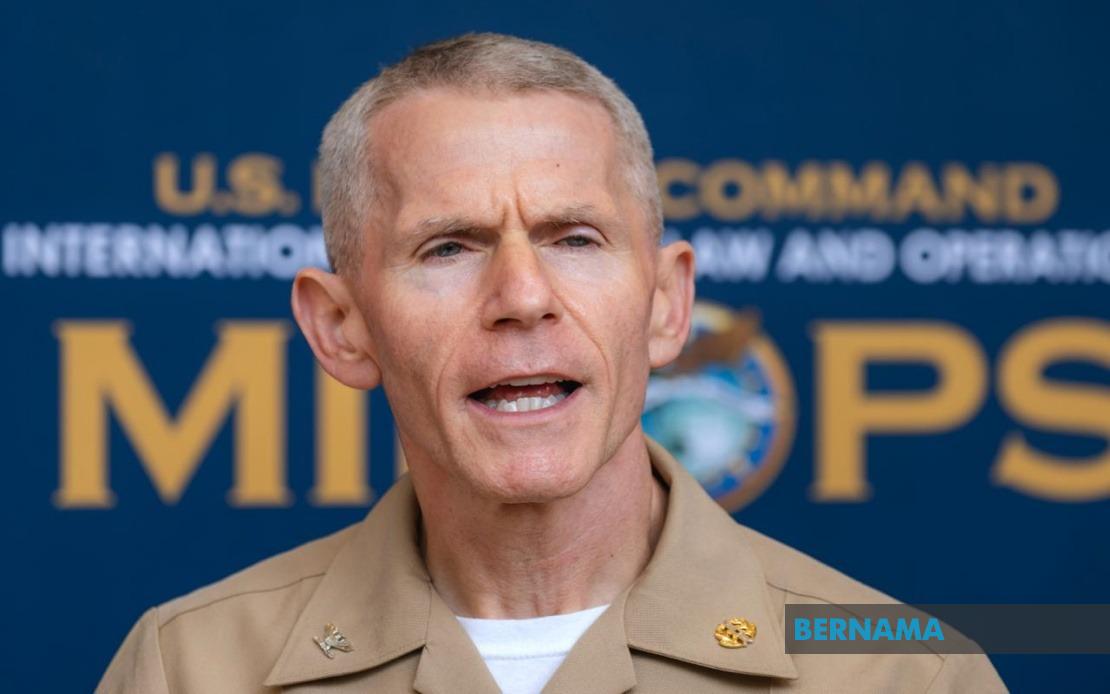
The United States Pacific Command has signalled its enduring commitment to preserving security and stability across the South China Sea and broader Indo-Pacific region, pledging to sustain its military presence as a counterbalance to destabilising activities. Navy Captain Dustin Wallace, serving as USPACOM Staff Judge Advocate, outlined the command's strategic priorities during the 37th International Military Law and Operations Conference in Kuala Lumpur on Monday, emphasising that the waterway remains integral to American regional security objectives.
Wallace articulated USPACOM's dual mandate of deterrence and reassurance, stating that the command's fundamental responsibility involves preventing aggression and countering destabilising behaviour across the Indo-Pacific theatre. This positioning reflects broader American strategic doctrine that views the South China Sea—through which roughly one-third of global maritime commerce flows—as a critical arena where great power competition and regional stability intersect. For Malaysia and other Southeast Asian nations dependent on these shipping lanes for economic prosperity, such American declarations carry significant implications for regional balance and commercial security.
Central to USPACOM's stated approach is unwavering support for international legal frameworks, particularly the principles of freedom of navigation and freedom of commerce. Wallace stressed that these doctrines form the bedrock of shared values between the United States and its regional partners, operating as mechanisms to safeguard sovereign equality and individual nations' maritime rights. This emphasis resonates particularly with countries like Malaysia, Vietnam, and the Philippines, which have maritime interests that could be constrained by alternative interpretations of international law.
The command's approach to ASEAN reflects a nuanced diplomatic strategy, acknowledging the regional bloc's heterogeneous composition while seeking to strengthen ties across individual member states. Wallace underscored that USPACOM recognises the divergent priorities and sovereign interests that characterise the ten-member association, indicating Washington's willingness to tailor engagements to each nation's specific concerns rather than imposing a one-size-fits-all framework. This differentiated approach potentially strengthens American influence across Southeast Asia by demonstrating respect for national autonomy, a principle many ASEAN members value highly.
Wallace's reaffirmation of support for ASEAN centrality—the principle that the regional grouping should lead diplomatic and security architecture in Southeast Asia—signals American willingness to work within existing multilateral frameworks rather than circumventing them. This positioning distinguishes current American policy from earlier periods when Washington sometimes pursued bilateral arrangements that sidestepped ASEAN involvement. For Malaysia, which has consistently advocated for ASEAN's central role in regional affairs, such statements validate longstanding diplomatic positions and reinforce the organisation's relevance amid great power competition.
The broader context for Wallace's remarks centres on the MILOPS 26 conference, a gathering that brings together over 300 military leaders, legal experts, and policymakers from more than 30 countries. Hosted jointly by USPACOM, Malaysia's Defence Ministry, and the Malaysian Armed Forces, the conference operates under the thematic umbrella of "From the Seabed to Space: Advancing Security, Freedom, and Prosperity for All Across the Indo-Pacific." This framing encompasses maritime security, space-based capabilities, and economic dimensions—reflecting the multifaceted nature of contemporary regional challenges.
The conference's emphasis on advancing the rule of law and sovereign equality speaks to persistent tensions in the South China Sea, where competing maritime claims and differing legal interpretations have generated friction among claimant states. By convening lawyers, policymakers, and military officials in a forum dedicated to international law, participating nations attempt to build consensus around legal principles that theoretically protect smaller states' interests against pressure from larger powers. For Malaysia, which holds maritime claims in the disputed waters, such dialogue potentially provides platforms for articulating positions and building coalitions around shared interpretive frameworks.
Wallace's statements also underscore the American commitment to strengthening existing partnerships while cultivating new relationships across the region. This formulation implies ongoing military assistance, defence cooperation, and intelligence sharing with allies including Japan, South Korea, Australia, and increasingly with Vietnam and other Southeast Asian partners. For Malaysia, maintaining productive defence relationships with Washington whilst preserving strategic autonomy remains a perennial balancing exercise, particularly given historical links to Britain and contemporary relationships with China.
The timing of these remarks carries diplomatic weight, arriving amid broader international discourse about maintaining open and rules-based systems in contested waters. American declarations of commitment to freedom of navigation have occasionally generated friction with China, which interprets certain naval operations as provocative. Malaysia's position as both a South China Sea claimant and a nation with substantial Chinese economic investments creates complex incentives around security partnerships and public positioning on regional disputes.
Looking forward, USPACOM's stated approach suggests sustained American engagement in the Indo-Pacific, with particular emphasis on multilateral frameworks, international law, and reassurance of regional partners. The conference itself demonstrates this commitment through institutional investment and high-level participation. For Malaysian policymakers and defence strategists, such engagements offer opportunities to influence American regional strategy and assert Southeast Asian priorities within the broader international security architecture that increasingly shapes Indo-Pacific affairs.

