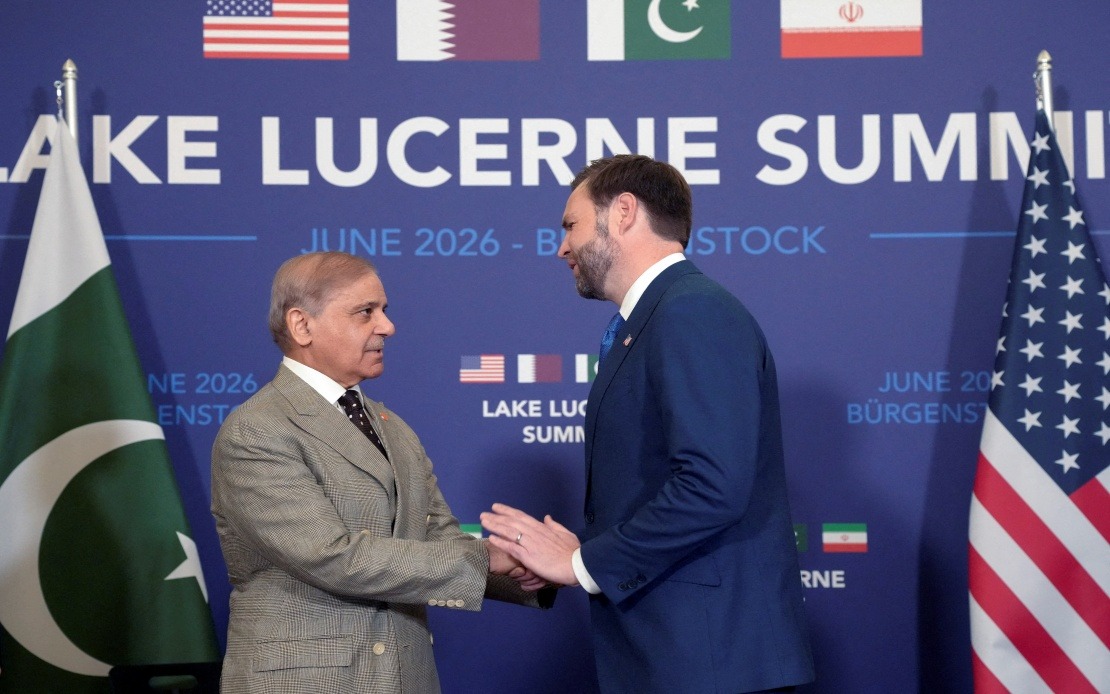
A high-level delegation from the United States convened with Pakistani leadership at the Burgenstock resort in Switzerland on Sunday, marking a significant diplomatic engagement between the two nations. Vice President JD Vance, alongside special envoys Steve Witkoff and Jared Kushner, met with Pakistan's Prime Minister Shehbaz Sharif and Pakistan Army Chief Field Marshal Asim Munir for discussions that commenced immediately following their greeting. The timing of this bilateral engagement underscores the strategic importance Washington attaches to Pakistan's role in broader regional security dynamics, particularly as fresh negotiations with Iran get underway in the same Swiss location.
The meeting between American and Pakistani officials takes place against the backdrop of intensified diplomatic efforts to resolve the armed conflict between the United States and Iran, which erupted on February 28. The White House press pool confirmed that the discussions were proceeding at the resort, though specific details regarding the agenda and duration were not immediately disclosed. The convergence of these separate but parallel negotiations at a single venue suggests coordinated efforts to address interconnected regional concerns that affect multiple stakeholders across South and West Asia.
Technical-level negotiations between Iran and the United States commenced on Sunday at Burgenstock, with Pakistan and Qatar serving as mediator nations in the process. These discussions, conducted in closed-door sessions away from public scrutiny, represent an effort to operationalise the framework established through a memorandum signed remotely by both nations overnight into June 18. The presence of Pakistani representatives in these mediation talks reflects Islamabad's significant geopolitical position and its established relationships with both American and Iranian leadership, making it a natural bridge between the negotiating parties.
The memorandum signed between Washington and Tehran establishes concrete mechanisms to halt the military hostilities that have defined their relationship since late February. Critically, the agreement incorporates specific timelines governing the removal of the American naval blockade and Iran's corresponding responsibility to restore normal shipping operations through the Strait of Hormuz. For the global economy, particularly for nations dependent on Middle Eastern oil and gas supplies, the restoration of maritime commerce through this critical chokepoint carries substantial implications for energy prices and regional stability.
Nuclear proliferation concerns remain central to the broader negotiations, with Iran committing to forgo acquisition of nuclear weapons as part of the ceasefire agreement. However, the mechanics of Iran's existing nuclear programme will be addressed through a separate, dedicated negotiation track rather than incorporated into the current conflict resolution framework. This bifurcated approach allows both sides to compartmentalise immediate security concerns from the more technically complex and potentially protracted discussions surrounding nuclear enrichment capabilities and compliance verification mechanisms.
The two parties have established a 60-day window for concluding negotiations specifically focused on Iran's nuclear programme, creating a defined timeline that pressures both delegations toward concrete outcomes. This compressed schedule reflects an understanding that prolonged uncertainty around Iran's atomic ambitions could jeopardise implementation of the broader ceasefire agreement and reignite tensions. The countdown also signals to international observers and economic actors that a resolution framework is being actively pursued rather than indefinitely stalled.
For Tehran, the anticipated reward for compliance with the memorandum's provisions centres on the lifting of comprehensive international sanctions that have severely constrained Iran's economy and its integration into global markets. These sanctions regimes, imposed over decades and tightened progressively through successive American administrations, have strangled Iranian access to international banking systems, oil export markets, and critical technology imports. The prospect of sanctions relief therefore represents a transformative outcome for Iran's domestic economy and its ability to recover from years of international isolation.
Pakistan's presence as a mediator reflects its unique strategic positioning and diplomatic relationships with both the United States and Iran. As a nuclear-armed nation with complex ties to both Washington and Tehran, Islamabad brings credibility and understanding of regional sensitivities to these negotiations. The country's participation also signals to international audiences, particularly in South Asia, that major powers recognise Pakistan's continued relevance in shaping regional security outcomes and that meaningful developments affecting the broader Asian landscape include Pakistani input.
The diplomatic choreography evident in Switzerland demonstrates how contemporary international relations frequently involve multiple overlapping negotiation tracks operating simultaneously. By hosting both bilateral US-Pakistan discussions and trilateral Iran-US-mediator technical talks within the same location, Switzerland has positioned itself as a neutral facilitator for complex geopolitical problem-solving. This approach streamlines communication between parties, facilitates backchannels, and allows for rapid coordination when developments in one negotiation track affect another.
For Malaysian and Southeast Asian observers, these developments carry implications for regional security and economic stability. Any successful resolution of the Iran-US conflict reduces the risk of wider Middle Eastern instability that could affect maritime security in adjacent waters, disrupt energy supplies, or create refugee flows affecting countries throughout Asia. Furthermore, successful mediation by Pakistan and Qatar establishes precedents for Asian nations' roles in global conflict resolution, potentially expanding opportunities for Southeast Asian involvement in comparable international disputes.
The outcome of these Switzerland negotiations will likely reverberate through international relations frameworks for years to come, establishing either a model for resolving deep great-power conflicts or alternatively demonstrating the limits of diplomatic resolution when fundamental interests clash. The 60-day nuclear negotiation deadline and the immediate technical discussions represent critical junctures where agreement or breakdown could dramatically alter regional and global trajectories.
%22%2F%3E%3C%2Fpattern%3E%3C%2Fdefs%3E%3Crect%20width%3D%22100%25%22%20height%3D%22100%25%22%20fill%3D%22url(%23ph3tt8dg)%22%2F%3E%3Crect%20width%3D%22100%25%22%20height%3D%22100%25%22%20fill%3D%22url(%23ph3tt8dp)%22%2F%3E%3Ctext%20x%3D%2250%25%22%20y%3D%2250%25%22%20text-anchor%3D%22middle%22%20dominant-baseline%3D%22central%22%20fill%3D%22rgba(255%2C255%2C255%2C0.95)%22%20font-family%3D%22Georgia%2C%20'Times%20New%20Roman'%2C%20serif%22%20font-weight%3D%22700%22%20font-size%3D%22226%22%20letter-spacing%3D%22-0.02em%22%3EDiesel%3C%2Ftext%3E%3C%2Fsvg%3E)
%22%2F%3E%3C%2Fpattern%3E%3C%2Fdefs%3E%3Crect%20width%3D%22100%25%22%20height%3D%22100%25%22%20fill%3D%22url(%23ph3oiarg)%22%2F%3E%3Crect%20width%3D%22100%25%22%20height%3D%22100%25%22%20fill%3D%22url(%23ph3oiarp)%22%2F%3E%3Ctext%20x%3D%2250%25%22%20y%3D%2250%25%22%20text-anchor%3D%22middle%22%20dominant-baseline%3D%22central%22%20fill%3D%22rgba(255%2C255%2C255%2C0.95)%22%20font-family%3D%22Georgia%2C%20'Times%20New%20Roman'%2C%20serif%22%20font-weight%3D%22700%22%20font-size%3D%22320%22%20letter-spacing%3D%22-0.02em%22%3EPM%3C%2Ftext%3E%3C%2Fsvg%3E)