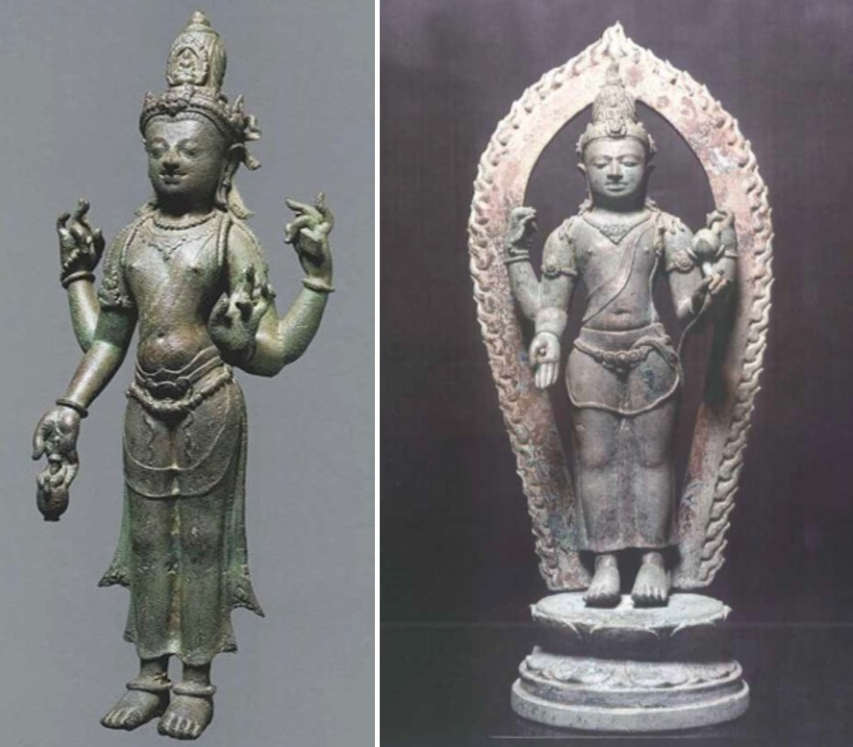
Two eighth-century bronze sculptures depicting Avalokiteshvara, the bodhisattva embodying Buddhist compassion and mercy, have been returned to Indonesia by the United States following their recovery in a sweeping investigation into international antiquities trafficking. The artworks, ceremonially handed over at the Indonesian Consulate in New York, represent a significant victory in efforts to stem the flow of looted Southeast Asian cultural heritage through global art markets, and underscore deepening cooperation between US law enforcement and source nations seeking to reclaim their stolen patrimony.
The statues entered illicit channels decades ago when they were removed from Indonesian archaeological sites by looters whose identities and methods remain obscured by time and deliberate concealment. They subsequently passed into the hands of Douglas Latchford, a British antiquities dealer whose Bangkok-based operations became infamous for trafficking Cambodia's temple treasures to international collectors and prestigious museums. Between 2003 and 2007, Latchford sold the Indonesian bronzes to a private American collector, deliberately falsifying their provenance and withholding information about their unlawful origins to facilitate their entry into the legitimate art market.
Latchford's criminal enterprise was exposed in 2019 when US prosecutors from the Southern District of New York secured an indictment accusing him of orchestrating a decades-spanning scheme to traffic looted Cambodian and Southeast Asian antiquities. The charges alleged that Latchford had systematically pillaged archaeological sites across the region, exploiting weak enforcement mechanisms and corrupt officials to extract irreplaceable cultural objects for sale to wealthy Western collectors. Though Latchford died in 2020 before facing trial, the investigation continued to unravel his network and recover hundreds of artworks, establishing a legal and forensic framework for identifying and repatriating looted pieces still circulating through international collections.
The voluntary surrender of the Indonesian statues came in 2021 when the American collector who had unknowingly acquired them from Latchford returned 34 Cambodian and Southeast Asian antiquities after learning of their illicit provenance. This decision proved pivotal, demonstrating that education and transparency can motivate cooperation from possessors of stolen heritage, even years after acquisition. Jay Clayton, the US Attorney whose office prosecuted the case, framed the repatriation as evidence of commitment to dismantling the financial incentives that drive antiquities trafficking. His statement emphasised partnership with Homeland Security Investigations and pledged continued pursuit of dealers and networks profiting from cultural looting, signalling that American law enforcement views art crime as a serious priority rather than a peripheral concern.
The Avalokiteshvara sculptures themselves merit careful attention as religious and artistic objects. Standing bronze figures of this bodhisattva are among the finest productions of Southeast Asian metallurgy and Buddhist devotional practice, their four-armed form conferring multiple blessings upon worshippers. Created during the eighth century, they reflect a period of flourishing Buddhist kingdoms and cross-cultural exchange across maritime Asia. Their removal from Indonesia constituted not merely theft of economic value but severing of spiritual and historical continuity with communities for whom such objects embody ancestral reverence and religious identity. The repatriation thus addresses a deeper wound than property loss alone.
The Latchford case illuminates structural vulnerabilities in heritage protection that continue to enable trafficking. Dealers operating from permissive jurisdictions like Thailand can exploit weak provenance standards, complicit bureaucracies, and the inherent opacity of private sales to obscure an object's origins. Museums and collectors in wealthy nations, even those acting in good faith, may accept incomplete documentation due to limited incentives for rigorous verification. Looters and tomb raiders face minimal legal consequences in source countries lacking adequate archaeological services or anti-smuggling capacity. Latchford's career, spanning four decades, suggests that despite growing international conventions and bilateral agreements, determined traffickers can accumulate vast collections before authorities respond effectively.
Indonesia's experience recovering looted heritage parallels Cambodia's more publicised struggle. In 2024, US authorities returned three Indonesian artefacts valued at approximately Rp6.5 billion, including a Majapahit stone relief, a seated Buddha, and a standing Vishnu statue. Those objects were recovered during investigation into Indian-American dealer Subhash Kapoor and American dealer Nancy Wiener, whose Manhattan gallery Art of the Past became a nexus for trafficking looted antiquities from South Asia and Southeast Asia. The Kapoor investigation, conducted jointly by Manhattan District Attorney's Office and the Department of Homeland Security between 2011 and 2023, recovered over 2,500 antiquities valued at exceeding $143 million, revealing the industrial scale of trafficking operations targeting the region.
For Southeast Asian nations including Malaysia, these repatriations carry important lessons about documentation, legal frameworks, and international coordination. Antiquities trafficking networks rarely confine themselves to single countries; looters and dealers operate across borders, exploiting jurisdictional gaps and legal inconsistencies. Enhanced cooperation among ASEAN nations on cultural heritage protection, combined with stronger enforcement against smuggling and improved bilateral agreements with Western nations, would strengthen defences. Malaysia's own archaeological sites and religious heritage face comparable pressures from looters and traffickers, making regional coalition-building essential for deterrence.
The voluntary return by the American collector who acquired the Indonesian statues from Latchford deserves emphasis as a model for engagement. Rather than criminalising possession retroactively or demanding restitution through adversarial litigation, the collector's cooperation reduced costs and accelerated return. This approach, emphasising education and moral suasion over punishment alone, may encourage other possessors of questionable pieces to consider their ethical obligations. As awareness grows regarding the harms inflicted by antiquities trafficking on source communities and archaeological science, private collectors may increasingly view repatriation as consistent with stewardship rather than loss.
The repatriation ceremony at the Indonesian Consulate symbolises not merely official handover but restoration of connection between objects and their cultural homeland. Eighth-century statues that spent decades in commercial circulation, displayed in anonymous Manhattan apartments or corporate offices, return to communities that venerate them as expressions of faith and historical identity. Indonesian authorities must now determine appropriate venues for display and conservation, engaging both museum professionals and Buddhist practitioners in decisions about how these artworks will be preserved and made accessible to public audiences.

