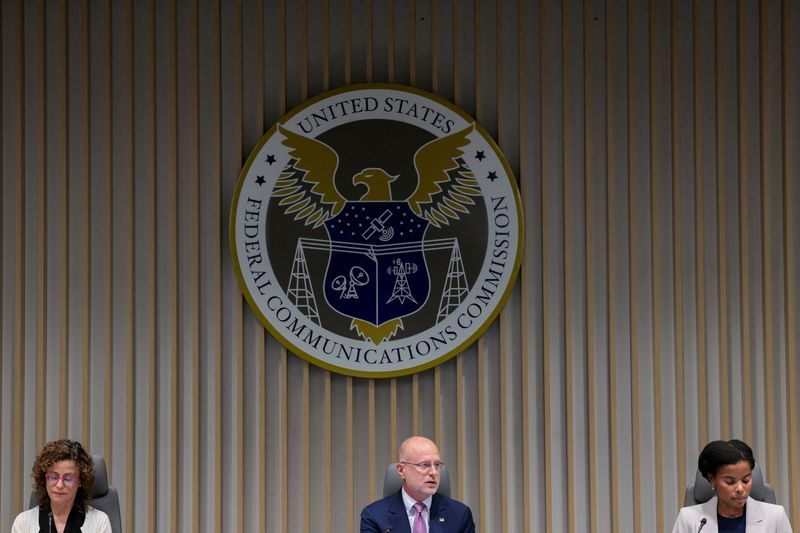
The United States has substantially tightened its restrictions on Chinese technology by banning the sale of devices containing key hardware components manufactured by companies deemed national security threats. The Federal Communications Commission voted on Wednesday to enforce this prohibition, marking a significant expansion of existing controls that primarily targeted complete devices rather than their internal parts. This move represents the latest and most comprehensive effort by the Trump administration to prevent Chinese technology firms from gaining access to the American market through component supply chains.
The FCC maintains a list of restricted Chinese companies, most prominently including telecommunications equipment makers Huawei and ZTE, whose products have been prohibited from entering the United States over national security grounds. For years, however, a regulatory gap existed that proved problematic: while complete devices manufactured by blacklisted companies faced import bans, the same restrictions did not apply to components supplied by those firms. This created a workaround whereby manufacturers could incorporate Huawei-made parts into their products and still receive FCC approval for market entry. FCC Chair Brendan Carr characterised the new regulation as closing this "component part loophole" definitively.
Under the previous framework established in 2022, companies like Huawei could no longer obtain authorizations for new complete devices intended for the US market. However, the policy contained a critical weakness: devices and equipment incorporating Huawei-manufactured logic-bearing components—the sophisticated parts that process information within a device—continued to receive regulatory clearance. The distinction between complete products and component-level restrictions created an unintended pathway for restricted Chinese firms to maintain commercial presence in America. The revised rules now explicitly prohibit any device containing Huawei-manufactured logic-bearing hardware from securing FCC approval, eliminating this regulatory gap entirely.
The rationale for this escalation centres on national security concerns regarding compromised components. Chris McGuire, a former White House National Security Council official during the Biden administration, explained to Reuters that "compromised components, particularly semiconductors or communications devices, can be used to corrupt entire devices." This assessment reflects broader US intelligence community concerns that Chinese-manufactured critical components could contain hidden surveillance capabilities, backdoors, or vulnerabilities that hostile actors might exploit. The argument posits that even if a foreign manufacturer incorporates a restricted Chinese component into an otherwise legitimate device, that component could pose systemic security risks to American telecommunications infrastructure and networks.
This regulatory action reflects the Trump administration's broader strategic posture toward Chinese technology. Since returning to office, the administration has pursued an aggressive campaign to restrict Chinese technology imports across multiple sectors. Last month, the FCC expanded its import ban to cover additional equipment from Chinese manufacturers, with restrictions taking effect on July 16. The agency has simultaneously proposed banning the importation of military-grade drones from Chinese producers, acknowledging vulnerability concerns in defence and surveillance applications that could affect national capabilities.
Beyond components and drones, the FCC has recently prohibited imports of new foreign drone and router models in recent months, recognising that connectivity equipment and aerial platforms represent critical infrastructure elements. The expansion of restrictions reflects a comprehensive approach targeting not just consumer electronics but also industrial and military-grade technology. Additionally, the agency has proposed prohibiting American telecommunications carriers from interconnecting with Chinese telecom firms that fall under national security designations, effectively preventing domestic networks from linking with restricted foreign carriers.
The scope of restrictions continues to expand. The FCC is currently evaluating additional measures that would prevent Chinese telecommunications companies operating data centres or Points of Presence in the United States from interconnecting with other American telecom providers. These Points of Presence represent critical infrastructure junctures where internet traffic from multiple carriers converges at exchange points. Allowing Chinese state-linked telecom firms to operate these facilities would theoretically grant them access to vast quantities of American internet traffic. Implementation of this proposal would effectively require Chinese telecom operators to cease operations of their American data centre infrastructure, a significant step that would sever their direct access to US internet backbones.
Huawei, the primary target of these restrictions, did not immediately provide comment on the FCC's decision. The company has previously characterised US restrictions as unfounded and politically motivated, arguing that its equipment poses no greater security risk than American alternatives. However, American policymakers have grown increasingly confident in their assessment that Chinese technology vendors maintain structural vulnerabilities to state interference, whether through mandatory access provisions in Chinese law or through the companies' relationships with Chinese intelligence services.
For Malaysia and Southeast Asia, these developments carry significant implications. The region's telecommunications infrastructure increasingly depends on a mix of Chinese, American, and European technology providers. As the US implements progressively stricter controls on Chinese components and equipment, regional carriers and equipment manufacturers must navigate complex regulatory environments. Malaysian telecom operators may face pressure to source alternatives to Chinese components, potentially increasing costs and limiting supplier options. Additionally, as Chinese firms find US markets increasingly closed, they may intensify focus on Southeast Asian markets, potentially accelerating the region's dependence on Chinese technology infrastructure and creating geopolitical complications should relations between major powers deteriorate further.
The broader trend suggests the technological world is fragmenting into competing spheres of influence. The US restrictions reflect Washington's determination to prevent what policymakers characterise as national security vulnerabilities from infiltrating American infrastructure. This posture, while presented through a security lens, also serves strategic economic objectives by protecting American technology companies from Chinese competition. For countries like Malaysia that maintain economic relationships with both the US and China, these restrictions complicate technology procurement decisions and raise questions about long-term compatibility and security standards as divergent regulatory regimes become increasingly incompatible.

