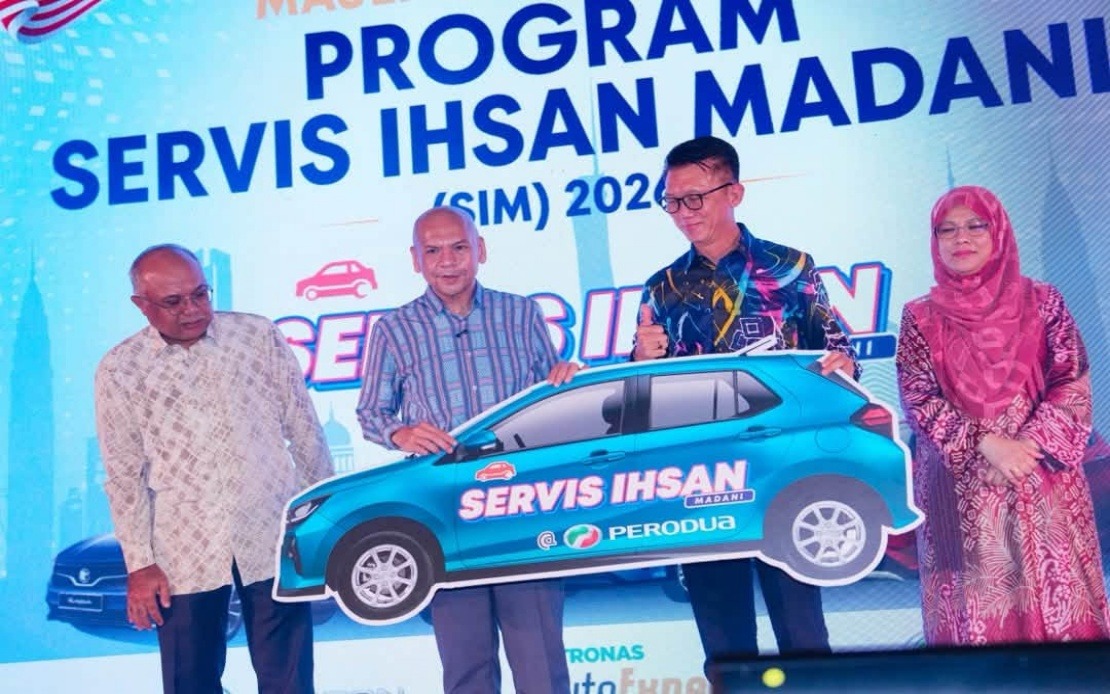
Malaysia's Ministry of Domestic Trade and Cost of Living announced a significant expansion of its vehicle maintenance subsidy programme, bringing relief to car owners as the government seeks to ease household expenses during the National Month 2026 celebration period. The initiative, announced by Minister Datuk Armizan Mohd Ali, extends the Subsidi Penyelenggaraan Kenderaan (SIM) programme to include the country's two national automotive manufacturers alongside existing service providers, broadening access to government-subsidised maintenance across a vast network of facilities.
Under the expanded scheme, motorists can now claim a RM70 subsidy towards maintenance services at authorised Perodua and Proton service centres as well as PETRONAS AutoExpert workshops, marking a meaningful attempt to address the rising costs associated with vehicle upkeep. The subsidy structure remains subject to specified terms and conditions, ensuring programme integrity while distributing benefits in a controlled manner. This move represents a natural evolution of the government's support mechanisms, recognising that vehicle maintenance represents a substantial recurrent expense for middle and lower-income Malaysian households.
The geographical reach of this programme is extensive, encompassing a network of 531 service centres and workshops strategically distributed across Malaysia. The breakdown reveals 221 Perodua service centres, 186 Proton facilities, and 124 PETRONAS AutoExpert locations, indicating relatively balanced coverage across the three provider categories. Such comprehensive network availability suggests the government has negotiated closely with industry partners to ensure meaningful access without creating service bottlenecks or overwhelming individual facilities with demand spikes during the promotional period.
Accessibility forms a key component of the programme's design philosophy. Vehicle owners wishing to participate must make bookings through the respective service providers' mobile applications, a digital-first approach that aligns with Malaysia's broader push towards e-government services and cashless transactions. This mechanism reduces fraud risk while enabling real-time monitoring of subsidy utilisation across the network. The application-based booking system also captures valuable data regarding consumer preferences and service demand patterns across different regions.
Minister Armizan positioned the initiative within the broader Payung RAHMAH MADANI framework, the government's umbrella cost-of-living support scheme introduced by Prime Minister Datuk Seri Anwar Ibrahim's administration. This positioning emphasises that vehicle maintenance subsidies represent just one component of a multi-faceted approach to reducing household financial pressures across various consumer categories. The minister articulated that the initiative translates the aspirational principle of Malaysia MADANI—encompassing prosperity that citizens genuinely experience and benefit from—into tangible, immediate relief.
Beyond the direct financial subsidy, the government articulated secondary policy objectives through this programme. By encouraging regular vehicle maintenance practices among the general population, authorities hope to improve overall road safety and reduce accident rates attributable to mechanical failures. Well-maintained vehicles consume fuel more efficiently, potentially yielding environmental benefits through reduced emissions. From an economic perspective, subsidised maintenance supports service centre employment and revenue streams, benefiting the broader automotive aftermarket sector that provides jobs across supply chains.
The timing of this expansion, announced during National Month celebrations, reflects strategic political messaging. Government officials frequently deploy consumer-friendly initiatives during patriotic observance periods, leveraging heightened civic consciousness to underscore the administration's commitment to national welfare. The connection between affordable vehicle maintenance and Malaysia's development narrative—enabling citizens to maintain reliable transport for work and commerce—aligns economic policy with nationalist sentiment.
Concurrently, the government unveiled complementary initiatives under the same RAHMAH framework, including the Jualan Ihsan RAHMAH 9.9 online sales event scheduled for September 9 in conjunction with Malaysia Day 2026 celebrations. This particular initiative features partnerships with TikTok Shop Malaysia offering discounts ranging from 10 to 30 percent on essential goods, demonstrating how government cost-of-living support increasingly leverages digital commerce platforms and social media channels to reach younger, digitally-native consumers. Prime Minister Anwar previously announced this online sales initiative, signalling whole-of-government coordination across multiple ministries.
The integration of private sector partners into government subsidy schemes presents a model that has gained prominence in Malaysian policy circles. Rather than relying exclusively on government-managed distribution channels, the approach channels support through existing commercial infrastructure—in this case, the dealer networks of Perodua and Proton alongside the fuel retailer's service arm. This arrangement potentially reduces administrative burden while leveraging established customer service frameworks that private companies have already invested in developing.
For Malaysian consumers, the RM70 subsidy represents meaningful savings when multiplied across the service lifecycle. Annual vehicle maintenance costs for typical passenger vehicles can range from RM500 to RM1,500 depending on vehicle age, usage patterns, and maintenance schedules. The RM70 rebate translates to approximately 5-14 percent savings on annual maintenance expenditure, a non-trivial reduction for cost-conscious households. This assistance particularly benefits lower-income vehicle owners who depend on personal transport for employment but face budget constraints.
The programme's emphasis on regular maintenance carries particular relevance in the Malaysian context, where tropical climate conditions, high humidity, and road infrastructure variations across urban and rural areas create varied wear patterns on vehicles. Encouraging scheduled servicing through financial incentives potentially extends vehicle lifespan, reducing the need for premature replacements and the associated capital expenditure that strains household budgets. For older vehicle owners, maintenance subsidies may prove the difference between continuing to operate functional vehicles or attempting expensive repairs that force economic decisions.
Looking forward, the success of this expanded programme will likely depend on several implementation factors. Service centre capacity to accommodate increased booking demand without compromising quality represents one consideration. The real-time availability of subsidies across distributed service networks requires robust backend coordination systems. Clear communication to the target population regarding eligibility criteria, booking procedures, and redemption processes remains essential to maximising participation rates. Should the initiative succeed in generating measurable savings and improved maintenance compliance, it may establish a template for similar subsidised access to other consumer services deemed essential to household economic wellbeing.

