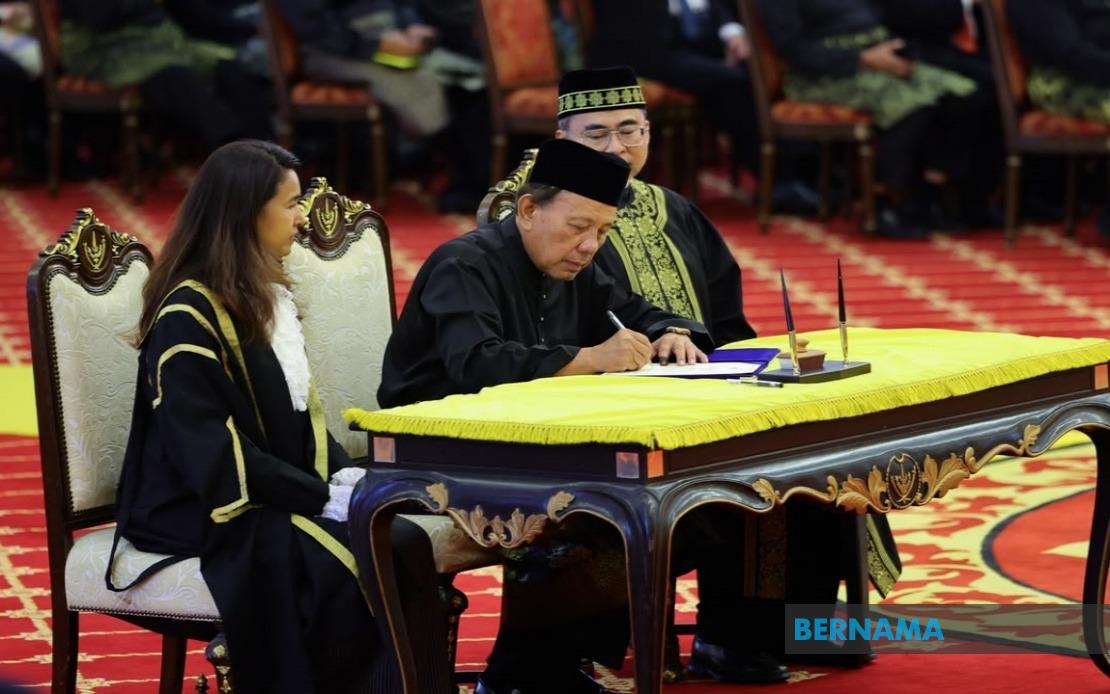
Datuk Ismail Lasim assumed office as Negeri Sembilan's new Menteri Besar on August 2, completing a formal oath-taking ceremony before the Yang Dipertuan Besar of Negeri Sembilan, Tuanku Muhriz Tuanku Munawir, at the Balairong Seri within Istana Besar Seri Menanti. The appointment marks a significant transition in the state's political leadership, with the 67-year-old Juasseh assemblyman bringing substantial institutional knowledge accumulated over nearly three decades of service in various governmental and party positions.
Ismail's ascent to the top executive position in Negeri Sembilan represents the culmination of a political trajectory that began in 1999 when he was first elected to the State Legislative Assembly representing the Senaling seat. His longevity in state politics reflects both his personal political durability and the trust placed in him by his constituents and party colleagues through successive electoral cycles and leadership transitions. The timing of his appointment follows the 16th state election, which fundamentally reshaped the political landscape through the formation of a Unity Government comprising Barisan Nasional and Perikatan Nasional.
Prior to his elevation to Menteri Besar, Ismail held the Juasseh state seat, which he secured in the recent state election with a decisive margin of 4,091 votes, defeating candidates from both Pakatan Harapan and Parti Pribumi Bersatu Malaysia. This electoral victory underscores his political relevance within his constituency and validates his mandate at the grassroots level. The electoral outcome in Negeri Sembilan saw Barisan Nasional capture 18 state seats whilst Perikatan Nasional secured seven, providing the two coalitions with a commanding two-thirds majority in the state assembly and enabling stable governance structures.
Ismail's professional credentials extend beyond partisan politics into the legal sphere, where he has established credibility as a practitioner. His educational foundation includes an undergraduate law degree from the University of Malaya, one of Malaysia's premier institutions. This legal background has informed his approach to governance and policy formulation throughout his career, offering him analytical frameworks for addressing complex administrative and constitutional matters inherent to state-level executive responsibilities.
His tenure on the State Executive Council, which spanned three consecutive terms from 2004 until 2018, positioned him as a key architect of state education policy and human capital development initiatives. During this extended period overseeing the education portfolio, he would have influenced curricula frameworks, institutional capacity-building, teacher development programmes, and resource allocation decisions affecting thousands of students and educational professionals across Negeri Sembilan. Following the formation of the Unity Government after the most recent state election, Ismail returned to the executive fold as Chairman of the Education and Human Capital Action Committee, suggesting that this policy domain remains within his purview.
Beyond his statutory roles in government, Ismail has maintained an active presence within UMNO's institutional hierarchy. He currently serves as Negeri Sembilan UMNO Information Chief, a position that carries responsibility for party communications strategy and public messaging. His accumulated experience within UMNO's organizational structures and decision-making processes positions him as someone deeply versed in intra-party dynamics, coalition management, and the mechanics of maintaining political cohesion across diverse stakeholder groups within the party apparatus.
Ismail's background also encompasses corporate sector experience at board level, suggesting familiarity with private sector governance principles, fiduciary responsibility, and business operations management. This exposure to corporate governance frameworks may inform his approach to state-level fiscal management, statutory authority oversight, and public-private partnership arrangements that feature increasingly in contemporary state administration throughout Malaysia.
Born and raised in Juasseh within Kuala Pilah district, Ismail maintained local roots throughout his political career, attending Sekolah Kebangsaan Pusat Juasseh for primary education before progressing to Sekolah Menengah Kebangsaan King George V. His family stability, reflected in his marriage to Datin Noraishah Othman and their five children, provides personal anchoring to traditional family values frequently emphasized in Malaysian political narratives. This biographical consistency contributes to his positioning as a figure of continuity and stability during a period of political reorganization in the state.
The appointment carries implications extending beyond Negeri Sembilan's borders given the state's economic significance within Malaysia's central region. Negeri Sembilan's location between the Klang Valley and the southern corridor positions it strategically for regional economic development, infrastructure coordination, and labour mobility. Ismail's stewardship will influence decisions affecting transport corridors, industrial development, and inter-state coordination mechanisms that impact the broader Southeast Asian commercial landscape through Malaysia's regional trade relationships.
The formation of the Unity Government comprising Barisan Nasional and Perikatan Nasional, within which Ismail now operates, reflects broader Malaysian political currents emphasizing coalition-building and consensus-seeking after years of polarization. This configuration requires careful management of diverse political constituencies with potentially differing policy priorities and ideological orientations. Ismail's lengthy experience navigating Negeri Sembilan politics, combined with his legal acumen and demonstrated administrative competence in the education sector, provides him with tools for managing these inherent tensions within the governing coalition.
As Menteri Besar, Ismail faces the familiar challenges confronting state-level executives in Malaysia: balancing fiscal constraints with developmental ambitions, managing federal-state coordination, addressing urban-rural disparities, and responding to citizen expectations regarding service delivery and infrastructure development. His previous experience with education policy formulation and human capital issues suggests a recognition that state competitiveness increasingly depends on developing skilled workforces and fostering innovation ecosystems. These priorities align with contemporary imperatives facing Malaysian states seeking to attract investment and generate sustainable employment opportunities for their populations.
The transition to the Menteri Besar position represents both personal advancement and institutional responsibility, with Ismail's appointment signalling confidence in his ability to navigate the complex governance architecture of a Malaysian state. His appointment reinforces patterns within Malaysian politics whereby experience, party loyalty, and demonstrated administrative capability remain decisive factors in leadership selection, even as pressures for performance-based governance and transparent decision-making intensify across the country's political system.

