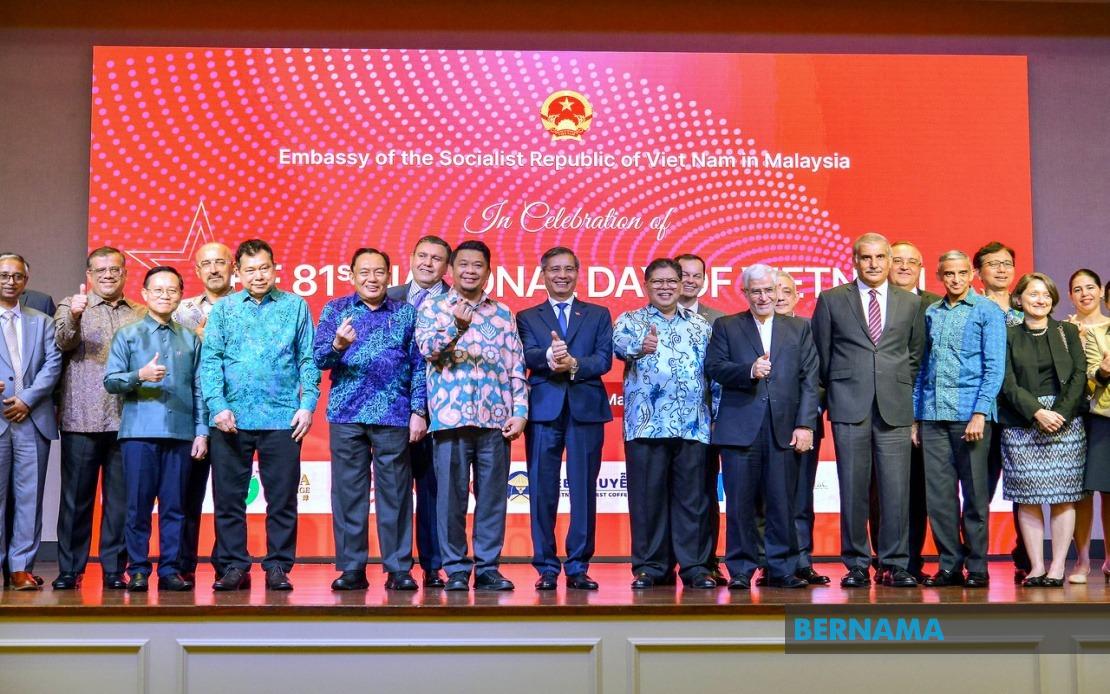
Vietnam and Malaysia are entering a fresh phase of diplomatic engagement, marked by the elevation of their bilateral relationship to a Comprehensive Strategic Partnership—a designation that reflects more than five decades of gradual relationship-building between the two Southeast Asian neighbours. Speaking at Vietnam's 81st National Day celebration in Kuala Lumpur on Thursday evening, Vietnam's Ambassador to Malaysia Dinh Ngoc Linh underscored the strategic importance of this partnership, emphasizing that Malaysia represents a cornerstone of Hanoi's regional diplomacy in an era of geopolitical uncertainty and rapid global transformation.
The Comprehensive Strategic Partnership, formally established in November 2024, signals a qualitative shift in how the two nations intend to coordinate across multiple domains. Ambassador Dinh described the arrangement as embodying genuine political trust and mutual comprehension—intangible but essential ingredients for sustained cooperation. This characterization matters because it suggests that the partnership rests on genuine alignment of interests rather than mere protocol or transactional engagement. For Malaysian policymakers and businesses, this signals Vietnam's commitment to developing deeper institutional and economic ties rather than pursuing opportunistic bilateral arrangements.
Trade and investment constitute the tangible foundation of the evolving partnership. The ambassador highlighted that commercial flows have expanded considerably over the preceding twelve months, reflecting growing confidence among Malaysian and Vietnamese enterprises in each other's markets. Beyond commerce, agricultural cooperation has become increasingly significant, particularly as both nations grapple with food security challenges and climate-related vulnerabilities. Educational and cultural exchanges, meanwhile, foster people-to-people connections that sustain relationships across generations, creating constituencies within both societies with vested interests in maintaining cordial ties.
Defence and security cooperation occupies particular prominence in Ambassador Dinh's articulation of the partnership's significance. He emphasized that military-to-military engagement and intelligence-sharing protocols contribute not only to bilateral confidence-building but also to broader regional stability. This framing is instructive for Malaysia, which navigates complex security dynamics involving great power competition, maritime disputes, and transnational security threats. By positioning defence cooperation as mutually beneficial rather than directed against external actors, both capitals can pursue security interests without unnecessarily antagonizing other regional or global powers.
Parliamentary exchanges feature prominently in the ambassador's assessment of the partnership's sustainability. Regular engagement between legislative bodies facilitates informed policymaking, reduces misunderstandings that might otherwise fester, and ensures that civilian oversight mechanisms function effectively across bilateral matters. For Malaysian parliamentarians, such exchanges provide firsthand exposure to Vietnamese perspectives and institutional practices, enriching domestic debates on foreign policy and regional cooperation. The reciprocal arrangement allows Vietnamese legislators similar insights into Malaysian governance and priorities.
Regionally, both nations have positioned themselves as custodians of ASEAN unity and centrality—principles that have become increasingly contested as members navigate divergent relationships with major powers. Vietnam and Malaysia, while possessing distinct strategic alignments, share fundamental interests in preserving ASEAN's institutional autonomy and preventing the bloc from fracturing along great power lines. The ambassador's reaffirmation of this commitment signals that bilateral cooperation serves not merely bilateral interests but contributes to regional architecture that smaller and medium-sized powers depend upon for security and prosperity.
The timing of Ambassador Dinh's remarks carries additional significance, given that his tenure in Kuala Lumpur is concluding. His expressed affection for Malaysia and commitment to the bilateral relationship, extending beyond his official term, reflects the personal dimension that seasoned diplomats bring to state-to-state interactions. Such continuity in sentiment, even as individuals rotate through postings, reinforces institutional memory and prevents bilateral relationships from deteriorating when particular ambassadors depart. For Malaysia's Foreign Ministry, this suggests that maintaining productive channels with Vietnamese counterparts remains feasible regardless of personnel changes.
The historical arc from 1973 diplomatic recognition to the 2024 Comprehensive Strategic Partnership demonstrates that meaningful international relationships require patience and incremental confidence-building. The roughly five-decade trajectory encompasses periods of regional tension, Cold War dynamics, and shifting great power relationships—yet Vietnam and Malaysia navigated these complexities without serious rupture. This history suggests resilience in the relationship and provides precedent for managing future disagreements constructively. Malaysian observers might reflect on what factors enabled this trajectory and whether similar approaches might address contemporary friction points with other regional partners.
For Malaysian readers and policymakers, the deepening Vietnam partnership carries practical implications. Vietnamese investment in Malaysian manufacturing and services sectors supports employment and technology transfer. Vietnamese workers in Malaysian agriculture and construction fill labour shortages. Conversely, Malaysian capital and expertise flow into Vietnamese infrastructure and industrial projects. Educational mobility between the two nations creates networks of professionals with binational experience and perspectives—assets that both governments increasingly value in a complex regional environment.
The ambassador's emphasis on addressing shared challenges reflects recognition that bilateral relationships in the twenty-first century cannot remain insular. Climate change, pandemic preparedness, cybersecurity threats, and supply chain disruptions affect both nations comparably. Coordinated responses amplify both nations' capacity to manage these transnational issues effectively. The Comprehensive Strategic Partnership framework provides institutional scaffolding for such coordination, transforming what might otherwise remain discrete bilateral interactions into systematic cooperation.
Looking forward, the partnership's trajectory will depend on both governments' willingness to invest political and financial resources in its maintenance and expansion. Regular high-level visits, cabinet-level dialogues, and working-group meetings that translate partnership language into concrete deliverables prove essential. For Malaysia's leadership, the Vietnam relationship offers an opportunity to position the country as a credible and strategically important partner within Southeast Asia—a role that enhances Malaysia's diplomatic influence and economic prospects.
The deputy foreign minister's attendance at Thursday evening's celebration underscores official Malaysian commitment to the partnership's advancement. Such symbolic gestures, while sometimes dismissed as merely ceremonial, serve important functions in diplomatic practice—they signal to domestic constituencies and regional observers that the government prioritizes the relationship and intends to sustain its development. As both nations navigate an increasingly multipolar and contested regional environment, the Comprehensive Strategic Partnership represents a deliberate choice to deepen institutional interdependence and collaborative capacity.

