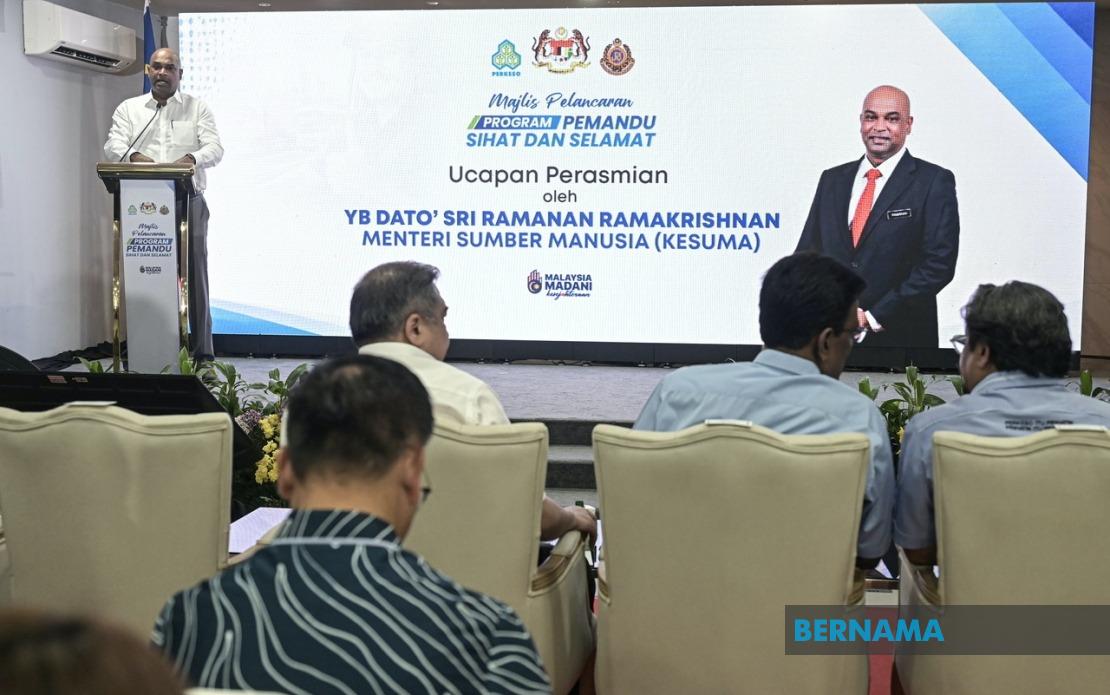
Professional drivers seeking to renew their vocational licences must now submit to comprehensive health assessments through the Healthy and Safe Driver Programme, a nationwide initiative formally launched by Human Resources Minister Datuk Seri R. Ramanan in Kuala Lumpur. The programme, operating through 500 designated panel clinics across the country, represents a significant shift in Malaysia's approach to road safety by placing preventive health screening at the centre of licence renewal requirements for commercial drivers.
The screening protocol encompasses a broad spectrum of medical examinations designed to identify conditions that could impair driving ability. Beyond routine physical assessments and vision checks, the programme includes hearing evaluations and specialised screening for sleep disorders, particularly obstructive sleep apnea—a condition increasingly recognised as a major contributor to driver fatigue and accidents. The assessment also covers critical bodily systems including cardiovascular, respiratory, and neurological function, with blood tests measuring glycated haemoglobin levels for relevant drivers. This holistic approach acknowledges that modern road safety depends not merely on driving skills but on the underlying health status of operators who spend extended hours behind the wheel.
The government has structured the programme to minimise financial barriers for participating drivers. Individuals pay only RM30 for the complete screening, with the Social Security Organisation (Socso) subsidising the remaining RM55—a deliberate policy choice that reflects the Ministry of Human Resources' commitment to making preventive healthcare accessible to working professionals. This cost-sharing arrangement underscores official recognition that road safety is fundamentally linked to worker welfare, positioning the initiative as part of broader efforts to protect Malaysia's transport workforce.
Minister Ramanan emphasised that the screening programme serves diagnostic rather than punitive purposes. The underlying objective is early detection of health conditions that might compromise driver safety, enabling timely medical intervention before they manifest as dangerous incidents on Malaysian roads. This preventive philosophy represents a departure from reactive approaches that typically address safety only after accidents occur. By identifying hypertension, diabetes, sleep disorders, and other conditions during the renewal process, the programme aims to keep unsafe drivers off the roads while providing those with manageable health issues the opportunity to seek treatment and retain their livelihoods through proper management.
The scale of the initiative reflects serious concerns about Malaysia's road safety crisis. Current data indicates that 115 workers died in road accidents in 2025, an alarming increase from 94 deaths in the previous year. This upward trajectory demands intervention strategies that move beyond traditional regulatory approaches. The vocational driver cohort faces particular risks: lorry drivers alone accounted for 62 fatalities, representing 21 percent of the total worker road deaths. These figures encompass lorry, bus, van and car drivers, as well as motorcyclists whose occupational activities depend on road use.
The concentration of fatalities among commercial drivers reflects both the extended hours many work and the physical demands of professional driving. Fatigue, medical emergencies, and undiagnosed health conditions pose acute dangers when drivers operate heavy vehicles or carry passengers. The PSS programme directly addresses this vulnerability by establishing health screening as a routine requirement tied to professional credentials. Drivers cannot renew their vocational licences without demonstrating current health status, creating a tangible incentive for participation and compliance.
Expansion plans suggest the government views this initiative as foundational rather than experimental. The Ministry aims to increase panel clinic participation to 3,000 facilities nationwide, a fivefold expansion from current capacity. This scaling reflects confidence in the programme's utility and suggests intention to create a comprehensive health surveillance system for Malaysia's professional driver population. Broader access through additional clinics would reduce geographical barriers and administrative delays, making compliance more feasible for drivers in rural and remote areas who currently travel significant distances to access medical services.
The initiative emerges from coordinated policy-making between the Ministry of Human Resources and the Ministry of Transport, reflecting recognition that road safety transcends single-sector responsibility. Worker welfare and transport policy intersect in occupational road safety, requiring integrated approaches that neither ministry could advance independently. This bureaucratic alignment strengthens implementation prospects and signals high-level political commitment to reducing fatalities through systematic health intervention.
For Malaysian drivers and the transport industry more broadly, the PSS programme introduces new compliance requirements that will reshape licence renewal procedures. Professional drivers must now factor health screening appointments into their administrative timelines, while employers may need to adjust scheduling practices to accommodate medical assessments. Transport operators dependent on large driver workforces face coordination challenges, though the subsidised cost structure mitigates financial impacts. Insurance companies may eventually leverage health screening data to refine risk assessment for professional drivers, potentially incentivising participation through premium adjustments.
The programme's success will depend partly on implementation efficiency and driver awareness. Expanding from 500 to 3,000 panel clinics requires substantial coordination with private healthcare providers and Socso infrastructure. Clear communication about programme requirements, screening procedures, and cost arrangements remains essential to ensure smooth adoption. Some resistance may emerge from drivers viewing the additional steps as bureaucratic inconvenience, necessitating messaging that emphasises personal and public safety benefits alongside administrative necessity.
Regionally, Malaysia's approach to integrating health screening into licence renewal positions the country among more proactive jurisdictions. Many Southeast Asian nations struggle with road safety challenges without similarly systematic preventive interventions. The PSS model could potentially inform regional best practices, though successful replication elsewhere would require adaptation to local healthcare infrastructure and regulatory environments. As Malaysia implements and evaluates this programme, outcomes will carry implications for how other nations approach occupational driver safety.
Longer-term, the health screening data accumulated through the PSS programme could contribute to epidemiological understanding of occupational health risks among professional drivers. Patterns in prevalence of cardiovascular disease, diabetes, sleep disorders, and other conditions identified through 3,000 clinics nationwide would provide valuable insights for targeted public health interventions. Such analysis could inform workplace health standards, training requirements, and policy refinements that further enhance road safety while improving occupational health outcomes for Malaysia's transport workforce.

