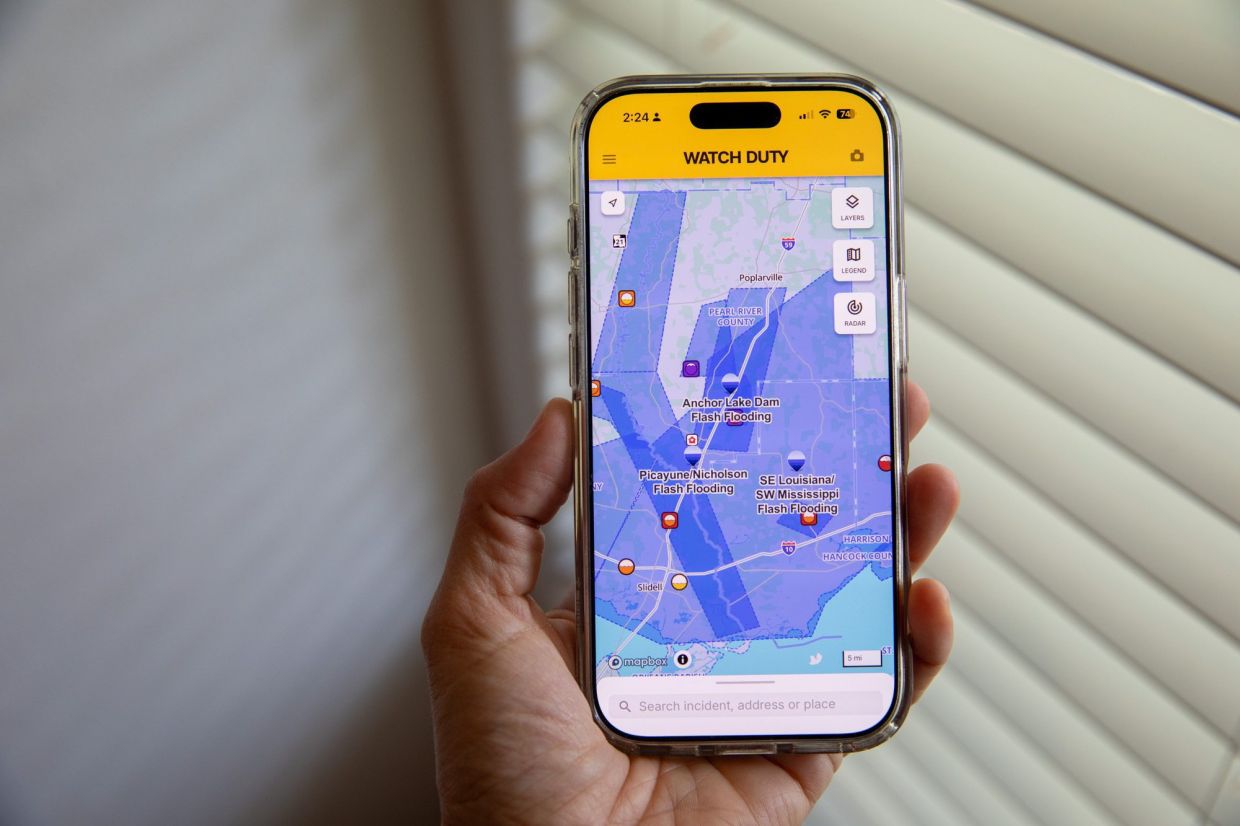
When the Eaton Fire threatened Altadena, California, in January 2025, Matt Blea faced an agonising choice: remain in his home or evacuate his family to safety. A colleague's recommendation to download Watch Duty proved decisive. The free application displayed the fire's advancing perimeter, evacuation orders, and emergency response updates in real time. Blea left that evening and later learned his home had been destroyed. He was among more than 2.5 million users who relied on Watch Duty's information during the devastating fires that swept through Los Angeles County, a scale of adoption that underscores how the app has become essential infrastructure for Americans confronting climate-driven emergencies.
Watch Duty's operation relies on a lean but dedicated team. Approximately two dozen paid staff and over 100 volunteers coordinate information gathered from emergency radio frequencies, aircraft reports, and official agency communications. David Hertz, captain of the Malibu Fire Brigade and a resident of the affected community, characterises the service as democratising access to critical data. When the Eaton and Palisades fires claimed 31 lives, many residents had received minimal warning. Hertz credits Watch Duty with filling crucial communication gaps that traditional alert systems sometimes fail to address, particularly in outlying areas where official notification channels operate inconsistently.
The nonprofit's expansion into flood monitoring represents a natural progression driven by climate reality. Beginning in June 2025, Watch Duty began deploying its established monitoring model to track flooding across the nation. This timing coincides with intensifying seasonal flood risks and reflects lessons from last July's catastrophic Texas floods, which killed over 130 people and exposed serious deficiencies in public warning systems. Residents of Texas Hill Country received inadequate advance notice despite the scale of the impending danger. John Mills, the nonprofit's CEO and co-founder, articulated the urgent motivation behind this expansion: climate hazards continue escalating while information dissemination remains sluggish and fragmented across multiple channels.
Mills established Watch Duty in 2021 following a personal crisis. When a wildfire approached his Northern California residence, he received neither official alerts nor evacuation instructions, prompting him to seek alternative information sources. He observed that volunteer radio operators monitoring emergency scanners provided timely updates via social media platforms, yet this approach carried inherent problems. Social media's heterogeneous content and susceptibility to misinformation risk drowning out life-or-death information. Mills recognised an opportunity: by formalising this volunteer monitoring culture and channeling it through a dedicated platform, he could create a more reliable system. Recruiting fellow engineers and volunteers, Mills developed Watch Duty as a nonprofit entity, a structural choice that has cultivated public trust and contributed to its growth to over 20 million users. The organisation received nearly US$6 million in grants and donations during 2025.
Watch Duty's operational structure emphasises accuracy and speed. Approximately 300 volunteer reporters systematically collate and verify information sourced from radio scanners, satellite imagery, ground cameras, user submissions, and official announcements. The platform presents this vetted information through multiple channels—interactive maps, text feeds, and push notifications calibrated to penetrate even silenced phones. Content is available in five languages, acknowledging demographic diversity across risk zones. Pete Curran, Watch Duty's meteorologist and a retired firefighter, emphasises the platform's user-centric design philosophy. Rather than requiring citizens to consult separate National Weather Service websites, emergency management portals, and county systems, Watch Duty consolidates critical information into plain language accessible through a single interface.
Operational efficiency distinguishes Watch Duty from formal government agencies. Curran attributes the app's speed advantage partly to organisational simplicity: volunteer reporters possess a singular mandate—monitoring and information synthesis—whereas emergency management officials juggle incident command responsibilities alongside public communication. This focused division of labour enables Watch Duty reporters to disseminate information faster than agencies managing complex multi-faceted emergency responses. The streamlined structure does not replace official agencies but rather complements them by accelerating information flow and ensuring messages reach populations that might otherwise remain uninformed during critical windows.
Watch Duty's flood monitoring capability integrates data from established federal sources. The platform incorporates National Weather Service flood warnings and watches, real-time river gauge measurements, and notifications regarding potential dam or levee failures. Beyond immediate alerts, the system enables users to understand their underlying flood vulnerability during non-emergency periods. Residents can determine whether they inhabit FEMA-designated flood zones and establish personalised notifications triggered when specific river gauge thresholds are approached. This preventive information architecture transforms the app beyond a crisis response tool into a risk management resource. Dr Lori Moore-Merrell, the former US Fire Administrator under President Joe Biden and current Watch Duty board member, articulates the rationale: climate change is producing rainfall patterns and intensities in regions historically unaccustomed to such events. Communities previously untouched by major flooding now require comprehensive situational awareness.
Despite Watch Duty's exponential growth and evident public value, technological solutions alone cannot fully address emergency communication challenges. Chad Berginnis, executive director of the Association of State Floodplain Managers, raises a sobering point regarding the Texas floods: warnings possess utility only if recipients understand how to respond. Knowledge of evacuation routes, advance planning, and practical rehearsal of emergency procedures represent critical vulnerabilities that applications cannot entirely resolve. Berginnis emphasises that families must not merely possess plans but actively practise them. The distinction between theoretical preparedness and embodied readiness remains substantial, and many communities demonstrate profound gaps in this domain.
Systemic vulnerabilities extend beyond individual preparedness. The infrastructure supporting weather monitoring and public alerting in the United States faces mounting pressure from existing and proposed federal funding reductions. Berginnis underscores a basic economic reality: maintaining robust monitoring and alert systems requires sustained financial investment. Personnel expenses, equipment maintenance, and technological upgrades cannot be sustained through voluntary effort alone. Federal agencies and local emergency warning systems require stable, adequate funding to fulfil their missions. Without this foundational infrastructure, even sophisticated voluntary platforms cannot guarantee comprehensive coverage or reliable functionality during widespread emergencies.
Mills articulates Watch Duty's complementary rather than replacement role. The organisation's mission assumes that National Weather Service, fire services, and established emergency infrastructure continue operating effectively. Watch Duty amplifies and accelerates information from these sources rather than displacing them. Mills explicitly recommends that users enrol in their local alerting systems alongside using the app. This redundancy principle extends beyond digital systems. Berginnis advocates for including inexpensive NOAA weather radios in household emergency kits—technology that operates independently of cell networks and internet connectivity. Contemporary emergency management sometimes privileges sophisticated technological solutions while overlooking simpler, equally effective alternatives that function without requiring downloads or data plans.
Geographic and demographic considerations impose constraints on app-based solutions. Watch Duty provides utility only to individuals who have downloaded the application and maintain sufficient cellular coverage to access it. Rural or geographically isolated populations may lack reliable connectivity, and elderly or technology-averse demographics may not adopt smartphone applications regardless of their life-saving potential. Berginnis emphasises that resilient emergency communication requires intentional redundancy across multiple modalities and technologies. No single platform—however well-designed or extensively populated—can serve all populations across all circumstances. Comprehensive public safety demands maintaining older, simpler communication channels alongside emerging digital tools.
The Watch Duty expansion into flood monitoring reflects both technological innovation and systemic inadequacy in American emergency response infrastructure. The app's success demonstrates public appetite for faster, more transparent information during crises and reveals significant gaps in official systems. Millions of people actively seeking real-time emergency information through crowdsourced platforms indicates that traditional government channels—though necessary—do not fully satisfy community needs. However, Watch Duty cannot substitute for adequate funding of federal weather agencies, local emergency management capacity, and public education regarding disaster preparedness. The application represents a productive supplement to functioning emergency infrastructure but cannot indefinitely compensate for systemic underinvestment or fragmented communication protocols. As climate hazards continue intensifying, the sustainability of both formal systems and volunteer-powered platforms requires political commitment to funding and coordination across multiple scales of governance.

