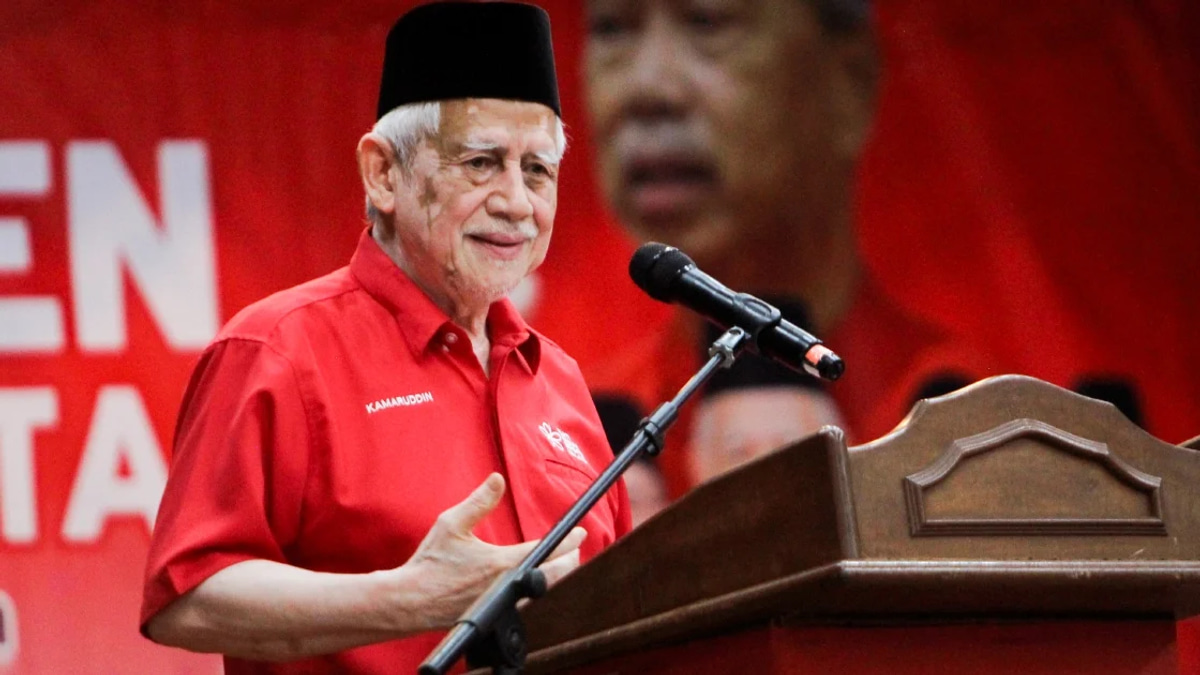
Barisan Nasional's secretary-general has expressed confidence that the emergence of Wawasan and Bersama as political entities will have minimal bearing on the coalition's performance in upcoming state elections, projecting an image of stability and preparedness within the traditional ruling alliance.
Zambry's remarks reflect BN's determination to maintain its narrative of strength and organizational capacity despite the volatile nature of Malaysia's political landscape in recent years. The coalition has faced considerable electoral headwinds since 2018, losing federal power for the first time in six decades, and has since worked to rebuild its position across various state assemblies. His statement signals that BN views these new political movements not as serious competitors but as peripheral developments unlikely to significantly alter voting patterns.
The emergence of Wawasan and Bersama represents part of a broader fragmentation within Malaysia's opposition and political space. These entities reflect attempts by certain political figures and factions to carve out distinct spaces in a crowded electoral arena, though their organizational strength and grassroots penetration remain underdeveloped compared to established parties. BN's confidence appears anchored in its extensive party machinery, entrenched administrative networks, and financial resources accumulated over decades of governance.
For Malaysian observers, Zambry's assurance carries particular significance given recent electoral volatility. The 2023 general election demonstrated that Malaysian voters remain unpredictable and responsive to local issues, sentiment shifts, and campaign momentum. BN's recovery since 2018 has been substantial in several states, yet the coalition remains acutely aware that complacency invites electoral punishment. The confidence expressed by party leadership must therefore be understood as both genuine organizational belief and necessary political messaging to rally party members and supporters.
The timing of such statements matters considerably. Ahead of state elections, coalition leaders typically project certainty and momentum to energize party machinery, suppress perceptions of weakness that might encourage opportunistic defections, and maintain voter confidence. Zambry's dismissal of Wawasan and Bersama as factors likely serves multiple strategic purposes within BN's internal dynamics and public positioning.
State elections across Malaysia have increasingly become testing grounds for new political configurations and emerging leaders. Recent contests in Selangor, Terengganu, and other states have revealed sophisticated voting patterns where urban constituencies lean toward opposition while rural areas remain BN strongholds. The role that movements like Wawasan and Bersama might play in this calculus depends substantially on their ability to mobilize specific voter demographics or address particular grievances that established parties neglect.
BN's preparation for these contests encompasses several dimensions beyond mere electoral mechanics. The coalition has invested in candidate selection, attempting to project fresh faces while retaining experienced administrators, and has refined messaging around development, economic management, and religious-communal issues that resonate with core constituencies. Whether such preparations prove sufficient depends on numerous variables beyond party control, including economic conditions, perception management, and opposition unity or fragmentation.
From a Southeast Asian perspective, BN's confidence reflects broader patterns observable across the region where established coalitions and parties seek to maintain dominance against fragmentation pressures. Thailand, Indonesia, and the Philippines have all witnessed similar dynamics where traditional power structures face challenges from new political movements. Malaysia's particular context involves the additional complexity of ethnic and religious sensitivities that shape voter behavior and coalitional mathematics in ways distinct from neighbours.
The relationship between BN and these emerging movements also warrants attention. History suggests that political entities in Malaysia's landscape sometimes merge, reabsorb, or neutralize potential competitors through negotiation and coalition-building rather than purely electoral competition. Wawasan and Bersama might eventually become incorporated into BN's broader structure or reach accommodation with the coalition, rather than functioning as persistent electoral rivals.
For Malaysian voters and observers, Zambry's statement reinforces that BN remains committed to contesting state elections as a unified force despite historical tendencies toward internal friction between component parties. The Umno-led coalition's performance in forthcoming contests will provide concrete evidence regarding whether leadership confidence reflects genuine organizational strength or represents wishful thinking in face of underlying erosion.
Ultimately, electoral outcomes depend on dynamics extending far beyond coalition rhetoric or leadership assertion. Voter sentiment, economic performance, local issue salience, and opposition effectiveness will determine whether BN's confidence proves justified. The next state elections will serve as important barometers of the coalition's true competitive position and whether peripheral political movements genuinely merit dismissal.