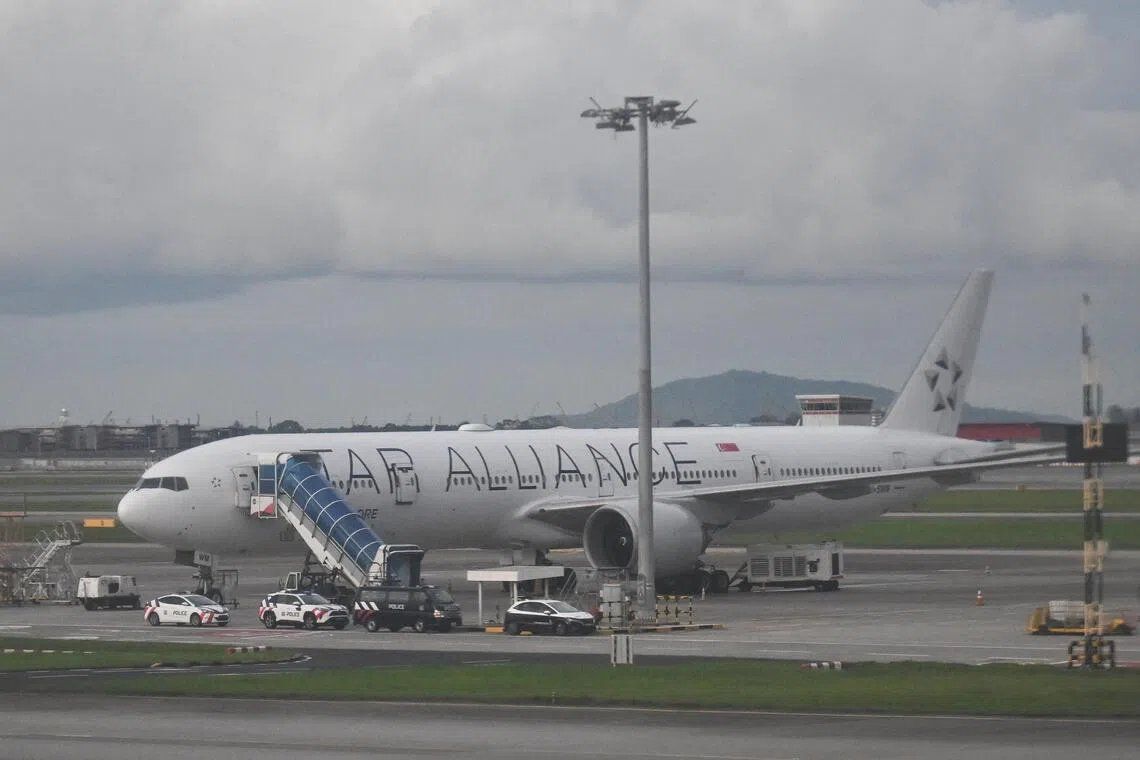
Linda Kitchen, 74, has initiated legal proceedings in Britain's High Court against Singapore Airlines following the death of her husband during a severe turbulence event that also left her with critical spinal injuries. The incident occurred on Flight SQ321 on May 21, 2024, as the aircraft travelled from London to Singapore, striking an unexpected pocket of severe weather over Myanmar that caused the plane to plunge more than 54 metres in merely five seconds. The widow is pursuing compensation to fund specialist medical treatment for her fractured spine, marking the latest in a series of legal challenges the airline now faces from passengers affected by the incident.
Geoffrey Kitchen, a theatre director with whom Linda had spent 52 years of marriage, suffered a fatal heart attack during the turbulent event. The couple had embarked on a planned six-week holiday through Singapore, Indonesia, and Australia when the incident unfolded without warning. Eyewitness accounts describe how the abrupt descent occurred mid-breakfast service, with unsecured items and passengers themselves hurled about the cabin. Geoffrey fell heavily onto his wife, crushing her against the armrest before other travellers intervened to assist him. A physician travelling on the aircraft immediately began emergency resuscitation efforts, yet these proved unsuccessful.
The flight carried 211 passengers alongside 18 crew members when the turbulence struck. The captain had no advance warning of the severe weather conditions, as the on-board weather radar system failed to detect the storm clouds that proved responsible for the violent shaking. The aircraft diverted urgently to Suvarnabhumi Airport in Bangkok, Thailand, for an emergency landing. In all, 79 people sustained injuries, with Linda remaining hospitalised for ten days before being airlifted to Bristol in the United Kingdom. She only learned of Geoffrey's death two days after the incident, a revelation she describes as devastating.
In remarks shared with British media outlets including The Independent, Linda explained her ordeal with stark clarity. "When I got separated from Geoff, I knew he was in a bad way, but nothing prepared me for hearing he had died. It was absolutely devastating," she recounted. The pain from her injuries made the journey home largely a blur of suffering, and upon arrival in Britain she remained hospitalised for approximately a week before discharge. Recovery has demanded substantial ongoing assistance at home, transforming her life in ways she is still processing years later.
Anthe Korelidou, an aviation law specialist representing Kitchen's family, emphasised that the legal action represents a fundamental step toward obtaining clarity on what occurred and whether preventative measures could have been implemented. "While it's more than two years since Geoff's death, Linda and the rest of her family continue to have a number of questions and concerns about what happened and if more could have been done to prevent their injuries," Korelidou stated. "All Linda wants is for the most thorough investigations to be conducted. The issuing of High Court proceedings is a major milestone in being able to provide Geoff's loved ones with the answers they deserve." The filing documents contain two separate claims, one for Linda personally and another on behalf of Geoffrey's estate.
Beyond Kitchen's action, court records indicate that at least six other passengers have similarly pursued legal remedies. Bradley Richards, Jack Jenkins, Hannah Fullerton, Andrew Dawood, Bryan Matthews, and the couples Pauline and Michael Rainey have all initiated proceedings against Singapore Airlines. This accumulation of legal challenges reflects the severity of injuries and trauma experienced by those aboard, as well as broader questions about airline accountability when technological systems fail to provide necessary safety information.
Singapore Airlines responded to inquiries from The Straits Times in late August by declining to comment on matters currently before the courts, a standard legal position for defendants in active litigation. However, the airline has already demonstrated financial commitment to addressing passenger suffering. During 2024, SIA implemented a compensation programme offering US$10,000 to those who sustained minor injuries, while passengers requiring long-term medical intervention received US$25,000 advances when requesting financial assistance. The airline additionally committed to full refund of airfare for all passengers on the flight, and issued an apology acknowledging the traumatic nature of the experience.
Singapore Airlines stated in that formal apology: "We sincerely apologise to all passengers and crew members on board Flight SQ321 for their traumatic experience. The safety and well-being of SIA's passengers and staff are our top priority." Yet such assurances do not address the underlying technical questions that remain unresolved about how such an incident could occur on a modern aircraft equipped with contemporary safety systems.
A comprehensive investigation conducted by Singapore's Transport Safety Investigation Bureau (TSIB), a department operating under the Ministry of Transport, has provided partial but incomplete answers. The TSIB determined that the storm clouds responsible for the turbulence evaded detection by the aircraft's weather radar system, thereby surprising the captain at a moment when advance warning could have enabled preparation or route alteration. This finding raises serious concerns about whether the radar system itself contained technical deficiencies, or whether the weather phenomenon represented conditions that current radar technology cannot reliably detect. The TSIB's determination that conclusions remain inconclusive regarding potential technical malfunction leaves hanging the critical question of whether the radar performed within normal parameters or whether equipment failure contributed to the disaster.
For Malaysian and wider Southeast Asian aviation observers, the SQ321 incident and its unfolding legal ramifications underscore vulnerabilities in how weather hazards are managed in one of the world's most heavily travelled regions. The skies above Southeast Asia, particularly during monsoon seasons and in proximity to equatorial atmospheric patterns, present weather challenges that occasionally exceed the detection capabilities of aircraft systems. The Kitchen family's pursuit of answers reflects a legitimate demand for transparency about whether airlines and manufacturers have implemented sufficient safeguards, and whether training protocols prepare crews adequately for failures in standard safety equipment. As multiple legal actions proceed through British courts, the findings may influence regulatory responses and industry practices across the entire region.

