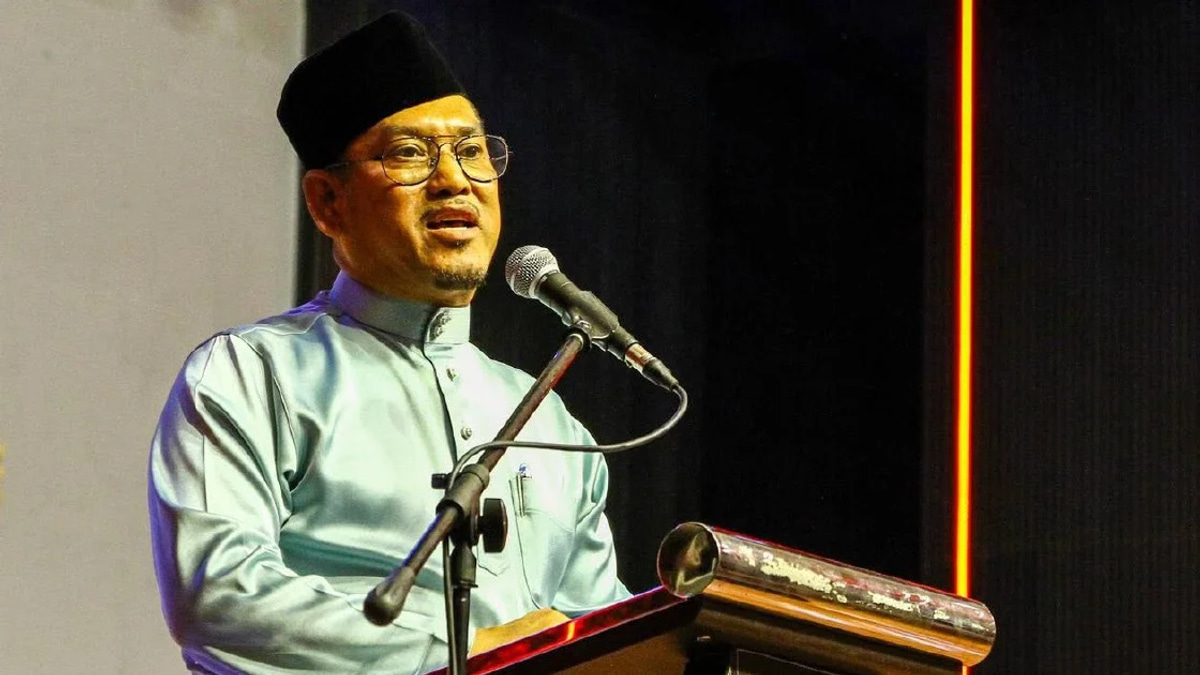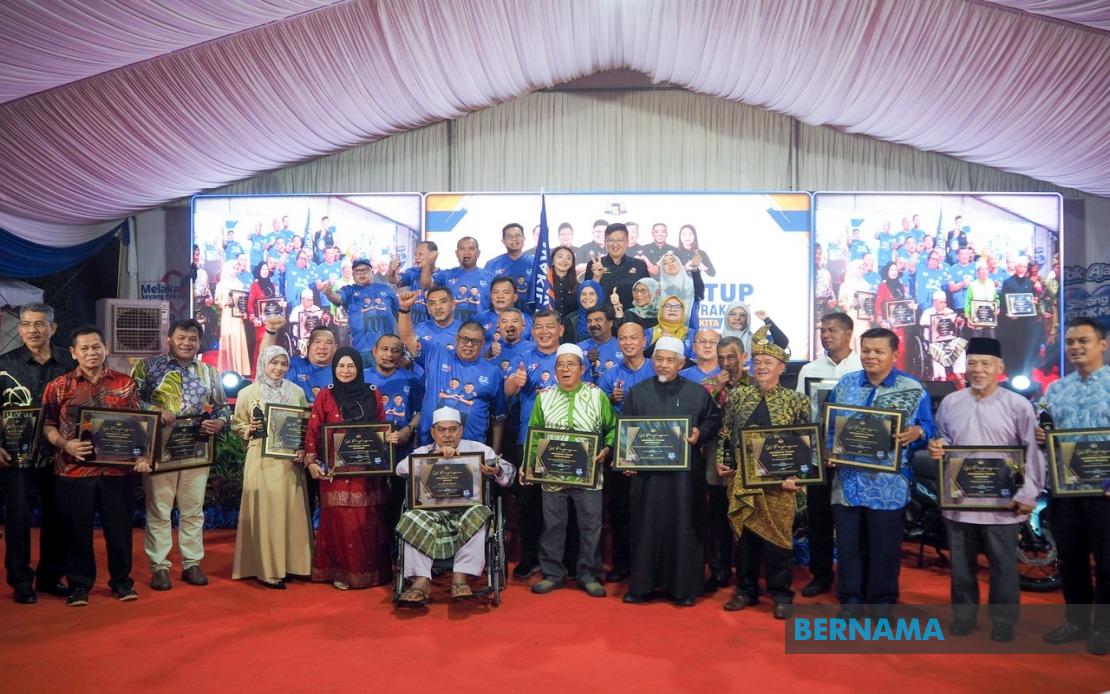
Melaka Chief Minister Datuk Seri Ab Rauf Yusoh has reframed how success should be evaluated for the Wakil Rakyat Untuk Rakyat (WRUR) Programme, arguing that the metric should focus on tangible improvements in residents' circumstances rather than counting initiatives undertaken. Speaking at the closing ceremony of the WRUR programme for Kota Melaka parliamentary constituency in Telok Mas, Ab Rauf underscored that the initiative's true worth lies in its capacity to resolve community grievances and enhance living standards across constituencies.
The WRUR approach operates on a foundational principle: problems must be addressed at the grassroots level where they originate. The framework ensures that every complaint submitted by residents receives formal documentation and systematic attention, with no distinction based on their socioeconomic status, ethnicity, or geographic location. This democratisation of complaint resolution represents a shift from traditional governance models where access to decision-makers was often mediated by patronage networks or administrative hierarchies.
Across 19 state constituencies where WRUR has been deployed, the programme has accumulated 4,027 complaints from the public. Of these, 2,633 cases—representing more than 65 per cent—have been successfully resolved. This resolution rate suggests the programme has established operational efficiency in processing grievances, though the substantial backlog of approximately 35 per cent of unresolved cases indicates ongoing implementation challenges that require sustained attention and resource allocation.
Kota Melaka represents the third parliamentary constituency to implement WRUR following Alor Gajah and Hang Tuah Jaya. During its four-week operational window, the programme generated over 500 distinct activities across five state constituencies, reaching more than 200,000 residents. The Kota Melaka constituency itself received 470 complaints, with 31 resolved during the implementation period while others remain in the processing pipeline according to severity and feasibility.
A critical distinction Ab Rauf made was that programme termination does not signify the conclusion of complaint resolution efforts. He has explicitly directed all relevant government agencies to maintain oversight of unresolved matters beyond the formal programme closure, ensuring continuous progress toward resolving issues until residents observe concrete improvements in their circumstances. This commitment addresses a common governance failure where citizen complaints languish after programme completion.
Simultaneously, State Tourism, Heritage, Arts, and Culture Committee chairman Datuk Abdul Razak Abdul Rahman outlined the broader development trajectory in Telok Mas state constituency. Over the preceding five years, 328 local development projects valued at nearly RM68 million have been executed, benefiting residents distributed across 12 distinct areas. These projects encompassed infrastructure modernisation—specifically road upgrades, river maintenance, drainage and sewerage system improvements—alongside housing rehabilitation and construction of new residential units.
Community infrastructure has received substantial investment through this development framework. Upgrades to community halls, religious facilities, business centres, sports facilities, and educational institutions demonstrate a comprehensive approach to enhancing public spaces that serve multiple functions within society. This integrated infrastructure strategy recognises that economic opportunity, social cohesion, and quality of life depend on interdependent physical and institutional foundations.
Beyond infrastructure, social assistance programmes have extended direct support to vulnerable populations in Telok Mas. Between 2022 and the present, 6,098 residents accessed food, welfare, and health assistance packages totalling more than RM1.2 million. Additionally, 213 medical beds were distributed to individuals requiring them, addressing healthcare access disparities in the constituency. The Jualan Rahmah and Jualan Murah initiatives—seventy iterations since 2022—have specifically targeted cost-of-living pressures through subsidised retail operations. Approximately 15,000 residents benefited from the Free Petrol Programme, receiving assistance worth RM177,000.
Educational support has emerged as a priority within the development strategy. Approximately 1,694 secondary students preparing for the Sijil Pelajaran Malaysia examination received targeted assistance, while 255 high-achieving Form Five students and higher education institution enrollees accessed educational incentives amounting to RM244,200. This combination of examination support and merit-based scholarships attempts to address both equity and excellence in educational outcomes.
Tourism sector development has been identified as a growth avenue for Telok Mas. The Ministry of Tourism, Arts and Culture has allocated RM2.4 million for upgrading tourism facilities at Sungai Punggor and Alai, with completion projected for 2027. A separate RM300,000 allocation will transform Dataran Telok Mas into a unified centre marketing both tourism experiences and local traditional products, positioning the locality as a destination for cultural and artisanal consumption.
Geological heritage has gained recognition through the Melaka Geopark initiative. Bukit Larang has been designated as a significant geosite within this framework and will undergo assessment for National Geopark status in October. This recognition, if successful, could generate sustainable economic benefits through geotourism while preserving geological features of scientific and educational significance. The geopark designation represents an innovative approach to balancing conservation with community economic development.
These multifaceted interventions—spanning complaint resolution, infrastructure modernisation, social assistance, education, and cultural tourism—collectively illustrate an administrative philosophy prioritising tangible quality-of-life improvements over programme proliferation. For Malaysian readers and Southeast Asian observers, the WRUR framework presents a potential governance model emphasising systematic responsiveness to citizen concerns and long-term developmental commitment beyond electoral cycles. Whether such systemic improvements can be sustained across varying political circumstances and financial constraints remains an open question warranting future evaluation.