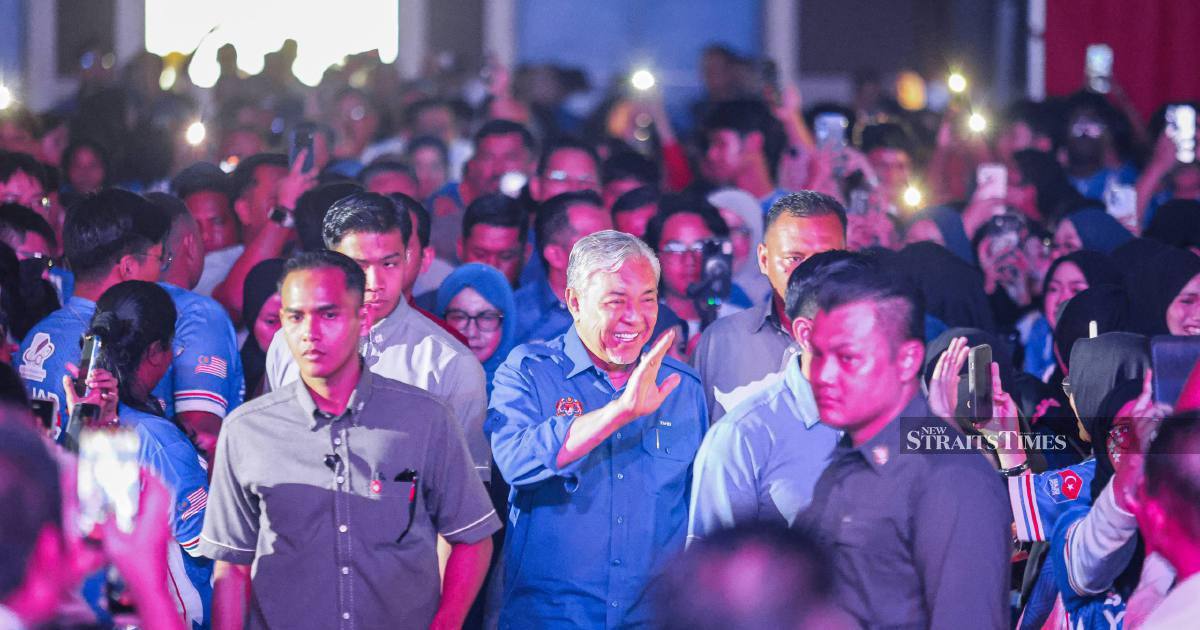
The Barisan Nasional coalition is intensifying efforts to secure youth backing for caretaker Johor menteri besar Datuk Onn Hafiz Ghazi as the state gears up for its July 11 election. Deputy president Datuk Seri Zahid Hamidi, speaking in Iskandar Puteri, has positioned the incumbent as the coalition's leading candidate and urged younger voters to maintain their support to ensure ongoing development momentum in the southern state.
Onn Hafiz has emerged as a central figure in BN's electoral strategy, representing the coalition's vision for Johor's future. His administration has undertaken various infrastructure and economic initiatives that the coalition hopes will resonate with voters across different demographics. By framing the election as a choice between continuity and uncertainty, BN is attempting to leverage any goodwill from recent projects and policy implementations.
The emphasis on youth engagement reflects a broader recognition that younger voters hold significant electoral sway and are increasingly decisive in Malaysian politics. Many in this demographic have demonstrated growing interest in development transparency, economic opportunities, and digital governance. BN's appeal to this constituency suggests an attempt to move beyond traditional messaging and connect with voters who prioritise tangible improvements in living standards and job creation.
Johor has historically been a BN stronghold, though the coalition faces heightened pressure from opposition parties seeking to expand their footprint in the peninsula's southernmost state. The upcoming election represents a critical moment for BN to retain control of one of Malaysia's most economically significant states. The development narrative—emphasising projects completed and future investments—forms the backbone of this retention strategy.
Zahid's direct engagement with youth groups underscores BN's awareness that complacency could prove costly. Opposition campaigns typically gain traction when incumbent governments fail to communicate recent achievements or appear disconnected from younger voters' concerns. By actively soliciting youth support, the coalition is attempting to counter such narratives and demonstrate responsiveness to this electorate.
Onn Hafiz's tenure has coincided with various state-level economic initiatives and infrastructure developments. Whether these have genuinely improved constituent well-being or simply created visible projects remains contested, but BN clearly intends to campaign on these achievements. The framing of Onn Hafiz as essential to development continuity suggests BN views him as electorally potent and capable of attracting cross-party voters concerned primarily with governance competence.
The broader context of Malaysian politics shows that state elections increasingly function as referendums on federal coalition performance. Johor's election will inevitably reflect voter sentiment regarding national economic conditions, cost of living pressures, and the federal government's handling of various portfolios. BN's state-level campaign cannot entirely insulate itself from these national narratives, though local messaging about Johor-specific projects may influence swing voters.
Youth participation in elections has demonstrated volatility in recent years. While this demographic was instrumental in the 2018 political transition, subsequent elections have shown variable engagement levels. BN's youth-focused outreach suggests the coalition believes this segment remains winnable but recognises it cannot take their support for granted. Messaging around job creation, skills development, and digital economy opportunities may prove more persuasive than traditional appeals to party loyalty.
The competitive landscape in Johor has evolved considerably. While BN retains structural advantages as the incumbent with greater access to resources and administrative machinery, opposition coalitions have strengthened considerably since 2018. Multiple parties are vying for votes across different constituencies, potentially fragmenting the opposition vote but also indicating genuine multi-cornered contests rather than straightforward BN versus opposition matchups.
Onn Hafiz's political trajectory and public profile will likely be central to the campaign narrative. As caretaker menteri besar, he possesses significant advantages in terms of government visibility and the ability to announce new initiatives. However, his effectiveness in converting these structural advantages into electoral victories depends partly on his personal appeal and partly on broader voter sentiment regarding governance and development outcomes.
For Malaysian observers, particularly those in Johor and beyond, this election carries implications for the trajectory of state-level governance and the continued balance of political power in peninsula Malaysia. The outcome will signal whether BN can successfully reinvigorate support among younger constituencies and whether development-focused messaging remains electorally compelling amidst broader concerns about equity, sustainability, and inclusive growth. Johor's result may also provide early indicators for federal-level political dynamics as Malaysia approaches its own electoral cycle.

