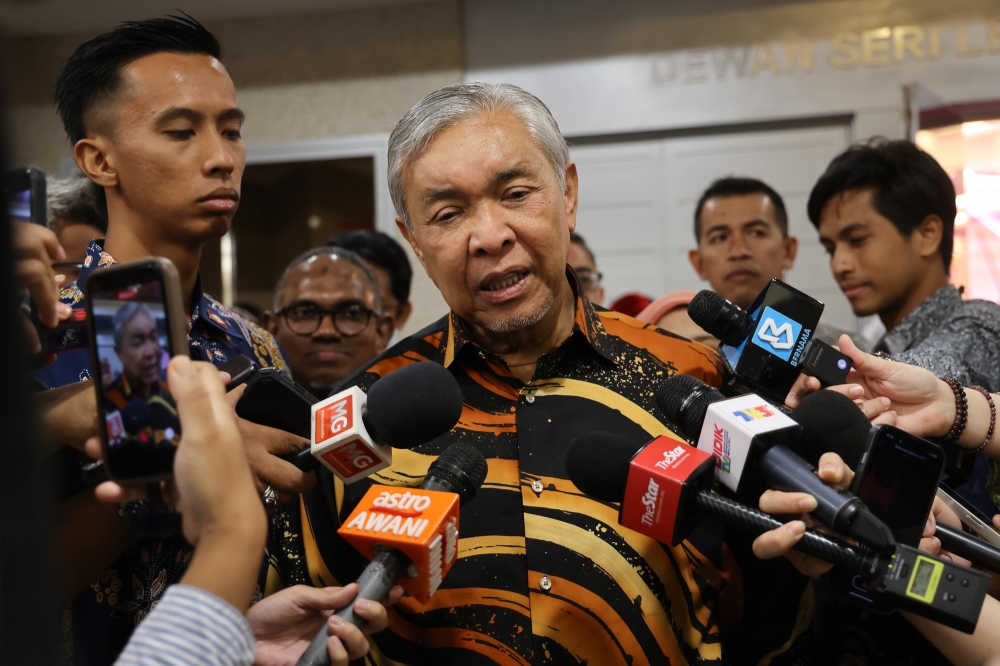
Deputy Prime Minister Ahmad Zahid Hamidi has issued a stark warning that anyone responsible for mismanagement at Tabung Haji (TH) must face consequences, underscoring Barisan Nasional and Umno's commitment to holding officials accountable for breaches of public trust. Zahid's remarks, made in Putrajaya on August 6, reflect mounting pressure within the ruling coalition to address systemic governance failures that have damaged public confidence in one of Malaysia's largest Islamic financial institutions.
The Tabung Haji scandal represents a significant governance crisis that has exposed vulnerabilities in how state-linked entities manage pilgrim savings and investments. As Malaysia's designated hajj fund manager, TH holds the life savings of millions of Malaysian Muslims who contribute regularly in anticipation of performing the Islamic pilgrimage. The revelations of mismanagement have therefore struck at the heart of public trust in institutions designed specifically to serve the Muslim community's religious and financial needs.
Zahid's unequivocal stance signals a potential shift in how the current administration intends to handle corporate governance lapses within government-linked companies. Rather than defensive positioning or attempts to minimize the scandal, the Deputy Prime Minister is publicly committing to a reckoning, suggesting that internal party discipline and legal mechanisms will be deployed against wrongdoers regardless of their standing or connections. This represents a departure from Malaysia's historical pattern of protecting powerful figures implicated in financial scandals.
The TH situation carries particular political implications for Umno, which has long positioned itself as the guardian of Malay-Muslim interests. Any perception of negligence in protecting the hajj savings of ordinary Malays risks eroding the party's base support, especially among rural and middle-class Muslims who constitute the traditional Umno demographic. For Barisan Nasional more broadly, the scandal presents both a reputational risk and an opportunity to demonstrate that the coalition's return to power has genuinely included commitments to institutional reform.
Previous investigations and audits into TH have uncovered serious lapses in investment oversight, inadequate risk management protocols, and concerning performance metrics that fell far short of what would be expected from a fund managing billions in pilgrim contributions. The scale of these failures suggests they were not isolated incidents but rather reflective of deeper structural problems in governance frameworks that were either overlooked or inadequately monitored over extended periods.
For Malaysian citizens, particularly the millions whose retirement and hajj aspirations are tied to TH's performance, Zahid's pronouncement offers some measure of reassurance. However, the true test will lie in whether these commitments translate into concrete actions, transparent investigations, and measurable reforms that restore institutional credibility. The public has grown increasingly skeptical of high-level declarations that are not followed by visible enforcement actions.
The implications extend beyond Tabung Haji itself, as the scandal has prompted broader scrutiny of governance practices across Malaysia's sprawling ecosystem of government-linked companies and statutory bodies. If accountability mechanisms can be effectively deployed in the TH case, it could establish precedent and momentum for similar oversight in other institutional domains, ranging from sovereign wealth funds to development agencies.
International investors and rating agencies have also taken note of Malaysia's handling of corporate governance crises within state institutions. The willingness of political leadership to pursue accountability rather than deflect or obscure can influence investor confidence in Malaysia's institutional maturity and commitment to international standards. This financial and reputational dimension adds weight to Zahid's statements beyond domestic political considerations.
The Deputy Prime Minister's remarks also reflect pressure from the broader Barisan Nasional coalition partners and civil society organizations that have demanded transparency and action. Ignoring such calls could have fractured the ruling coalition's fragile unity, particularly given that many BN partners have their own institutional interests and constituencies affected by governance failures in state-linked entities.
Moving forward, the critical question becomes how comprehensively these promised consequences will be implemented. Establishing clear accountability pathways, strengthening board oversight mechanisms, and ensuring that financial penalties or legal proceedings are pursued consistently regardless of individuals' political connections will be essential to validating Zahid's commitment. The manner in which this unfolds will significantly influence public perception of whether Malaysia's governance standards are genuinely improving or whether they remain subject to the same patronage patterns that have historically undermined institutional integrity.

