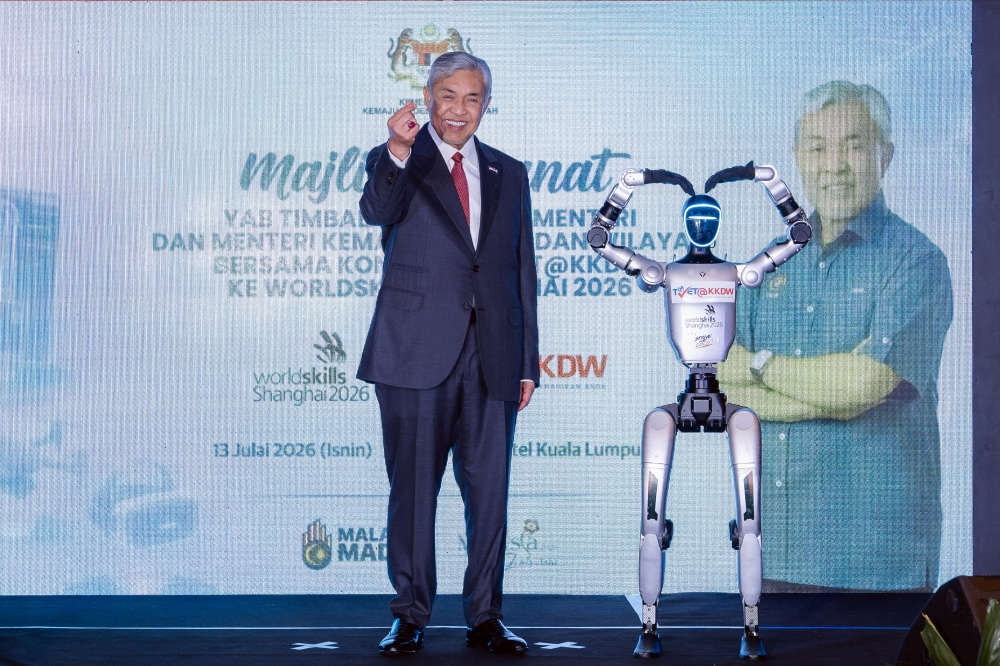
Deputy Prime Minister Datuk Seri Dr Ahmad Zahid Hamidi has sought to defuse political tensions by brushing aside recent remarks from Housin Nga Kor Ming, signalling that Malaysia's multi-party Unity Government coalition remains intact and functioning effectively despite occasional public friction among members.
Zahid's measured response comes as the DAP leader previously indicated he might step down from ministerial duties, a statement that could have signalled deeper cracks within the governing alliance. Rather than engage in lengthy rebuttal, the second-ranking government official chose to characterise the situation as a routine matter of coalition politics, noting that disagreements and heated exchanges do not necessarily undermine the broader partnership that has sustained the federal administration since 2022.
The Deputy Prime Minister's conciliatory tone reflects the delicate equilibrium required to maintain the Unity Government, which brings together parties from across Malaysia's political spectrum—a historically fragmented landscape where the convergence of UMNO, DAP, PKR, Amanah, and numerous other parties represents a significant departure from traditional two-coalition competition. This arrangement, while offering governance legitimacy through broader representation, demands constant diplomatic navigation among leaders with distinct ideological bases and electoral interests.
Zahid's personal reference to Nga as a friend underscores an important dimension often overlooked in coverage of Malaysian coalition dynamics. Behind formal institutional structures and policy disagreements exist personal relationships and institutional knowledge that provide resilience when public positions harden. By humanising the relationship and moving away from adversarial framing, Zahid attempted to reorient the narrative away from fragmentation and toward partnership.
The Unity Government has faced periodic testing since its formation following the 2022 general election. Previous disputes involving ministerial responsibilities, policy direction, and resource allocation have occasionally spilled into public view, prompting similar reassurances from senior figures. Each instance has raised questions about the coalition's longevity, particularly given the departure from the two-coalition model that dominated Malaysian politics for decades. However, the absence of actual cabinet collapses or significant ministerial resignancies suggests the structural incentives holding the coalition together remain powerful.
For Malaysian readers and regional observers, the stability of the federal government carries substantial implications. The Unity Government's persistence has allowed continuation of economic policies and development programmes while providing unusual opportunities for cross-party legislative cooperation. Conversely, heightened fragility could destabilise implementation capacity, particularly in addressing inflation, infrastructure delivery, and foreign investment confidence.
Nga's brief flirtation with resignation talk may have reflected frustration over specific policy matters or resource allocation within the cabinet structure. DAP, as the principal Chinese political party and one of the coalition's major components, maintains particular sensitivities regarding decision-making processes that affect the interests of its electoral base. When DAP leadership perceives marginalisation or exclusion from important discussions, statements of discontent often serve as pressure tactics rather than precursors to actual departure.
Zahid's response strategy—acknowledging Nga's status, downplaying the significance of tensions, and reasserting government functionality—represents orthodox coalition management. This approach avoids escalation while signalling to both internal and external audiences that disagreements remain within acceptable bounds. The Deputy Prime Minister's position as UMNO's de facto operational leader adds weight to such assurances, as UMNO remains the largest and most institutionally embedded party within the Unity Government.
The broader context involves managing expectations around the next general election, scheduled no later than 2027. Coalition partners must balance the need to maintain unified governance with the competitive imperatives of positioning their respective parties for potential electoral contests. This tension creates recurring cycles of public controversy followed by reassurance and recommitment. Each party must simultaneously appear loyal to collective governance while protecting its distinctive identity and electoral brand.
Regional stability matters considerably given Malaysia's role as a significant Southeast Asian economy with substantial trade relationships and investment flows. Political uncertainty at the federal level can affect currency markets, foreign investor confidence, and the implementation of regional economic cooperation frameworks. The relative stability signalled by dismissing coalition tensions contributes to broader macroeconomic confidence.
Looking forward, the Unity Government's trajectory will likely continue showing surface tensions interspersed with rhetorical reaffirmations of commitment. Zahid's comments suggest senior leadership remains invested in maintaining the coalition structure despite inherent contradictions and competing pressures. Whether this equilibrium can persist through the remainder of the parliamentary term, with approaching electoral politics intensifying, remains an open question that Malaysian political observers will continue monitoring closely.

