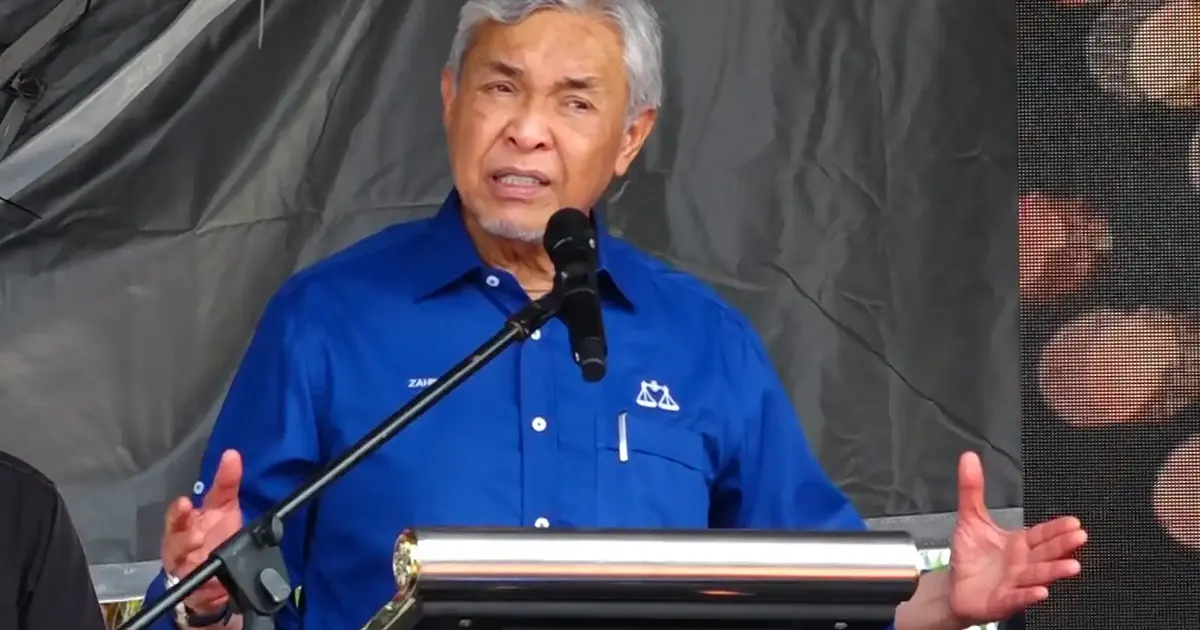
Ahmad Zahid Hamidi has moved to quell speculation about behind-the-scenes political manoeuvring, flatly denying that any high-level meeting between Barisan Nasional, Perikatan Nasional, GPS, and GRS has taken place or is being planned. The UMNO president's swift rebuttal comes as political observers increasingly scrutinize alignments among Malaysia's major coalition blocs ahead of the next general election.
The denial carries particular weight given the persistent questions about coalition stability in Malaysian politics. Since the formation of the Madani government in November 2022, speculation has periodically surfaced regarding potential realignments or secret negotiations among opposition and fence-sitting parties. Such rumours typically gain traction during periods of political uncertainty or when legislative votes become tight, prompting questions about whether supporting coalitions might seek alternative arrangements.
Zahid's clarification extends beyond merely dismissing the meeting allegation. By publicly reiterating Barisan Nasional's commitment to backing the Madani administration through to the sixteenth general election, he has sought to provide reassurance regarding the coalition's political trajectory and intentions. This statement serves multiple audiences simultaneously: loyalists within BN who may harbour concerns about the stability of current arrangements, potential coalition partners who might be considering overtures from other blocs, and the government itself, which requires predictable legislative support.
The timing of such denials often matters as much as their substance. Political coalitions in Malaysia operate within a delicate equilibrium where perceptions of weakness or wavering commitment can quickly translate into real defections. By promptly addressing these reports rather than allowing them to circulate unchecked, Zahid has attempted to forestall the narrative damage that might otherwise accumulate if questions about BN's loyalty went unanswered.
Barisan Nasional's position within the current political configuration differs markedly from its dominance in earlier eras. As a party that held unbroken power for nearly seven decades before 2018, BN now operates as a supporting coalition rather than the dominant force, a transition that inevitably prompts ongoing negotiations and reassessments. The coalition comprises UMNO, MCA, MIC, and several other component parties, each with its own constituency concerns and political calculations.
Perikatan Nasional, which includes BERSATU and PAS alongside several smaller parties, represents the primary opposition force and has been actively positioning itself as an alternative government-in-waiting. GPS and Sarawak-based parties hold particular strategic value given their parliamentary seats and potential to swing outcomes on critical votes. In this context, any credible reports of meetings between these various blocs would carry significant implications for parliamentary arithmetic and government stability.
The Madani government itself rests on a coalition comprising Pakatan Harapan parties—PKR, DAP, and Amanah—alongside Barisan Nasional and several independent lawmakers. This arrangement, while functional, lacks the overwhelming parliamentary supermajority that would render it completely insulated from defection pressures. Consequently, the political temperature regularly rises when questions emerge about whether any component of this supporting structure might shift allegiance.
Zahid's emphasis on BN's commitment extends through to GE16, expected around 2027 or 2028 depending on parliamentary dissolution timing. This timeframe is significant because it suggests BN intends to participate in the next election campaign as part of the Madani coalition rather than reverting to opposition status or brokering alternative arrangements. Such a stance contrasts with opposition parties that have traditionally positioned themselves to offer voters a clear alternative government.
The broader political context in Malaysia has shifted substantially since 2022. The 15th general election resulted in a hung parliament, a rarity in Malaysian electoral history, which fundamentally altered how coalitions operate. Rather than one bloc commanding a clear majority, multiple parties now exercise greater leverage in negotiations. This fragmentation has necessitated more complex coalition management and created opportunities for realignment that simply did not exist in earlier periods of Malaysian politics.
For regional observers, Malaysian political developments carry implications beyond the nation's borders. Southeast Asia's largest Muslim-majority democracy serves as a bellwether for democratic resilience and coalition stability in a region where authoritarian pressures increasingly constrain political pluralism. How Malaysia's various blocs manage their relationships, whether through institutional mechanisms or backroom negotiations, influences perceptions of democratic legitimacy across the region.
Zahid's denial, while intended to settle the immediate controversy, may ultimately prove less important than the underlying question it raises: how durable are the current coalition arrangements, and what factors might eventually precipitate realignment? As Malaysia approaches the next electoral cycle, such calculations will likely intensify among political actors seeking to position themselves advantageously regardless of which coalition emerges victorious.

