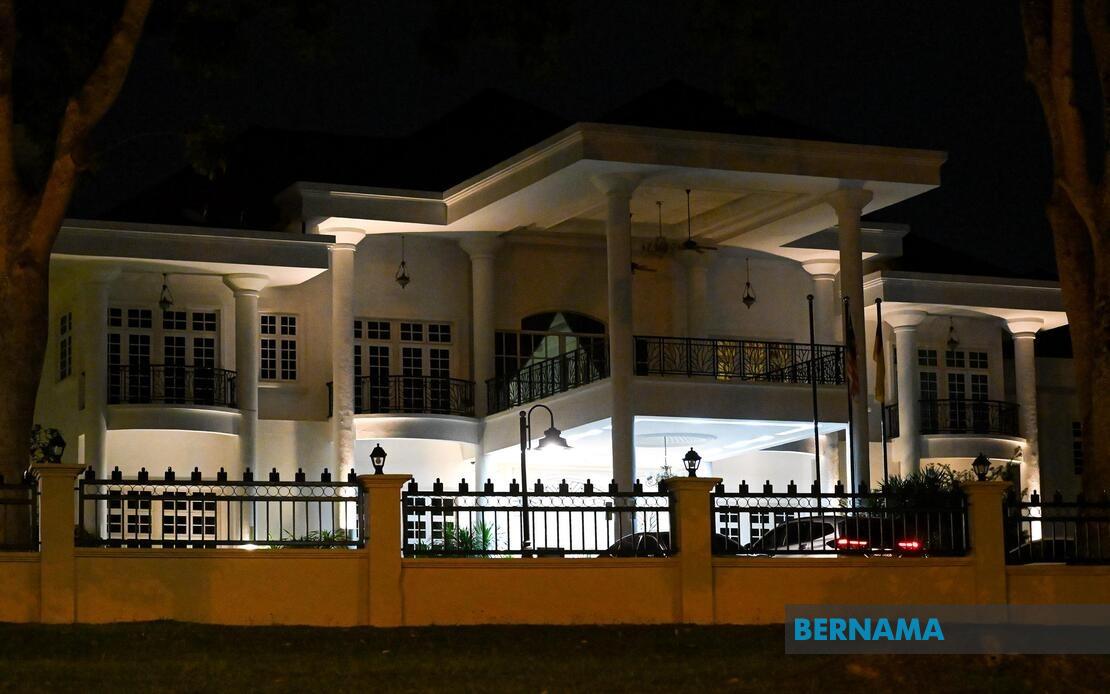
Barisan Nasional chairman Datuk Seri Dr Ahmad Zahid Hamidi arrived at Istana Hinggap in Seremban on the night of August 1 for what observers believe was an official audience with Negeri Sembilan Yang Dipertuan Besar Tuanku Muhriz Tuanku Munawir. The visit came as the coalition celebrated a decisive mandate from voters in the state's recent electoral contest, signalling a clear shift in the political landscape of the northern peninsular state.
The high-profile delegation comprised more than ten vehicles carrying senior figures from both Barisan Nasional and Perikatan Nasional, underscoring the significance of the post-election engagement with the palace. Among those present was Negeri Sembilan BN chairman Datuk Seri Mohamad Hasan, a key political figure in the state whose participation reflected the importance of presenting a united front during palace consultations. The motorcade entered the palace grounds around 10 pm, suggesting formal protocol and coordinated movement befitting discussions on government formation.
According to unofficial tabulations released by Zahid, the combined coalition has secured a commanding position in Negeri Sembilan's legislature. Barisan Nasional captured 18 of the 36 State Legislative Assembly seats, while Perikatan Nasional secured seven, bringing their combined strength to 25 seats. This two-thirds supermajority—significantly exceeding the 19 seats required for a simple majority—grants the coalition substantial legislative flexibility and the ability to propose constitutional amendments should they arise. Such a commanding mandate is relatively rare in Malaysian state politics and suggests a decisive public preference for the coalition's governance model.
The timing and composition of the palace visit reflect established constitutional practice in Malaysia's monarchical system. When state elections produce clear outcomes, it is customary for the winning coalition's leadership to present itself formally to the ruler for consultation and endorsement before government formation proceeds. This consultation phase, though largely ceremonial in cases of decisive victories, remains an important constitutional ritual that affirms the ruler's role as guardian of the state's institutions and democratic processes.
For Barisan Nasional specifically, this result represents significant political recovery in Negeri Sembilan. The coalition's strong performance suggests that party machinery mobilisation, combined with public confidence in BN's administrative experience, resonated with voters in the state. The involvement of Zahid as party chairman in this ceremonial visit emphasises BN's central role in the coalition arrangement and his position as a key figure in the party's ongoing political rehabilitation and resurgence in Malaysian electoral politics.
Perikatan Nasional's seven-seat contribution, though smaller than BN's share, remains strategically important in the coalition's overall positioning. The partnership between these two blocs demonstrates the pragmatic cooperation needed to secure supermajority governance in contemporary Malaysian politics. Such arrangements have become increasingly common as Malaysian voters fragment support across multiple parties, making coalition-building essential for stable state governments.
The palace visit also carries broader implications for Malaysian federalism and state-level politics. Negeri Sembilan, as a significant state in the peninsula with its own constitutional monarchy framework, serves as an important barometer of political trends. A strong performance by Barisan Nasional in the state provides momentum for the coalition nationally and suggests that the party's efforts to restore public confidence following earlier controversies have gained traction at the grassroots level.
For Malaysian political observers, the scale of the coalition's majority raises questions about the legislative agenda and governance priorities that Negeri Sembilan will pursue over the coming term. With such commanding numbers, the government possesses considerable scope to pursue substantive policy initiatives without facing obstruction, though the quality and effectiveness of governance will ultimately depend on factors beyond mere seat counts.
The delegation's composition and the timing of the palace audience reflect established norms in Malaysian constitutional monarchy, where rulers maintain active engagement with elected representatives and retain important ceremonial and consultative roles. This balance between electoral democracy and constitutional monarchy has been a defining feature of Malaysia's political system since independence.

