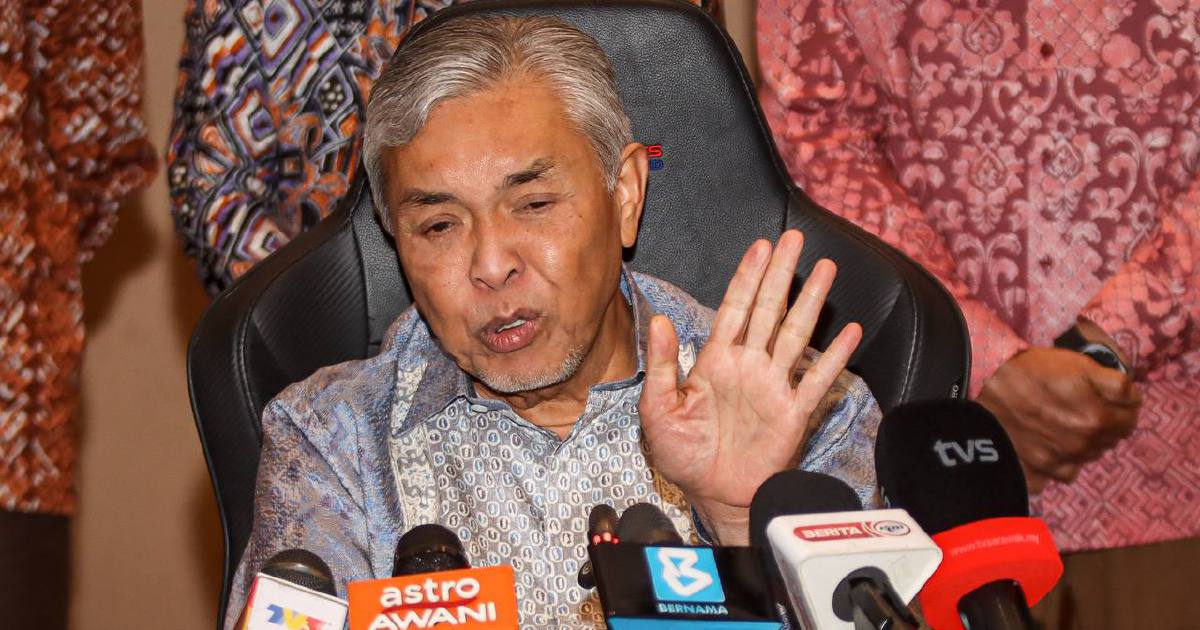
Deputy Prime Minister Datuk Seri Dr Ahmad Zahid Hamidi has moved to quash persistent rumours of political manoeuvring against Prime Minister Datuk Seri Anwar Ibrahim, publicly reinforcing Barisan Nasional's pledge to sustain the governing alliance through the remainder of the 15th Parliament. Speaking in George Town, Zahid's unequivocal statement represents an attempt to dispel ongoing speculation about potential fractures within the coalition that has governed Malaysia since late 2022.
The deputy premier's comments arrive at a moment when Malaysia's political landscape continues to generate considerable uncertainty, with various factions regularly scrutinised by observers monitoring potential shifts in parliamentary arithmetic. Zahid's intervention underscores the necessity of maintaining a unified front among the coalition partners, particularly given the mathematical realities of governance where single-digit parliamentary majorities leave administrations vulnerable to defections or strategic realignments. By making such an explicit declaration, Zahid signals awareness that confidence in coalition stability directly affects investor sentiment, currency movements, and the government's capacity to advance its legislative agenda.
Barisan Nasional's participation in the unity government represents a significant evolution in Malaysian politics, marking a departure from decades of two-bloc competition between the coalition and opposition alliances. This arrangement emerged following the 2022 general election, when no single political grouping secured an outright majority, necessitating cooperation across traditional rival blocs. For Barisan Nasional, entering government alongside Pakatan Harapan signals both pragmatism and recognition that governing stability often trumps adversarial positioning in contemporary Malaysian politics.
Zahid's categorical dismissal of toppling speculation carries particular weight given his position as deputy prime minister and the symbolic importance of explicit statements from senior figures regarding coalition commitments. In Malaysia's political ecosystem, such pronouncements often serve as public reaffirmations for parliamentary members who may harbour doubts or face pressure from party bases sceptical of cross-coalition arrangements. By personally rejecting removal narratives, Zahid provides senior party members with political cover should they face internal questioning about BN's participation in the unity government.
The timing of Zahid's statement suggests deliberate strategic communication, likely designed to address concerns circulating within party structures or among BN-aligned lawmakers. Speculation about political instability, even when ultimately unfounded, can undermine government initiatives and complicate economic management. International investors and rating agencies monitor such chatter closely, as hints of parliamentary fragility can trigger capital outflows and increase government borrowing costs. By publicly cementing BN's commitment, Zahid attempts to restore and maintain market confidence in governmental continuity.
Malaysia's experience with coalition politics demonstrates that formal declarations of loyalty, while important, ultimately depend upon sustained political will and ongoing negotiation of power-sharing arrangements. The unity government model requires continuous management of diverse interests across parties with fundamentally different ideological positions and constituency bases. Coalition arrangements succeed when senior figures consistently signal commitment while simultaneously ensuring that member parties receive sufficient incentives—ministerial positions, development funding for constituencies, and legislative influence—to remain satisfied participants.
For Barisan Nasional specifically, membership in the unity government has offered ministerial representation and parliamentary influence that the coalition might not have obtained through opposition positioning alone. The arrangement also provides Zahid personally with the elevated profile associated with the deputy prime minister's office, a position unlikely to be available in opposition circumstances. These structural incentives generally work in favour of coalition stability, though they require careful management to prevent resentment building among marginalised factions or parliamentary members who feel insufficiently rewarded.
The broader Malaysian electorate increasingly expects political stability and effective governance delivery rather than constant parliamentary drama. Public opinion, while less frequently measured regarding coalition preferences than specific policy positions, generally responds negatively to perceived governmental instability. Zahid's categorical reassurance thus addresses not merely internal coalition management but also public expectations that political leaders prioritise national governance over internecine power struggles.
Looking ahead, BN's sustained participation in the unity government depends on how effectively the coalition balances internal interests while delivering tangible policy outcomes. Economic challenges, service delivery performance, and management of divisive issues like religious and ethnic tensions will ultimately determine whether coalition partners remain committed to continued collaboration. Zahid's statement reflects awareness that verbal commitments matter, but genuine coalition stability ultimately rests upon shared interests in governance success and recognition that alternatives to current arrangements may prove equally or more problematic for individual partners.

