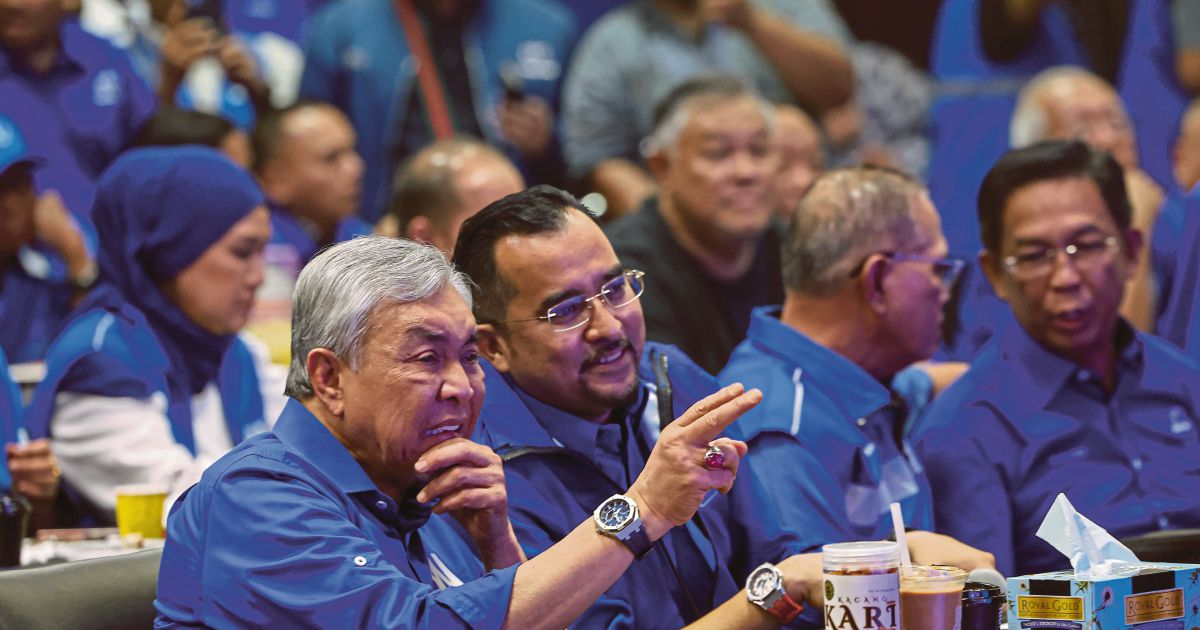
Barisan Nasional chairman Datuk Seri Dr Ahmad Zahid Hamidi has signalled his intention to formally consult with the Yang di-Pertuan Besar of Negri Sembilan before the coalition finalises its candidate for the state's top administrative position. The announcement reflects the constitutional protocols and established political norms that govern major leadership decisions in Malaysia's monarchy-based system, where rulers maintain a ceremonial but occasionally decisive role in state governance matters.
The statement underscores the deliberative approach BN intends to adopt in selecting its Menteri Besar nominee for the east-coast state. By publicly committing to seek the ruler's counsel, Zahid is positioning the coalition's decision-making process as one that respects constitutional propriety and acknowledges the symbolic authority vested in Negri Sembilan's monarchical institution. This procedural transparency may also serve to forestall potential criticism from opposition quarters regarding the legitimacy of BN's eventual choice.
Negri Sembilan occupies a distinctive constitutional position within Malaysia's federation as an elective monarchy, where the Yang di-Pertuan Besar is selected through a collegial process among the state's nine ruling chiefs. This unique arrangement, unlike the hereditary systems in other states, means the ruler carries particular legitimacy derived from the consensus of the territorial aristocracy. The Yang di-Pertuan Besar's involvement in pre-emptive consultation on state leadership therefore carries heightened symbolic weight within the state's political culture.
The timing of Zahid's declaration assumes significance given the fluid nature of Malaysian coalition politics in recent years. The prospect of an audience with the ruler suggests that BN is moving toward a formal announcement regarding its MB candidate. The consultation framework also indicates that the coalition may be managing competing internal interests or factional preferences within its membership, using the ruler's anticipated counsel as a neutral platform for legitimising the final decision.
For Negri Sembilan's political stakeholders and ordinary citizens, the protocol signals stability in the decision-making process. Rather than announcing a candidate through purely partisan channels, the involvement of royal consultation creates an appearance of cross-factional deliberation and institutional oversight. This approach may help soften potential internal party dissent, as unsuccessful candidate camps could accept an outcome purportedly endorsed by the state's highest constitutional authority.
The consultation also carries implications for the broader pattern of governance in Malaysia's federal structure. By demonstrating respect for the ruler's role and seeking formal audience before critical appointments, BN is reinforcing the constitutional standing of state monarchs in federation politics. This may resonate positively with those who favour strong institutions and ceremonial protocols, particularly among traditionalist constituencies in Negri Sembilan and the Klang Valley region where many state residents reside.
Within the Malaysian political context, where coalition governments sometimes struggle with internal cohesion, Zahid's emphasis on consulting the Yang di-Pertuan Besar prior to announcement suggests a calculated strategy to insulate the appointment from accusations of political favouritism or backdoor dealing. The public commitment to seek audience creates accountability to constitutional procedure and potentially deters party factions from challenging the eventual nomination through informal channels.
Negri Sembilan's electorate will likely view this procedural emphasis as reassuring. State-level governance has occasionally been complicated by coalition tensions and internal jostling for key positions. By anchoring the MB selection process to royal consultation, Zahid's approach provides a degree of institutional gravitas that purely partisan negotiations might lack. The state's diverse communities, spanning urban centres like Seremban and rural agricultural hinterlands, may appreciate this emphasis on formal protocols and constitutional respect.
For the opposition and civil society monitors, the framework also establishes a clearer audit trail for the decision-making process. Rather than a candidate emerging through closed-door coalitions negotiations, the involvement of royal consultation creates multiple touchpoints for scrutiny and accountability. This transparency dimension may enhance public confidence in the legitimacy of the eventual appointment, regardless of which candidate BN ultimately selects.

