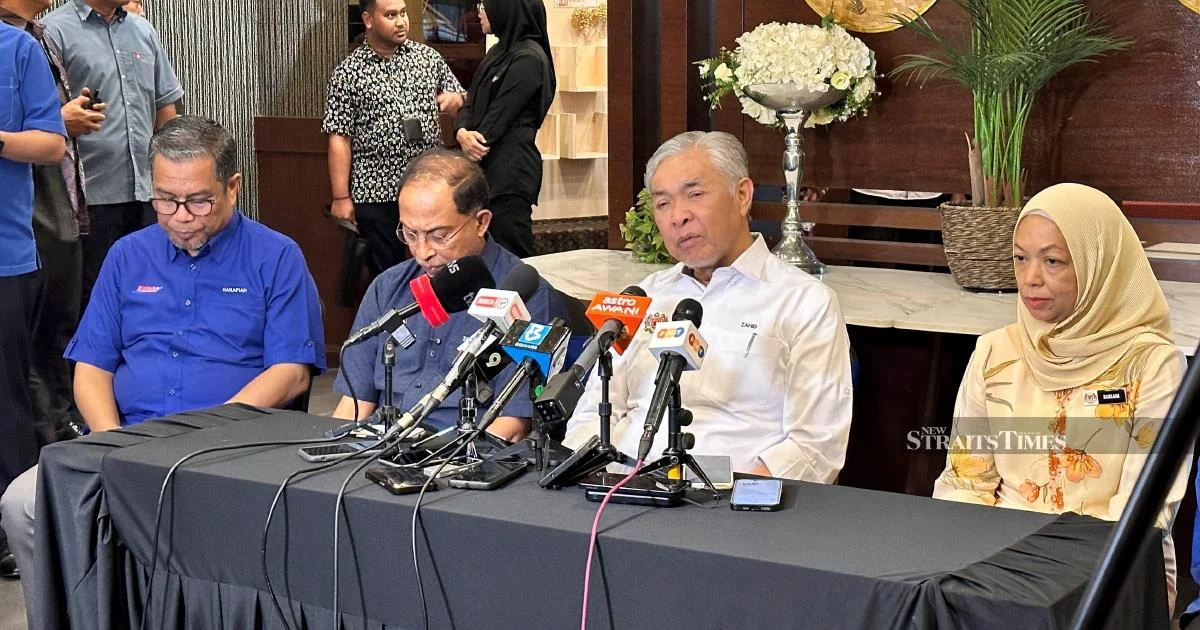
Barisan Nasional chairman Datuk Seri Dr Ahmad Zahid Hamidi has moved to discipline fellow members of the unity government coalition over their campaigning tactics in Johor, particularly their reliance on imagery and references tied to Malaysia's divisive recent past. Speaking in Kluang, the coalition leader signalled clear displeasure at what appears to be a fellow component party's decision to feature Datin Seri Rosmah Mansor, wife of former Prime Minister Datuk Seri Najib Razak, in their election materials, suggesting such moves run counter to the coalition's broader strategy for the state contest.
The rebuke highlights growing fault lines within the unity government as election preparations intensify across Malaysia's southernmost peninsula state. Johor has emerged as a critical battleground for the coalition, with both Barisan Nasional and the broader Pakatan Harapan-led unity administration keen to demonstrate electoral viability ahead of the 15th General Election. Zahid's comments suggest that internal coordination among coalition partners remains uneven, with different parties pursuing divergent approaches to voter mobilisation.
The decision to invoke Rosmah Mansor's image proves particularly controversial given the former first lady's high-profile legal troubles. She has faced multiple charges in Malaysian courts stemming from the 1Malaysia Development Berhad (1MDB) scandal that dominated headlines for years and fundamentally reshaped Malaysian politics. Her association with that era carries considerable baggage for voters who view the Najib administration as emblematic of institutional corruption and abuse of power. For many Malaysians, particularly younger voters and urban constituencies, revisiting that period through campaign materials appears strategically counterproductive.
Zahid's intervention reflects a broader strategic calculation within Barisan Nasional. The coalition has attempted to position itself as reformed and forward-focused since returning to electoral prominence following the 2022 general election. Party strategists evidently believe that dwelling on the pre-2018 era—when Najib's government fell amid massive public discontent over governance failures and financial mismanagement—undermines this carefully cultivated image of renewal. By publicly correcting coalition partners who deviate from this messaging discipline, Zahid aims to enforce adherence to a unified campaign narrative.
The incident also reflects broader tensions about Najib's continued influence within United Malays National Organisation (UMNO), Barisan Nasional's dominant component. While Najib remains a Member of Parliament and retains considerable support among the UMNO grassroots, his prominence remains contentious at leadership level. Several senior party figures have sought to distance UMNO from the Najib era, viewing his legal vulnerabilities and public unpopularity as liabilities. Zahid's criticism of references to that period aligns with this faction's preference for generational change and institutional reform narratives.
Johor's political significance extends beyond state-level implications. The state has traditionally served as a barometer for national sentiment, often foreshadowing broader electoral patterns. A strong Barisan Nasional performance would vindicate the coalition's recent electoral recovery and boost confidence ahead of national elections. Conversely, a poor showing would suggest that coalition unity remains fragile and that efforts to rebuild public trust have stalled. Zahid's insistence on campaign discipline likely stems from recognition that any appearance of internal division could prove electorally damaging.
The controversy also underscores the delicate balance Barisan Nasional must maintain in communicating with different voter demographics. Older voters and traditional party supporters may retain sympathy for the Najib era, viewing his legal predicament as politically motivated persecution. Younger voters and urban constituencies overwhelmingly reject that narrative, viewing 1MDB as emblematic of corruption requiring accountability. Coalition strategists must navigate these competing sentiments without alienating either constituency, a challenge complicated by coalition partners pursuing different approaches.
Zahid's public rebuke serves multiple purposes simultaneously. It reasserts his authority over coalition discipline at a moment when rival power centres within Barisan Nasional compete for influence over strategic direction. It signals to the broader electorate that the coalition prioritises institutional reform and forward momentum over rehabilitation of controversial figures from the previous government. It also serves notice to coalition partners that campaign messaging requires approval from central leadership, establishing clearer command structures for the Johor campaign.
The incident demonstrates that despite unity government proclamations, Malaysia's political coalitions remain loose confederations of parties with distinct interests and internal factions. Coordinating campaign messaging across multiple parties with competing leadership ambitions and voter bases presents ongoing operational challenges. Zahid's intervention suggests that while leadership understands the strategic imperative for unified messaging, enforcing discipline remains an imperfect process requiring continuous reiteration and correction.
Moving forward, the Johor campaign will test whether Barisan Nasional can maintain messaging discipline while accommodating diverse party interests and leadership perspectives. Success requires convincing coalition partners that abandoning references to the Najib era ultimately serves their electoral interests more effectively than appeals to party loyalty or nostalgia. The coming weeks will reveal whether Zahid's public correction translates into genuine coordination improvements or merely represents another chapter in ongoing internal coalition tensions that characterise Malaysian electoral politics.

