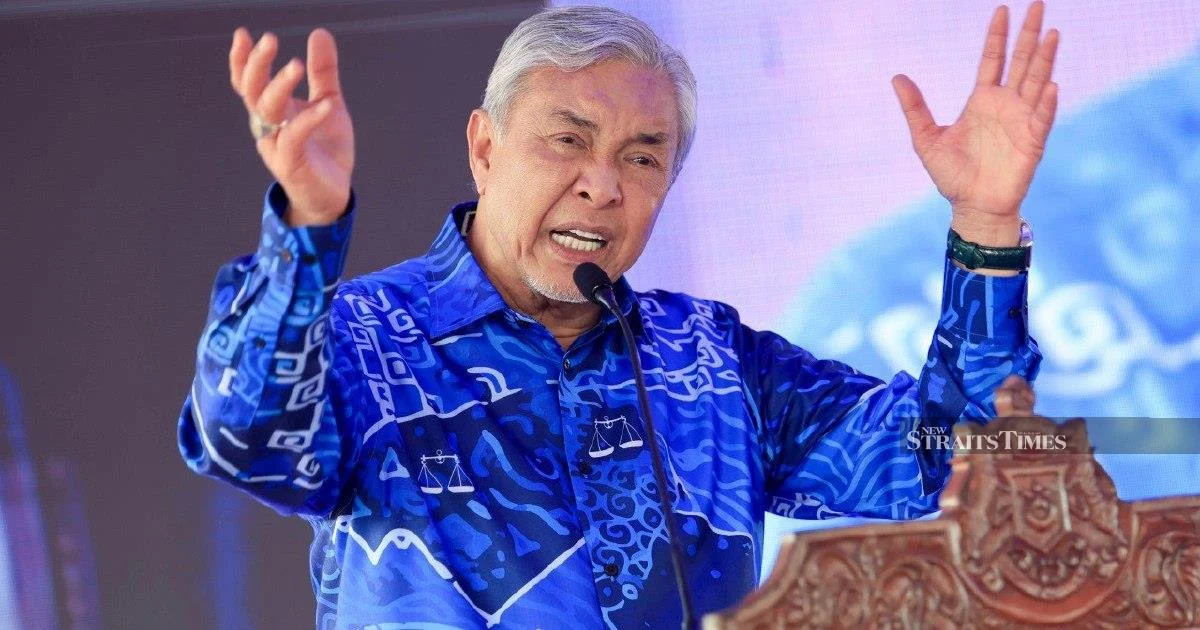
Barisan Nasional chairman Datuk Seri Dr Ahmad Zahid Hamidi has made a direct appeal to Johor voters to resist the temptation to support the wrong political coalition in the forthcoming state election, drawing lessons from electoral patterns observed in previous contests across the state.
Speak at Labis, Zahid framed the election as a critical juncture for the southern state, suggesting that voting decisions made today would reverberate through Johor's development and governance trajectory. His remarks reflect the strategic importance that Barisan Nasional places on retaining support in a state traditionally considered a stronghold of the coalition, though one that has witnessed significant political shifts in recent election cycles.
The chairman's intervention underscores mounting concerns within the coalition about voter sentiment and the possibility of electoral surprises. Johor's political landscape has become increasingly fluid, with voters demonstrating willingness to shift allegiances based on local issues, economic conditions, and perception of governance quality. Zahid's warning suggests that internal polling or ground feedback may indicate vulnerabilities that require active counter-messaging.
Historically, Johor has served as Barisan Nasional's electoral fortress, delivering substantial parliamentary and state-level seats. However, the 2018 general election marked a watershed moment when voters across the country, including Johor, delivered a shock result to the coalition. While Barisan Nasional recovered significantly in subsequent contests, including the 2022 general election, the memory of potential electoral reversal remains fresh in party strategists' calculations.
Zahid's framing of the election as a choice between coalitions rather than individual candidates or local issues represents a deliberate effort to elevate the contest beyond parochial considerations. By invoking past mistakes, he implicitly argues that choosing opposition coalitions would represent a step backward for the state, a messaging strategy designed to mobilize existing supporters and convince swing voters that continuity with Barisan Nasional offers greater stability and progress than alternative arrangements.
The emphasis on learning from history carries particular resonance in Malaysia's contemporary political context, where voters have demonstrated sophisticated understanding of electoral consequences. Many Johor residents witnessed the 2018 national result and observed the subsequent period of political uncertainty that followed. Zahid's invocation of these memories appears calculated to remind voters that coalitional stability matters not merely for governance consistency but for broader economic and social outcomes at the state level.
For Barisan Nasional, maintaining Johor is strategically essential. The state's political trajectory influences broader national coalition dynamics and affects the composition of parliamentary support that any federal government requires. A weakened Barisan Nasional performance in Johor would reverberate across national politics, potentially emboldening opposition formations and complicating future federal-state relations. Conversely, a decisive Barisan Nasional victory in Johor would reinforce the coalition's recovery narrative and provide momentum for the broader political cycle.
The election context in Johor also reflects broader tensions within Malaysian federalism and regional governance. Johor's position as an economically significant state with substantial trade links to Singapore and significant domestic investment means that state-level governance quality has measurable economic implications. Voters in Johor increasingly base electoral decisions on observable outcomes: infrastructure quality, employment generation, educational provision, and service delivery efficiency. Zahid's appeal to historical lessons must compete with voters' assessment of tangible governance performance.
Opposition coalitions have positioned themselves as agents of change and reform, particularly in constituencies where voters perceive governance failings or feel marginalized by incumbents. The rise of Perikatan Nasional as a credible alternative coalition in some regions, particularly peninsular states, has fragmented the two-coalition framework that dominated Malaysian politics through most of the post-independence period. Zahid's warning about choosing wrongly implicitly acknowledges that voters now contemplate multiple options, not merely a binary choice between Barisan Nasional and Pakatan Harapan.
The campaign strategy evidenced by Zahid's Labis remarks suggests Barisan Nasional intends to conduct a defensive campaign focused on consolidating existing supporters rather than expansively attracting new voters. This posture may reflect confidence in holding traditional constituencies or concern about the coalitional strength required to deliver a comfortable majority. The party's decision to emphasize historical lessons rather than unveiling expansive policy proposals for Johor's future suggests that mobilization of the existing support base ranks as the priority.
For Malaysian observers and Johor residents, the coming election will provide crucial data about voter priorities and coalition preferences in contemporary Malaysia. The contest will reveal whether the economic concerns that dominated 2023 national discussions remain paramount for state-level voters, whether specific governance grievances have accumulated sufficiently to motivate electoral change, and whether Barisan Nasional's recovery after 2018 represents durable consolidation or temporary reprieve. Zahid's appeal represents the opening salvo in what promises to be a politically significant state contest.

