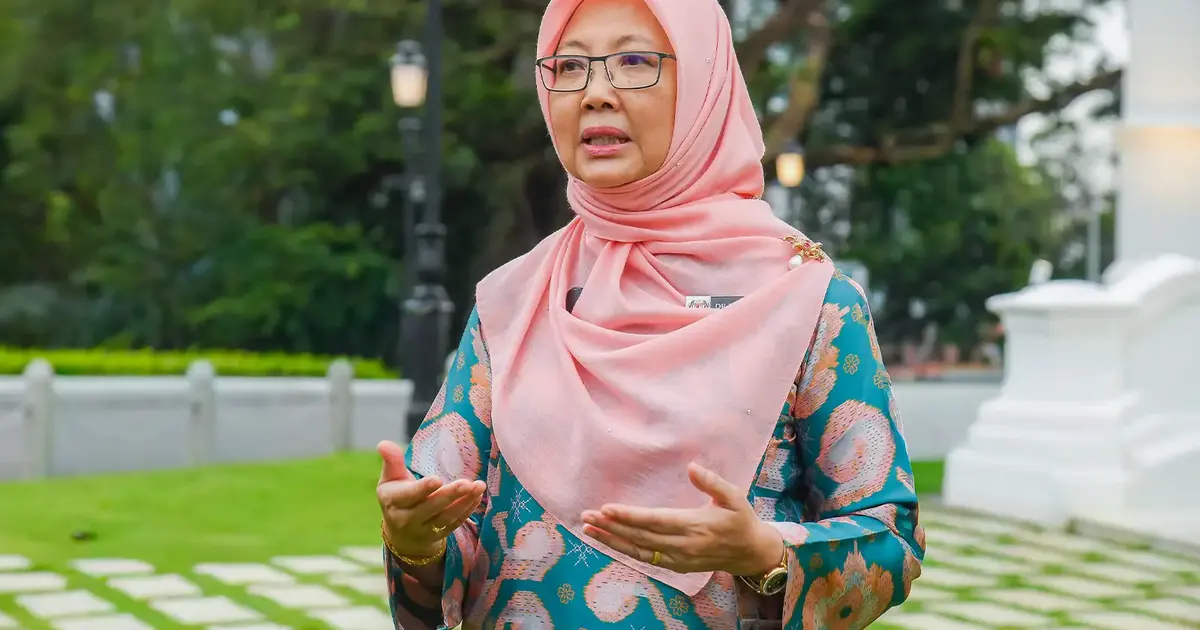
PKR vice-president Zaliha Mustafa has questioned the reasoning behind Johor BN chairman Onn Hafiz Ghazi's public call for Pakatan Harapan to name a single representative to serve as the coalition's face during the forthcoming Johor state election campaign. Speaking to reporters, Zaliha expressed bewilderment at the demand, pointing out a fundamental logical inconsistency: without any assurance that such a designee would actually be appointed as menteri besar if the coalition prevails, the exercise appears premature and strategically questionable.
The exchange underscores the intense political manoeuvring taking place in Johor ahead of the election, with both coalitions attempting to frame the contest in terms favourable to their respective messaging strategies. Onn Hafiz's request appears designed to pressure Pakatan Harapan into committing to a specific candidate, a move that would lock the opposition into a vulnerable position if internal disagreements or last-minute negotiations were to alter their original plans. For Zaliha and the PH leadership, such a commitment risks appearing inflexible at a time when coalition dynamics remain fluid and subject to various political contingencies.
The underlying tension reflects deeper divisions within Malaysia's political structure regarding how state-level elections should be contested and what signals parties should send to voters. Conventionally, coalition arrangements often involve complex negotiations over power-sharing, ministerial portfolios, and leadership positions that are finalised only after electoral success is assured. Asking the opposition to publicly designate a menteri besar candidate before votes are cast contradicts this established practice and places Pakatan Harapan at an immediate disadvantage in strategic terms.
Zaliha's response also highlights the reality that Pakatan Harapan itself comprises multiple parties with separate interests and visions for state leadership. Any individual selected as a poster boy would necessarily come from one party within the coalition, potentially alienating supporters of other PH members who might harbour their own aspirations or concerns about representation. This internal coalition complexity makes it difficult for the opposition to respond affirmatively to Onn Hafiz's demand without triggering internal friction or appearing to marginalise certain partners.
The broader political context is significant for understanding the stakes in Johor. As one of Malaysia's most significant states, Johor elections carry implications that extend well beyond state boundaries, influencing national political calculations and the perceived strength or weakness of the respective coalitions. Barisan Nasional's grip on Johor has historically been substantial, though recent electoral results elsewhere in the country have demonstrated that no state can be taken entirely for granted. The BN's effort to establish narrative control early, through demands like Onn Hafiz's, represents an attempt to shape the campaign on terms favourable to the ruling coalition.
From a strategic communications perspective, Zaliha's public expression of puzzlement serves multiple purposes for Pakatan Harapan. It allows the coalition to appear reasonable and questioning of unreasonable demands, portrays the BN as attempting to dictate terms rather than engaging in genuine democratic competition, and buys time for internal PH negotiations to proceed without external pressure. By framing Onn Hafiz's request as conceptually flawed rather than outright refusing it, Zaliha positions the opposition as intellectually superior while avoiding a blunt rejection that might appear evasive.
The menteri besar question is particularly significant in Malaysian state politics, where the chief minister position carries substantial powers over state development, resource allocation, and patronage. Voters in Johor have legitimate interest in understanding who might lead the state administration should their preferred coalition win. However, in a multi-party democratic system, these decisions typically emerge through negotiations among coalition partners after election results become known, allowing the strongest party or the party commanding most seats to claim the position.
Onn Hafiz's demand also reflects possible concerns within the Johor BN machinery about Pakatan Harapan's organisational coherence and voter appeal. By challenging the opposition to name a poster boy, the BN chairman may be testing PH's unity and signalling to voters that the opposition lacks a clear vision for state leadership. Conversely, should Pakatan Harapan refuse or dodge the question, BN messaging can frame this as evasiveness or internal disarray, reinforcing the narrative that a divided opposition cannot be trusted with state power.
For Malaysian voters in Johor, these high-level political exchanges offer insight into how the competing coalitions approach electoral competition and governance. Voters seeking accountability and clarity might view Zaliha's demand for logical consistency as a reasonable position—why should opposition leaders commit to personnel decisions before knowing whether they have earned the public's mandate? Alternatively, voters prioritising clarity and vision might prefer candidates willing to articulate their leadership plans directly and unambiguously.
The debate also reflects broader tensions within Malaysia's political system regarding coalition formation, power-sharing agreements, and the roles of party leaders versus elected representatives. As Malaysian politics continues to evolve beyond the long dominance of single-party or single-coalition governance, these questions about how multi-party coalitions should operate will become increasingly central to electoral campaigns and governing arrangements.
Moving forward, the Johor election campaign will likely see further exchanges of this nature, with both sides attempting to gain narrative advantage through framing arguments about competence, unity, and vision. Zaliha's articulate expression of confusion about Onn Hafiz's demand sets an early tone for opposition messaging that emphasises reasonableness and strategic clarity, even as internal PH discussions continue regarding leadership arrangements should the coalition succeed.
%22%2F%3E%3C%2Fpattern%3E%3C%2Fdefs%3E%3Crect%20width%3D%22100%25%22%20height%3D%22100%25%22%20fill%3D%22url(%23ph1fj49g)%22%2F%3E%3Crect%20width%3D%22100%25%22%20height%3D%22100%25%22%20fill%3D%22url(%23ph1fj49p)%22%2F%3E%3Ctext%20x%3D%2250%25%22%20y%3D%2250%25%22%20text-anchor%3D%22middle%22%20dominant-baseline%3D%22central%22%20fill%3D%22rgba(255%2C255%2C255%2C0.95)%22%20font-family%3D%22Georgia%2C%20'Times%20New%20Roman'%2C%20serif%22%20font-weight%3D%22700%22%20font-size%3D%22226%22%20letter-spacing%3D%22-0.02em%22%3EPolice%3C%2Ftext%3E%3C%2Fsvg%3E)