%22%2F%3E%3C%2Fpattern%3E%3C%2Fdefs%3E%3Crect%20width%3D%22100%25%22%20height%3D%22100%25%22%20fill%3D%22url(%23ph13ezig)%22%2F%3E%3Crect%20width%3D%22100%25%22%20height%3D%22100%25%22%20fill%3D%22url(%23ph13ezip)%22%2F%3E%3Ctext%20x%3D%2250%25%22%20y%3D%2250%25%22%20text-anchor%3D%22middle%22%20dominant-baseline%3D%22central%22%20fill%3D%22rgba(255%2C255%2C255%2C0.95)%22%20font-family%3D%22Georgia%2C%20'Times%20New%20Roman'%2C%20serif%22%20font-weight%3D%22700%22%20font-size%3D%22136%22%20letter-spacing%3D%22-0.02em%22%3EBangladesh%3C%2Ftext%3E%3C%2Fsvg%3E)
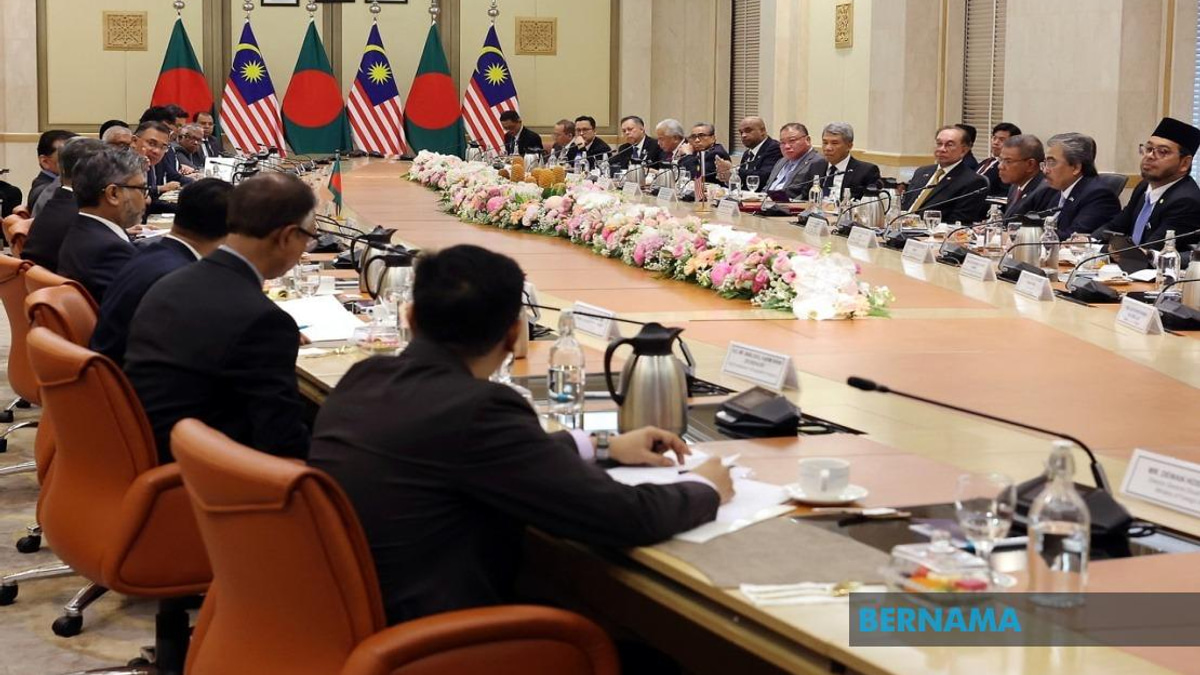
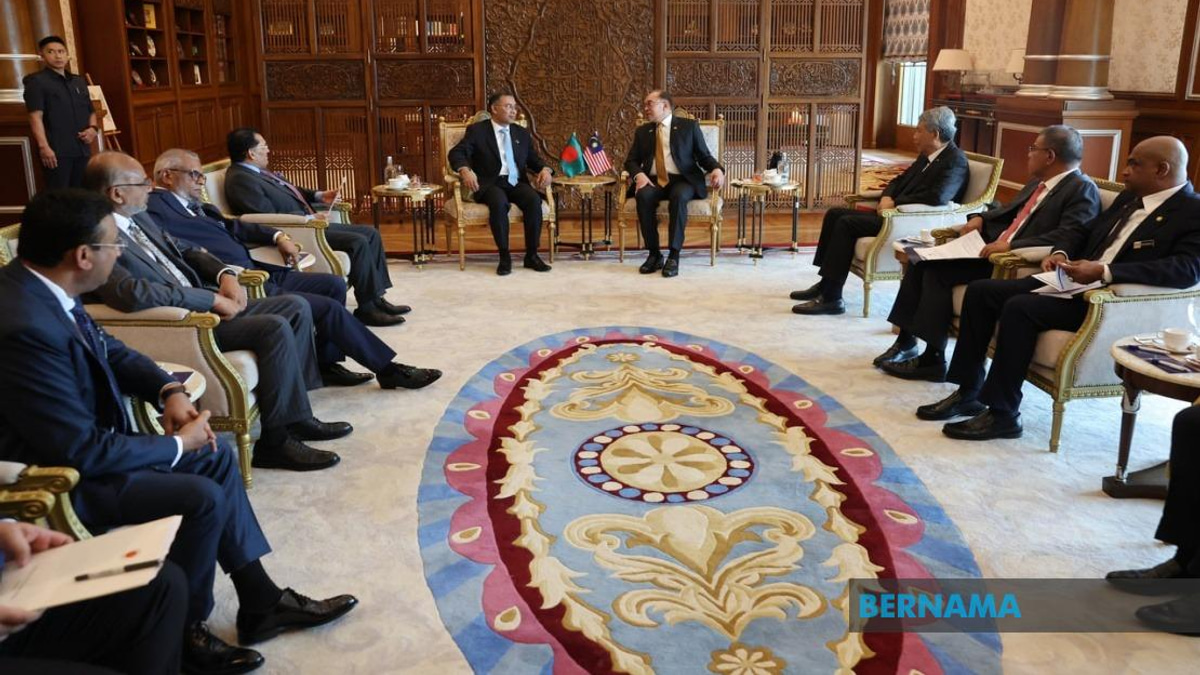
Bangladesh Prime Minister Tarique Rahman touched down in Malaysia yesterday, marking his first official visit to the country since assuming office. The arrival at Sepang, Malaysia's gateway international airport, signals a deliberate diplomatic move to strengthen ties between Dhaka and Kuala Lumpur at a pivotal moment for both nations in the region.
The timing of Rahman's visit carries considerable significance for South and Southeast Asian geopolitics. Bangladesh, with its 170 million population and strategic location along crucial maritime trade routes, occupies an increasingly important position in regional affairs. Malaysia, as a major Muslim-majority economy and ASEAN cornerstone, represents a natural partner for Bangladesh across economic, cultural, and political dimensions. This inaugural official visit underscores a commitment to elevating bilateral engagement beyond routine diplomatic protocols.
For Malaysian observers, Rahman's presence reflects broader regional dynamics where Bangladesh seeks to diversify and expand its international partnerships. The visit provides an opportunity for both nations to explore collaborative frameworks in trade, investment, and cultural exchange. Given Malaysia's established economic diversification and technological advancement, there are tangible opportunities for partnership in manufacturing, financial services, and green energy initiatives that could benefit both economies.
The visit also occurs within a context of shifting political landscapes in South Asia. Bangladesh has undergone significant political transitions in recent years, and Rahman's leadership represents a new chapter in the nation's governance. Malaysia, with its own complex political history, can offer insights and comparative perspectives on democratic evolution, institutional strengthening, and regional cooperation mechanisms that transcend domestic politics.
Bilateral trade between the nations has traditionally centred on textiles, garments, and raw materials, but there exists considerable untapped potential. Malaysian investors have historically shown interest in Bangladesh's manufacturing sector, while Bangladeshi workers form a notable diaspora community within Malaysia. The visit provides a platform to discuss labour mobility agreements, skills transfer programmes, and remittance facilitation that directly impact ordinary citizens in both countries.
Cultural and educational exchanges represent another dimension ripe for expansion. The shared Islamic heritage provides a foundation for cooperation through organizations like the Organisation of Islamic Cooperation, where both nations hold membership. Educational scholarships, academic partnerships, and people-to-people exchanges can deepen mutual understanding and create long-term networks of cooperation that transcend governmental cycles.
Regionally, Rahman's visit demonstrates Bangladesh's commitment to engaging with ASEAN and ASEAN-affiliated mechanisms. As a Bay of Bengal Initiative member and increasingly active participant in regional forums, Bangladesh seeks to strengthen relationships with individual ASEAN members ahead of broader multilateral engagements. Malaysia's role as an influential ASEAN voice makes this bilateral engagement strategically valuable for positioning Bangladesh within regional architectures.
The visit also occurs against the backdrop of evolving security challenges in the Indian Ocean and Bay of Bengal region. Maritime cooperation, anti-piracy initiatives, and freedom of navigation principles are concerns shared by both coastal nations. Discussions during the visit likely encompass security cooperation frameworks that reflect mutual interests in maintaining stable sea lanes critical to both nations' prosperity.
Investment promotion forms a crucial agenda item. Bangladesh's manufacturing sector, particularly in readymade garments, continues expanding, and Malaysian companies possess expertise in supply chain management and technology integration. Conversely, Bangladesh's growing pharmaceutical and IT sectors offer investment opportunities for Malaysian enterprises seeking regional diversification beyond traditional Southeast Asian markets.
The diplomatic visit also carries symbolic weight in terms of South-Southeast Asian connectivity. As the Bay of Bengal Initiative promotes greater economic integration among member states, bilateral visits like this facilitate trust-building and framework development. For Malaysian policymakers, strengthening ties with Bangladesh contributes to a diversified regional engagement strategy that extends beyond immediate ASEAN boundaries.
Rahman's inaugural visit provides both nations an opportunity to reset and strengthen relations. Given Malaysia's sophisticated diplomatic corps and Bangladesh's renewed political confidence, constructive outcomes addressing trade facilitation, investment protection, and cultural collaboration appear achievable. The visit also offers Bangladesh a chance to articulate its vision for regional cooperation to a respected voice within Southeast Asia.
Looking forward, this visit should catalyse follow-up mechanisms and working groups addressing specific sectors. Regular high-level visits, ministerial dialogues, and business forums can institutionalize the engagement patterns established during this inaugural trip, creating durable structures for sustained cooperation that weatherproof bilateral relations from political fluctuations in either country.