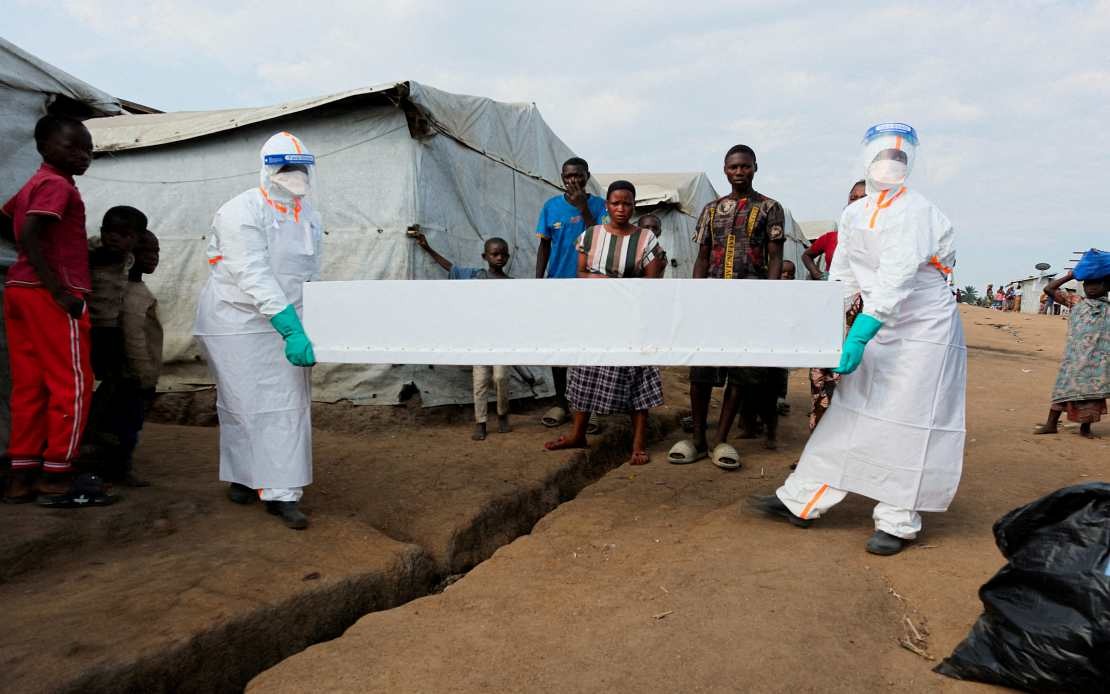
The Democratic Republic of Congo's Ebola crisis has escalated to a critical juncture, with confirmed cases climbing past the 1,000 mark as of late June. Health authorities reported 1,003 confirmed infections and 254 deaths since the outbreak was officially declared on May 15, reflecting a mortality rate of 25.3 per cent. This sobering milestone underscores the severity of a health emergency that continues to spread despite ongoing containment measures across the nation's eastern regions.
The geographical concentration of cases remains centred in the provinces of Ituri, North Kivu and South Kivu, areas already burdened by complex humanitarian challenges and limited healthcare infrastructure. Health Minister Roger Kamba acknowledged this reality while updating the public on response operations, noting that the situation presents extraordinary difficulties for epidemiological control. The combination of dense populations in conflict-affected zones, limited laboratory capacity, and community mistrust of health authorities creates a formidable obstacle to halting transmission chains.
Despite the grim trajectory, health officials have documented some positive developments within the broader response. At least 100 patients have recovered from the infection, offering a glimmer of hope and demonstrating that survival is possible with appropriate medical intervention. However, this encouraging figure is tempered by concerning trends in contact tracing operations. The contact follow-up rate has declined significantly, a critical metric that reveals gaps in identifying and monitoring individuals exposed to confirmed cases. Currently, 365 patients remain isolated or hospitalised, representing the intensive care demands placed on already stretched facilities.
The international health community has sounded alarm bells about the trajectory of this outbreak. The Africa Centres for Disease Control and Prevention issued a stark warning last week, cautioning that if transmission rates are not rapidly controlled, the current epidemic could surpass the devastating 2014-2016 West African Ebola epidemic that claimed more than 11,000 lives across Guinea, Liberia and Sierra Leone. That previous outbreak fundamentally reshaped perceptions of Ebola as a global health threat and exposed critical weaknesses in regional disease surveillance systems. The prospect of repeating that catastrophe has galvanised international attention and reinforced the urgency of containing this latest outbreak.
One critical finding provides both reassurance and scientific clarity about the outbreak's origins. Researchers from Uganda's Department of National Health Laboratory and Diagnostic Services collaborated with Congo's Institute of National Biomedical Research to analyse the viral strain, identifying it as Ebola Bundibugyo. Significantly, their investigation concluded that this represents a new spillover event from wildlife rather than a resurgence of a previously documented outbreak that may have persisted undetected. This distinction matters considerably for understanding epidemiological patterns and informing response strategies, as it suggests the need for enhanced wildlife-human interface surveillance and prevention measures.
Minister Kamba has emphasised that response teams maintain relentless focus on active case investigations and epidemiological surveillance within affected areas. The health ministry's statement stressed that despite the alarming case numbers, operations continue unabated to identify new infections, trace contacts, isolate cases, and support recoveries. Community communication remains a cornerstone of these efforts, recognising that public cooperation and accurate health messaging are essential for containing spread in communities that may hold deep-seated suspicions about government health institutions.
For Southeast Asian observers, the DRC situation carries important implications for regional preparedness. This outbreak demonstrates the continuing threat posed by zoonotic diseases in Africa and the potential for international spread given modern travel patterns. Malaysia and neighbouring countries maintain robust port and airport health screening mechanisms partly informed by lessons from previous Ebola episodes and other infectious disease outbreaks. The DRC case also underscores the critical importance of investing in diagnostic capacity, healthcare worker training, and community engagement infrastructure across the region, as early detection and rapid response remain the most effective tools for preventing catastrophic spread.
The decline in contact tracing effectiveness raises particular concern for the trajectory ahead. Contact tracing represents the backbone of Ebola containment strategies, as each case potentially connects to dozens of exposed individuals who must be monitored for symptom development. When this rate deteriorates, as reported in DRC, it typically signals that the outbreak is outpacing surveillance capacity or that operational challenges are overwhelming response teams. These challenges might include staff fatigue, insecurity in certain areas, or community resistance to cooperation.
The health ministry's intensified focus on diagnosis and case management reflects a pragmatic shift in priorities when community transmission accelerates beyond surveillance capacity. By strengthening clinical care for identified cases and improving diagnostic accuracy, authorities aim to reduce fatality rates among detected patients while simultaneously working to slow overall transmission. This dual approach acknowledges both the immediate humanitarian imperative to save lives among those already infected and the longer-term epidemiological challenge of reducing new cases.
Looking forward, the trajectory of this outbreak will depend significantly on whether transmission rates can be meaningfully reduced in the coming weeks. International support, including vaccination campaigns targeting healthcare workers and contact tracing resources, may prove decisive. The Ebola Bundibugyo variant, while less historically associated with massive outbreaks than Ebola Zaire, remains formidable in its lethality and transmissibility within populations lacking immunity. Success will require sustained commitment from both Congolese authorities and the international community to maintain response momentum despite the considerable challenges posed by geography, insecurity, and limited resources in one of Africa's most complex operating environments.