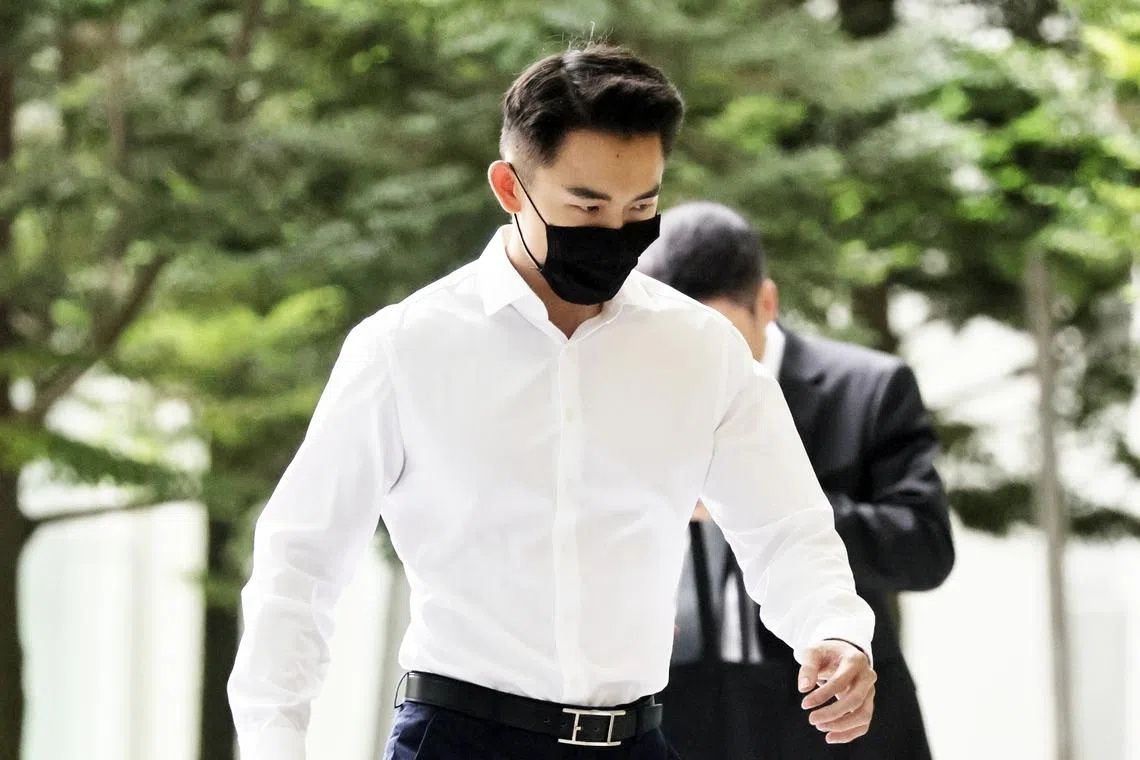
A medical practitioner in Singapore has been found guilty of drug consumption after attending a private gathering at a Sentosa island resort in August 2023, as authorities continue their crackdown on recreational drug use among affluent partygoers in the city-state. Rayson Lee Rui Sheng, 36, was one of 49 men detained during a Central Narcotics Bureau operation at a villa within the Sofitel Singapore Sentosa hotel, where police discovered what they believed to be controlled substances and drug paraphernalia. The conviction, handed down on Tuesday alongside that of his 29-year-old co-accused Tan Li Ming, represents a significant setback for those attempting to evade responsibility through claims of involuntary consumption.
The joint operation began when officers received intelligence about suspicious activity at the hotel and conducted initial checks just after 5.30am on the morning of August 9, 2023. What police discovered during their preliminary investigation prompted them to call in the CNB, Singapore's specialised narcotics enforcement agency. Authorities subsequently uncovered several substances suspected to be controlled drugs, including MDMA and ketamine, alongside equipment commonly associated with drug distribution and consumption. The scale of the operation—involving nearly five dozen individuals spanning a broad age range from 21 to 46 years old—underscored how drug use at private celebrations persists among a cross-section of Singapore society, including professionals.
Both Lee and Tan submitted biological samples for forensic examination, with the Health Sciences Authority's laboratory analysis proving decisive in establishing their guilt. Chemical testing of their urine revealed the presence of MDMA, while hair follicle samples indicated consumption of both ecstasy and ketamine on multiple occasions, suggesting this was not an isolated instance of accidental exposure. Rather than contesting the scientific findings, which are highly reliable, the two men adopted a strategy of claiming their beverages had been adulterated without their knowledge or consent. This legal approach reflected their attempt to distinguish between knowingly consuming drugs and inadvertently ingesting them through the actions of malicious third parties.
District Judge A Sangeetha delivered a withering assessment of the defendants' narrative during sentencing. The judge noted that despite their protestations about spiked drinks, both men had continued consuming additional alcoholic beverages throughout the evening, behaviour inconsistent with individuals who believed themselves to be victims of poisoning. Moreover, the hair analysis painted a picture of repeat drug users rather than novices who had happened upon a single dangerous situation. The judge pointedly observed that neither defendant qualified as unfamiliar with narcotics, a finding that substantially undermined their portrayal as unsuspecting victims of a sophisticated spiking operation.
The prosecution's case relied heavily on demolishing the credibility of the spiked drink narrative. Deputy public prosecutors Jocelyn Teo and Dhiraj G Chainani argued that the defendants had constructed an implausible defence through what they characterised as hypothetical speculation and unsubstantiated conjecture. They drew particular attention to the defendants' inability to provide specific identifying details about the individuals allegedly responsible for tampering with their drinks. Tan had claimed to witness a group of unidentified men extracting liquid from a bottle using a syringe and injecting it into plastic cups, yet the defence produced no credible evidence of who these individuals were or corroborating testimony from other witnesses at the party.
Tan's account of the suspicious incident contained several elements that prosecutors found convenient but implausible. According to his version of events, after observing what he described as an injection into drinks, he approached an unidentified person and received an explanation that the substance being added was "G-water"—supposedly a mixture that would produce intoxication. The prosecution challenged why someone seeking to drug an unsuspecting victim would voluntarily explain the contents and effects of what he was administering. Furthermore, Tan claimed ignorance of what "G-water" referred to, raising the question of how he could rationally consent to consuming a beverage when the purported contents had just been cryptically described to him by a stranger.
Lee's defence narrative involved his presence at a birthday celebration that had migrated to the Sentosa villa after initial festivities at a Clarke Quay nightclub. He stated that he arrived at the villa during early morning hours and encountered numerous guests, some of whom he did not previously know. According to his account, he consumed three beverages offered to him by strangers whose identities he could not establish. He maintained that he observed neither pills nor drug consumption equipment during his time at the venue, and claimed complete ignorance of any drug activity occurring around him. This account became increasingly problematic when considered alongside the hair sample evidence indicating he had consumed illicit drugs at least once previously, during a June 2023 trip to Thailand.
The prosecution systematically dismantled what they termed a defensive strategy based on "unexplored possibilities" rather than concrete facts. They emphasised that genuine victims of involuntary drug administration would logically be able to describe at least some identifying characteristics of their alleged perpetrators, remember faces, or recall specific details about encounters. The complete absence of such specificity in both defendants' testimonies suggested their narratives were post-hoc constructions designed to escape accountability rather than truthful recollections of actual events. The prosecutors further noted that even if the plastic cups claimed by the defence had been seized and tested positively, this would merely corroborate consumption of drug-laced drinks without establishing that such consumption had occurred without the defendants' knowledge or participation.
The convictions carry substantial implications for Malaysia and the broader Southeast Asian region, where organised law enforcement responses to recreational drug use among urban professionals remain inconsistent. Singapore's approach—combining sophisticated forensic capability with strict liability frameworks that place the onus on individuals to prove their innocence—differs markedly from enforcement practices in neighbouring countries. The case demonstrates how hair and urine analysis can provide historical evidence of drug use patterns, making claims of single isolated incidents increasingly difficult to sustain. For Malaysian authorities and policymakers, Singapore's escalating focus on detecting and prosecuting drug consumption, particularly among affluent demographics, illustrates the enforcement trajectory adopted by the region's wealthier jurisdictions.
The broader context of the Sentosa raid reveals persistent underground social networks facilitating recreational drug consumption among Singapore's professional and business classes. That 49 individuals spanning multiple age groups could be present at a single private event highlights the challenge authorities face in disrupting these networks. The participation of a medical doctor—a professional subject to strict ethical and legal obligations—underscores how drug use penetrates across occupational and educational strata. This phenomenon mirrors patterns observed in Malaysia's urban centres, where law enforcement occasionally uncovers similar clusters of educated, employed individuals engaged in recreational narcotics use despite the severe legal consequences.
The sentencing outcome will likely influence how similar defendants approach their legal strategies in future cases. The court's clear rejection of unsubstantiated claims about spiked drinks, combined with reliance on forensic evidence and observed behaviour, establishes a high evidentiary bar for defendants attempting this defence. The fact that the judge explicitly noted the defendants' prior exposure to drugs—derived from hair analysis—removes the possibility of portraying offenders as naive or uninformed about substances they were consuming. For Malaysian legal practitioners and observers, the case provides instructive guidance on how Commonwealth-influenced judiciaries assess credibility, evaluate scientific evidence, and apply burden-of-proof standards in drug prosecution cases.
The operation itself reflects Singapore's sustained commitment to narcotics enforcement at all social levels, not merely targeting street-level dealers or visibly disadvantaged populations. By focusing investigative resources on elite social spaces and affluent neighbourhoods, Singapore's CNB maintains pressure on drug distribution networks serving middle and upper-class consumers. This approach contrasts with some Southeast Asian jurisdictions where enforcement concentrates disproportionately on marginalised communities. The implications for regional policy include recognition that sustainable drug control requires consistent application of laws across demographic boundaries, supported by reliable forensic capabilities and professional investigative standards that can withstand judicial scrutiny.

