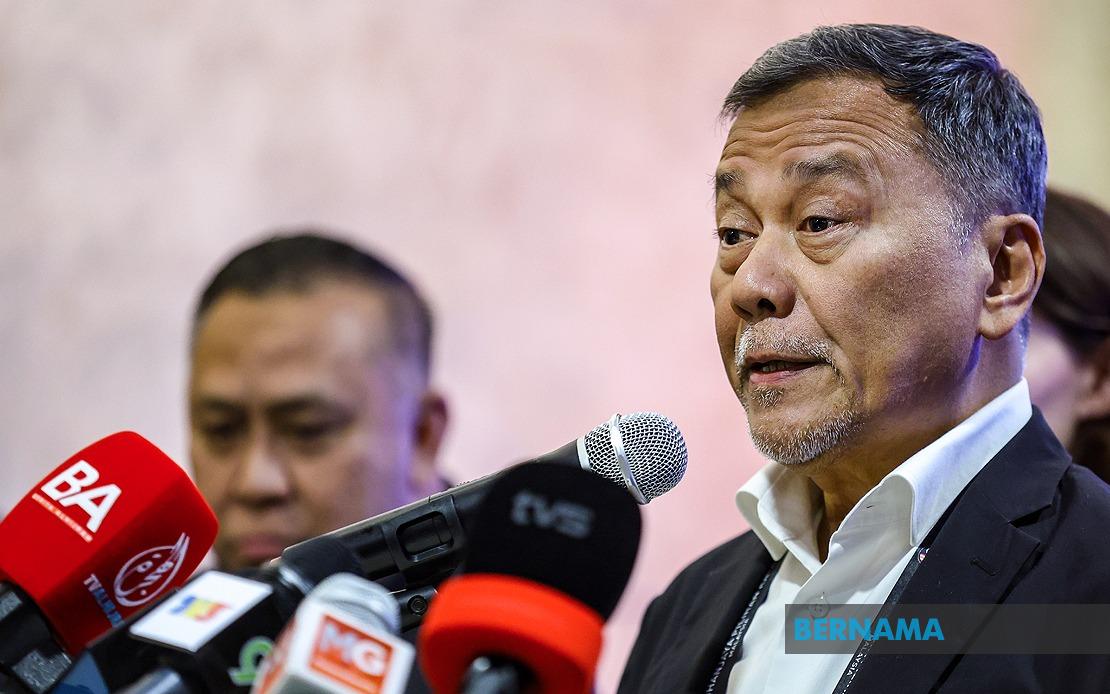
The Election Commission has delivered a positive assessment of the 16th Johor state election held recently, declaring the polls were executed without significant disruptions that might have undermined the integrity of the democratic process. Speaking at a media conference in Johor Bahru, EC chairman Datuk Seri Ramlan Harun outlined his organisation's contentment with how the election unfolded, emphasising that registered voters were able to freely exercise their electoral rights and fulfil their civic duties throughout polling day.
The election attracted substantial participation, with 1,874,918 voters—comprising those casting ballots early, through postal arrangements, and on the day itself—collectively representing a 68.73 per cent turnout. This figure provides a snapshot of engagement levels among Johor's electorate and suggests reasonable public participation in the state's political process, though it falls short of the turnout seen in some previous Malaysian elections.
Beyond simply noting the absence of major incidents, the EC has signalled its commitment to modernising electoral administration through technological and procedural innovations. The commission intends to expand a relatively recent initiative involving the display of unofficial election tallies in public venues alongside designated grandstands for observation. This approach, first tested during the Kinabatangan by-election, received encouraging feedback from stakeholders and the broader public, encouraging the EC to consider rolling it out more widely.
The underlying rationale for this initiative centres on transparency and speed of information dissemination. The unofficial results, compiled from Form 14 documentation that is simultaneously made available to candidates' representatives, allow observers and the public to monitor results as they are counted without waiting for final official proclamations. This mechanism potentially reduces public anxiety and speculation in the post-election period and fosters greater confidence in the electoral system by demystifying the counting process.
However, Ramlan cautioned that the EC remains vigilant about potential shortcomings. The commission plans to continually evaluate the effectiveness of this initiative and stands ready to modify or suspend it should complications emerge. To date, no such issues have materialised, and feedback from all involved parties has been constructive, suggesting the measure has served its intended purpose of enhancing electoral transparency without compromising security or accuracy.
A more pressing concern for the EC relates to the emergence of social media posts containing photographs of completed ballot papers. Several such images circulated online during or immediately after polling, raising questions about voter conduct and adherence to electoral regulations. Ramlan acknowledged that while the EC had observed multiple such photographs, investigators could not definitively establish whether they were actually captured within polling stations or obtained elsewhere.
This distinction matters considerably because EC rules mandate that voters deposit mobile phones and photographic devices into secure storage containers before entering voting booths, a regulation designed to prevent the exact scenario suggested by the circulating images. If such photographs were indeed taken inside polling stations, it would indicate a breach of procedure and security measures. The commission has indicated it will undertake detailed examination of these incidents and potentially introduce preventive measures for future elections to forestall any recurrence.
The results of the Johor election delivered a decisive outcome, with Barisan Nasional capturing 48 of the 56 state legislative seats available, while Pakatan Harapan won the remaining eight. This outcome reflects the coalition's continued dominance in Johor, historically a key stronghold for BN politics, and marks another significant result in Malaysia's ongoing political evolution as the country navigates multi-party competition and changing voter preferences across different states.
For Malaysia's broader electoral system, the Johor election represents a moment of institutional reflection. The EC's measured self-assessment, coupled with its acknowledgment of emerging challenges around social media behaviour and technological intrusion into the polling process, suggests the commission is grappling with contemporary issues that extend beyond traditional election administration. As Malaysia's electorate becomes increasingly digitally connected and socially engaged, election authorities must balance openness and accessibility with security and propriety.
The smooth conduct highlighted by the EC also carries implications for Malaysia's international standing as a democracy. Electoral integrity remains central to the legitimacy of any political system, and evidence of well-managed polls with strong participation helps reinforce perceptions of Malaysia as a functioning democracy despite periodic controversies. The relatively high turnout in Johor, along with the absence of major operational failures, contrasts with election-related concerns in some regional neighbours and underscores Malaysia's institutional capacity.
Looking forward, the EC's commitment to reviewing and refining electoral practices suggests an organisation attempting to modernise rather than resist change. The adoption of transparency measures and willingness to investigate emerging challenges indicates a degree of responsiveness to contemporary governance standards. However, the persistent emergence of social media complications points to an asymmetry between institutional evolution and the speed at which citizens and digital platforms create novel forms of electoral behaviour, suggesting this will remain an active area of concern for future polls.

