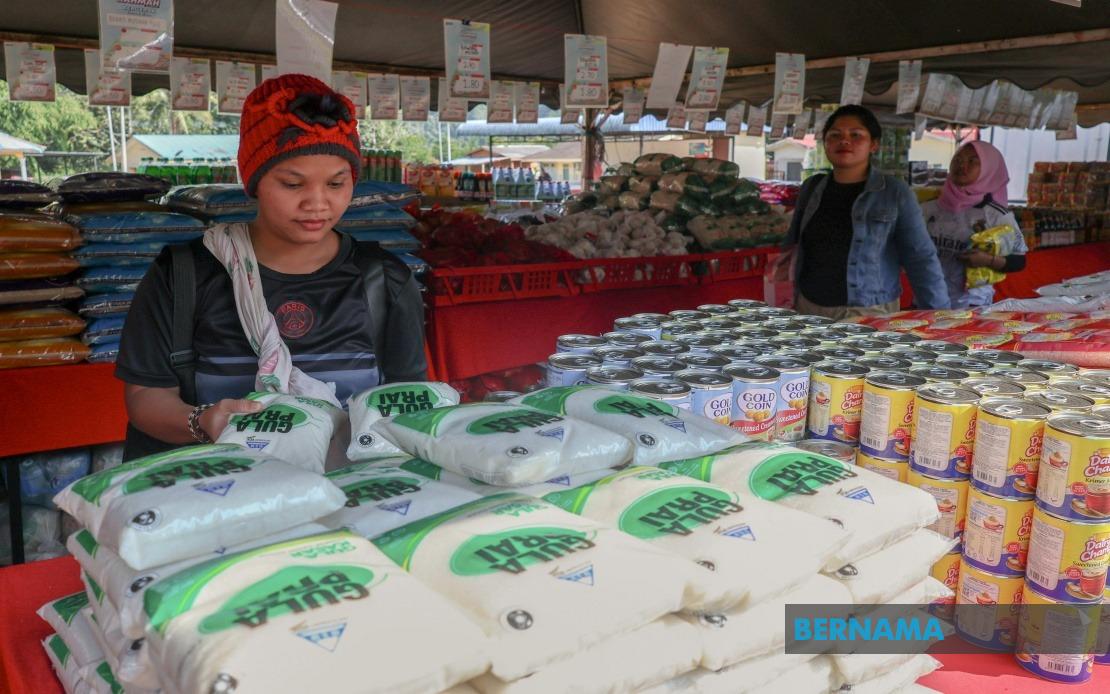
The Domestic Trade and Cost of Living Ministry has reported significant progress in its Essential Goods Distribution Programme, which aims to prevent price inflation on critical commodities in Malaysia's remote and rural communities. The initiative, which distributes controlled goods including sugar, wheat flour, cooking oil, white rice, liquefied petroleum gas and fuel, has demonstrated measurable success in closing the gap between what rural consumers pay and official price caps set in urban centres.
Geographic isolation has historically worked against consumers in remote zones, where transportation costs and limited competition force retailers to mark up essential items substantially. This structural disadvantage meant families in areas such as Pulau Libaran in Sabah faced costs significantly above what their urban counterparts paid for identical products. The ministry's intervention directly addresses this long-standing equity issue, recognising that living standards in peripheral regions are compromised when basic necessities become unaffordable relative to local incomes.
The Pulau Libaran example illustrates the programme's tangible impact on household budgets. Liquefied petroleum gas cylinders, previously retailing at RM39, now comply with the controlled price of RM26.60—a 32 percent reduction that translates to substantial monthly savings for cooking and heating. Similarly, packets of cooking oil dropped from RM3.50 to the regulated RM2.50, easing a recurring expense for food preparation across thousands of households. These are not marginal adjustments but meaningful cost reductions that accumulate across a family's annual expenditure on essentials.
The programme operates across an extensive distribution network designed to ensure comprehensive coverage rather than patchy implementation. With RM250 million dedicated for 2024, the ministry has structured delivery through 212 zones, 828 distribution areas and 1,532 points-of-sale spanning Sabah, Sarawak, Terengganu, Kelantan, Pahang and Kedah. This geographic spread reflects the diverse topography and settlement patterns across Malaysia's peninsula and Borneo territories, where a one-size-fits-all approach would fail to reach isolated communities. The targeting of 1.03 million residents indicates that the ministry has prioritised areas where market forces alone cannot deliver pricing efficiency.
Sabah receives the largest allocation at RM107.3 million, reflecting both its size and the acute challenges posed by delivering goods to an archipelago of islands and scattered inland settlements. Within Sabah, the Libaran zone alone justifies dedicated resources—RM1.76 million funds nine distribution points serving 17,061 residents, ensuring that this relatively small population is not neglected in broader state-level planning. This granular approach to budgeting suggests that the ministry recognises variations in logistics costs and population density when designing interventions.
Sustaining the programme's integrity requires robust oversight mechanisms that prevent diversion of subsidised goods or informal price inflation at the point of sale. The ministry has instituted standard operating procedures for all deliveries and established monitoring committees at both federal and state levels, creating a two-tier verification system. These controls are essential because any leakage—whether through pilfering, hoarding, or reselling in unofficial channels—undermines the programme's purpose and erodes public confidence in government support for rural communities. Transparency in implementation is as crucial as the subsidy itself.
Evaluation data gathered from the Programme Outcome Evaluation Committee indicates that beneficiaries recognise the initiative's value and want continuance, a positive signal that the scheme has embedded itself into community expectations and budgeting. When rural consumers report that the programme directly eases their cost of living, they are confirming that price stability has real material impact—they can plan household expenditure with greater certainty, allocate resources to health or education rather than emergency price shocks, and experience less economic stress. This feedback suggests buy-in from the intended beneficiary base rather than passive acceptance.
The programme sits within a broader Malaysian policy framework acknowledging that unequal access to affordable essentials creates social fragmentation and resentment between urban and rural constituencies. Price controls on fuel and basic foods are politically sensitive because they touch every household's economic security. By demonstrating that government can narrow urban-rural disparities through targeted spending rather than blanket price caps that distort markets, the ministry provides a model for efficient subsidy design that protects vulnerable populations without creating unsustainable fiscal obligations.
For Southeast Asia's broader development agenda, Malaysia's approach offers lessons in managing inflation's unequal regional impacts. As supply chain pressures and global commodity volatility create price instability, middle-income countries like Malaysia must balance fiscal sustainability with equity. The Essential Goods Distribution Programme demonstrates that strategic distribution infrastructure, combined with monitoring systems, can deliver purchasing power protection to dispersed populations more effectively than poorly-targeted generalised subsidies. The RM250 million annual commitment is substantial but contained, addressing a defined problem rather than attempting to subsidise consumption across the entire population.
Looking forward, the programme's success hinges on maintaining political commitment as electoral cycles shift and fiscal pressures mount. Rural constituencies that have experienced tangible price relief will likely become vocal supporters of continuation, creating constituency pressure on policymakers. Simultaneously, the ministry must continuously assess whether allocations match demographic changes, seasonal variations in accessibility, and shifts in commodity prices that may alter which goods most burden rural households. The framework appears sound, but sustained effectiveness requires adaptive management rather than static implementation.
The Essential Goods Distribution Programme ultimately represents recognition that geography is destiny in pricing power. Rural Malaysia's isolation from competition creates natural monopoly conditions that ordinary market mechanisms cannot correct. Government intervention, when properly designed and monitored, can restore a degree of consumer sovereignty to communities that would otherwise face price extraction simply because they lack alternatives. For residents of Pulau Libaran and thousands of similarly situated locations, this programme makes the difference between managing and struggling with essential costs.

